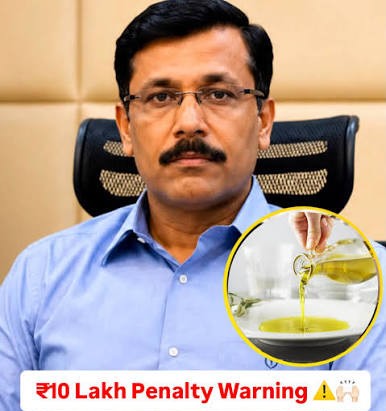
Maharashtra has taken a major step toward strengthening food safety by banning the sale of loose or unpackaged edible oil across the state. The decision, announced by the Maharashtra Food and Drug Administration (FDA) under Commissioner Tukaram Mundhe, is aimed at addressing concerns such as adulteration, unsafe packaging, improper storage, lack of traceability and repeated reuse of cooking oil.
Edible oil is a basic part of everyday cooking in millions of Indian households. Because it is consumed regularly, any contamination or adulteration can have serious consequences. The new rules therefore place greater responsibility on manufacturers, distributors, retailers, restaurants and other food businesses to ensure that the oil reaching consumers is safe, properly packaged and traceable.
Why Has Maharashtra Banned Loose Edible Oil?
One of the biggest problems with loose edible oil is the lack of reliable information about its source. When oil is sold without proper packaging, consumers may not know its manufacturer, batch number, manufacturing date, expiry date or exact composition.
According to the FDA, inspections have identified several violations in the edible-oil supply chain. These include adulteration, unauthorised blending of different oils, relabelling, repackaging of oil close to expiry and the use of unsuitable or unsafe containers. Loose oil also makes it harder for authorities to trace a product if a food-safety problem occurs.
The new approach is therefore not simply about changing how oil is sold. It is about creating accountability throughout the supply chain.
What Are the New Rules?
Under the Maharashtra FDA’s compliance and enforcement order, edible oil must be sold in properly sealed, tamper-evident and labelled packaging. The order applies broadly across the industry, including manufacturers, oil processors, blenders, repackers, importers, wholesalers, transporters, retailers and e-commerce sellers.
Retailers are expected to reject unsealed or tampered consignments rather than selling them to customers. The rules also address packaging practices, including the reuse of old or rusted containers, which can create additional food-safety concerns.
The restrictions cover several commonly consumed oils, including groundnut, mustard, soybean, sunflower, safflower, cottonseed, rice bran, palm, coconut, sesame and maize oils, as well as vanaspati.
₹10 Lakh Penalty and Strict Legal Action
The announcement has attracted significant attention because of the severe penalties associated with violations. Reports on the FDA’s action indicate that certain food-safety violations can attract penalties of up to ₹10 lakh, while serious offences under food-safety law can also result in imprisonment. The exact punishment depends on the nature of the violation and the applicable legal provisions.
This sends a clear message to businesses that food safety cannot be treated as a minor compliance issue. Companies involved in manufacturing, packaging, transportation or selling edible oil will need to pay greater attention to licensing, labelling, storage and quality-control requirements.
The warning also has implications for misleading or improper promotion of food products. Businesses should ensure that advertisements and product claims accurately represent what they are selling and comply with applicable food-safety regulations.
Repeatedly Reusing Cooking Oil Is Another Concern
The FDA’s campaign is not limited to loose oil. Another important concern highlighted by Commissioner Tukaram Mundhe is the repeated heating and reuse of cooking oil.
Restaurants, street-food businesses and other commercial kitchens sometimes reuse oil multiple times to reduce costs. However, repeatedly heating oil can cause chemical changes and the formation of compounds that may be harmful when consumed regularly. The FDA has therefore included the repeated reuse of cooking oil among the practices receiving greater scrutiny.
This part of the campaign is particularly important because food safety does not end with the manufacturing process. The way oil is stored, transported, heated and reused can also affect its quality.
What Should Consumers Do?
The new rules also give consumers an opportunity to become more careful about what they purchase. Consumers should prefer sealed and properly labelled edible-oil packages instead of buying oil from unidentified or unsealed sources.
Before purchasing packaged oil, customers should check important information such as:
- Manufacturer or producer details
- Batch or lot number
- Manufacturing and expiry dates
- Proper sealing and packaging
- Product name and quantity
- Relevant quality or certification information where applicable
If packaging appears damaged, tampered with or suspicious, consumers should avoid purchasing the product.
Impact on Small Businesses
The ban may create challenges for small retailers and businesses that traditionally sold oil in loose quantities. Loose oil can sometimes be cheaper and more convenient for customers who want to purchase smaller amounts.
However, the government and enforcement agencies will need to ensure that implementation is practical and that small businesses understand the new requirements. Clear communication, reasonable transition arrangements and awareness programmes can help businesses move toward compliant packaging without unnecessary disruption.
At the same time, businesses must understand that lower operating costs cannot come at the expense of consumer safety.
A Bigger Message About Food Safety
Maharashtra’s decision reflects a broader shift toward stronger food-safety enforcement. The FDA has already been conducting inspections and taking action against establishments involved in food-safety violations. Earlier in August, authorities seized substandard edible oil worth ₹1.94 crore in Beed and suspended the licences of five establishments following raids.
The latest action shows that authorities are increasingly focusing on traceability and accountability from production to the final consumer.
For consumers, the message is simple: know what you are buying and check what you are consuming. For businesses, the message is even clearer: proper licensing, safe packaging, accurate labelling and responsible handling of edible oil are essential—not optional.
Maharashtra’s crackdown on loose edible oil could become an important example of how stricter enforcement can be used to improve food safety. If implemented consistently, the move could reduce opportunities for adulteration, improve product traceability and encourage greater transparency across the edible-oil market.
Ultimately, the objective is not merely to impose fines or restrictions. It is to ensure that something as ordinary and essential as cooking oil is safe for the people who consume it every day.