India’s Unified Payments Interface (UPI) has become an essential part of everyday life, allowing millions of people to make instant digital payments at shops, restaurants, supermarkets and online platforms. However, a proposed change to UPI merchant transaction charges has attracted considerable attention across the country. The National Payments Corporation of India (NPCI) has now postponed the implementation of the proposed Merchant Discount Rate (MDR) on selected UPI transactions until after Diwali, providing temporary relief to merchants and businesses during the festive season.
The revised charges were originally scheduled to take effect on October 15, 2026. Before the latest announcement, reports suggested that implementation could be delayed until January 1, 2027. However, NPCI’s announcement on October 13 confirmed that the charges would be introduced immediately after Diwali, with the exact implementation date to be notified separately. Therefore, January 2027 should not yet be treated as the officially confirmed deadline.
The decision is significant for India’s digital payments industry because it affects the way certain merchant transactions may be charged, while raising questions about the future cost of operating the country’s widely used digital payment infrastructure.
Why Has NPCI Postponed the UPI Charges?
The primary reason for the postponement is the ongoing festive season, when consumer spending and digital payments generally increase. Diwali is one of India’s most important shopping periods, with millions of people purchasing clothing, electronics, household products, jewellery, gifts and other goods.
Introducing a new payment-processing fee immediately before this busy period could have created additional challenges for retailers, payment companies and banks. Businesses would need time to understand the new rules, update their payment systems and determine how the revised charges would affect their operations.
Merchant associations have also expressed concerns about the potential impact of additional transaction costs on businesses, particularly small retailers operating with limited profit margins.
According to reports published by Reuters and other news organisations on October 13, NPCI decided to postpone the rollout to avoid introducing the new fee structure during the festive period. The delay gives the payments industry more time to prepare for the changes.
However, the postponement does not mean that the proposed MDR framework has been cancelled. The current decision concerns the implementation timeline, while the announced fee structure remains subject to the applicable rules and any subsequent official changes.
What Are the Proposed New UPI Charges?
The proposed change concerns the Merchant Discount Rate, commonly known as MDR. This is a fee associated with processing eligible digital payments, generally paid by merchants to the payment ecosystem.
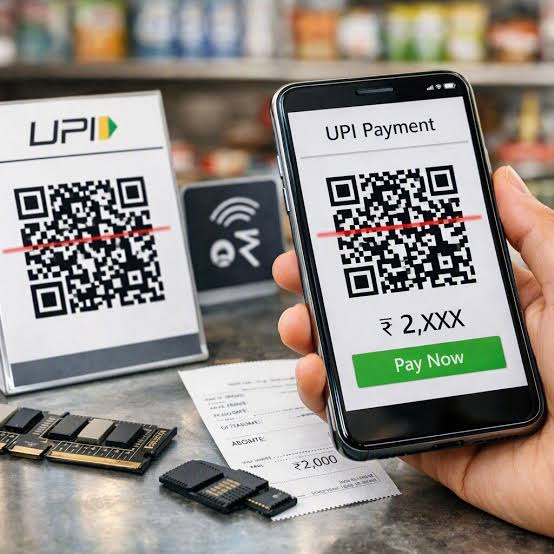
Under the announced framework, a 0.4% MDR is proposed for specified person-to-merchant (P2M) UPI transactions exceeding ₹2,000. For transactions of ₹75,000 and above, the proposed fee is capped at ₹300 per transaction.
For example, if an eligible merchant transaction amounts to ₹5,000, an MDR of 0.4% would equal ₹20. For a transaction worth ₹10,000, the same rate would amount to ₹40.
These calculations illustrate the proposed rate and do not mean that every UPI payment will automatically attract a fee. The actual applicability depends on the transaction category and the relevant exemptions under the framework.
The proposed changes distinguish between merchant payments and person-to-person transfers. A payment made by a customer to a business is classified as a P2M transaction, whereas money transferred between individuals is generally classified as a P2P transaction.
Personal transfers are not covered by the proposed merchant fee. Qualifying small-value merchant payments and eligible small merchants are also covered by exemptions under the announced framework.
The government has previously indicated that approximately 96% of merchant transactions would remain unaffected. Consequently, the proposed changes should not be interpreted as a universal charge on every UPI transaction.
Will Google Pay, PhonePe and Paytm Users Have to Pay?
One of the biggest concerns among consumers is whether they will have to pay extra when scanning a QR code at a shop or making a payment through applications such as Google Pay, PhonePe and Paytm.
The important distinction is that MDR is a merchant-side processing fee, not a blanket transaction charge imposed on every customer using UPI.
Ordinary person-to-person transfers remain outside the proposed MDR framework. Qualifying small-value payments and eligible transactions covered by exemptions are also expected to remain unaffected.
Nevertheless, consumers may be concerned that some businesses could attempt to recover additional operating expenses through higher product prices. Whether that happens will depend on individual businesses, market competition and the applicable rules.
The postponement itself does not introduce a new charge for customers. Instead, it delays the implementation of the proposed merchant fee structure. Users should follow official NPCI announcements for any subsequent changes rather than relying on social media claims suggesting that all UPI payments will become chargeable.
Why Are Merchants Concerned About the New Rules?
For many businesses, digital payments have become an important part of daily operations. Small retailers, grocery stores, food outlets and local service providers frequently accept UPI because it allows customers to pay quickly without carrying cash.
Merchants have raised concerns that payment-processing costs could affect their profit margins, especially when businesses handle a high volume of transactions.
For example, a retailer processing numerous eligible high-value payments could face additional costs under the proposed MDR framework. Businesses would therefore need to understand which transactions qualify for the fee, which exemptions apply and how the costs are distributed among payment service providers.
The festive season makes these concerns particularly relevant because retailers often experience higher sales volumes during this period. Additional uncertainty about transaction costs could complicate financial planning at a time when businesses are preparing for increased customer demand.
The postponement offers more time for merchants, banks and payment companies to prepare their systems and understand the operational requirements before implementation.
Why Does the Payments Industry Want an MDR Framework?
Although the proposed charges have generated concerns, the issue also highlights a broader question about the long-term sustainability of India’s digital payment infrastructure.
UPI processes enormous numbers of transactions every day. Maintaining this infrastructure requires investment in technology, cybersecurity, fraud prevention, customer support and payment processing.
Banks and payment service providers must continue supporting the system while managing these operational expenses. An MDR framework could create a revenue stream for eligible participants in the payments ecosystem.
At the same time, India’s digital payment growth has been supported by the accessibility and convenience of UPI. Any changes to its pricing structure must therefore balance the financial requirements of payment providers with the need to maintain affordable digital transactions for consumers and businesses.
The challenge for policymakers is to establish a framework that supports payment infrastructure without discouraging the adoption of digital payments, particularly among small merchants.
Is January 1, 2027, the Confirmed Implementation Date?
January 1, 2027, was widely discussed in reports published before NPCI’s latest announcement. Those reports indicated that the government and payment industry were considering a postponement from the original October 15 deadline.
However, NPCI’s announcement on October 13 stated that implementation would be delayed until immediately after Diwali and that the specific date would be announced separately.
This means January 1, 2027, is not confirmed as the implementation date by the latest announcement. The precise schedule will depend on further official communication.
Until then, merchants, banks, payment aggregators and consumers should distinguish between the confirmed postponement and earlier reports about a possible January deadline.
What Happens Next?
The next major development will be NPCI’s notification specifying when the proposed MDR framework will take effect. Payment companies and banks will then need to prepare for the revised implementation schedule and communicate the relevant requirements to merchants.
Businesses should monitor official updates to understand the applicable rates, exemptions and payment-processing arrangements. Consumers should also be cautious about unverified messages claiming that UPI payments will become universally chargeable.
The eventual implementation will be important for India’s digital payments ecosystem because it could change the way eligible merchant transactions generate revenue for payment service providers.
Conclusion
NPCI’s decision to postpone the proposed UPI merchant charges until after Diwali provides temporary relief to businesses during one of India’s busiest shopping seasons. The original October 15, 2026, implementation date has been deferred, but the proposed MDR framework has not been cancelled.
Under the announced structure, a 0.4% fee would apply to specified eligible merchant transactions exceeding ₹2,000, subject to the applicable caps and exemptions. Personal transfers and qualifying small-value payments remain outside the proposed charge.
Although January 2027 was previously reported as a possible implementation timeline, NPCI has not confirmed January 1 as the new deadline in its October 13 announcement.
For now, the most important development is the postponement itself. The final implementation date and any additional clarifications from NPCI will determine how the revised framework affects merchants, payment companies and India’s rapidly expanding digital payments ecosystem.
The decision also highlights the broader challenge facing India’s UPI network: maintaining an accessible, convenient payment system while ensuring that the infrastructure supporting millions of daily transactions remains financially sustainable.