Kenya has confirmed a second Ebola case linked to its first reported patient, prompting health authorities to intensify contact tracing, quarantine measures and screening at borders and airports. The second patient, a 39-year-old man who was a close relative of the first case, developed symptoms while under quarantine. Authorities said the two cases were epidemiologically linked and reported no evidence of community transmission in the latest account published by the Associated Press on October 15.
Kenya’s health authorities are responding to a new Ebola-related public-health concern after identifying a second case associated with an infected traveller who had returned from the Democratic Republic of Congo.
The development highlights the importance of early case identification, isolation and contact tracing when infectious diseases cross international borders.
According to the Associated Press, the second patient was identified as a close relative of Kenya’s first confirmed case. He developed symptoms on Tuesday and tested positive while under quarantine. <Cite refs={[“turn794878news6”]}/>
How the first case was identified
The first patient was a 40-year-old Kenyan who had been living in the Democratic Republic of Congo, where he became ill and received treatment at health facilities.
He travelled through Ebola-affected areas before reaching Kenya. He tested positive on October 5 and died the same day, according to the AP report. <Cite refs={[“turn794878news6”]}/>
Health authorities then began tracing people who may have come into contact with him during his journey and after his arrival.
This process is critical because Ebola can spread through direct contact with the blood or other bodily fluids of an infected person, or with contaminated materials.
It does not spread through the air in the same manner as influenza or measles.
Contact tracing and quarantine measures
Kenyan authorities identified approximately 128 contacts linked to the first case.
The AP reported that 108 contacts were placed in quarantine in Kenya, while five contacts abroad were being monitored through the relevant authorities. <Cite refs={[“turn794878news6”]}/>
Contact tracing helps public-health teams identify people who may have been exposed, monitor them for symptoms and arrange testing or medical care when necessary.
The second case’s identification while the patient was already under quarantine demonstrates the potential value of those measures.
Early detection can also improve the chances of timely medical intervention and reduce opportunities for further transmission.
Authorities report no evidence of community spread
The two confirmed cases were described as epidemiologically linked, and authorities reported no evidence of community transmission in the AP account. <Cite refs={[“turn794878news6”]}/>
That distinction matters.
A small number of linked cases does not necessarily mean that an outbreak is spreading widely through the population. Health officials assess the situation by examining transmission links, contact histories, new infections and the results of surveillance.
However, the absence of reported community transmission at one point in time does not eliminate the need for continued monitoring.
Border screening and regional cooperation
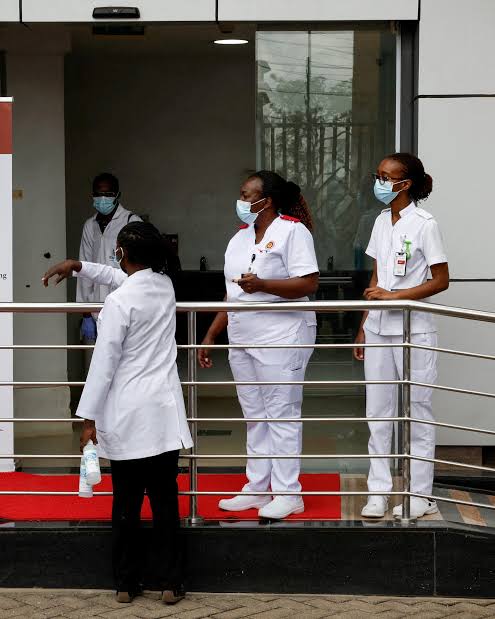
Kenya has tightened screening at border crossings and airports following the cases.
The country’s response also requires coordination with neighbouring states and other countries where potentially exposed contacts may be located.
International cooperation is important when patients travel across several jurisdictions before receiving a diagnosis.
Public-health authorities must be able to exchange information quickly while ensuring that potentially exposed individuals receive appropriate medical guidance.
What travellers should know
The report does not indicate that ordinary travel across Kenya is automatically unsafe, nor does it establish widespread community transmission.
Travellers should follow current advice from national health authorities and relevant international public-health agencies, particularly if they have visited affected areas or have been identified as contacts.
Anyone who believes they may have been exposed should seek guidance from health professionals rather than attempting to self-diagnose.
The situation requires continued monitoring
The confirmation of a second linked case makes surveillance and contact tracing especially important.
Authorities will need to monitor known contacts, investigate any additional suspected cases and provide updates as more information becomes available.
The latest report offers a limited but important snapshot of the response. It should not be interpreted as proof that the risk has ended or that a wider outbreak is inevitable.
For now, Kenya’s priority is to contain the linked cases, identify any further infections early and prevent additional transmission.