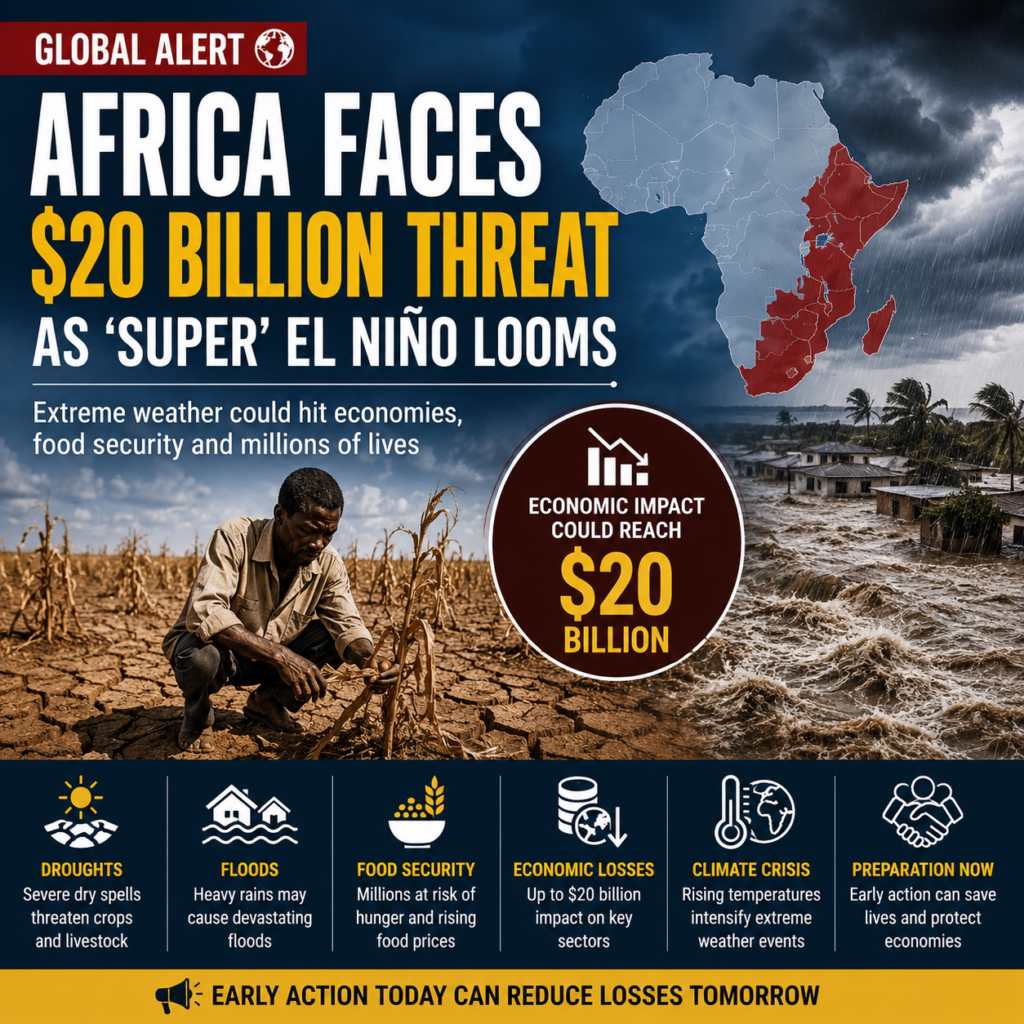
Africa is preparing for what experts describe as one of the most severe climate challenges in recent years, as forecasts indicate that a powerful “Super” El Niño weather event could strike parts of the continent in the coming months. According to the African Development Bank (AfDB), the phenomenon could result in economic losses of up to $20 billion, threaten food supplies, disrupt agriculture, and increase the risk of humanitarian crises across several countries.
The warning comes at a time when many African nations are already facing rising temperatures, water shortages, inflation, and economic pressures. Governments, humanitarian organizations, and climate experts are now urging immediate action to reduce the potential impact before weather conditions worsen.
What is El Niño?
El Niño is a naturally occurring climate pattern caused by unusually warm ocean temperatures in the central and eastern Pacific Ocean. Although it originates thousands of kilometers away, its effects are felt across the globe.
A strong El Niño can lead to:
- Severe droughts in some regions.
- Heavy rainfall and flooding in others.
- Crop failures.
- Water shortages.
- Increased risk of wildfires.
- Rising food prices.
When the warming becomes exceptionally intense, scientists refer to it as a “Super” El Niño, capable of triggering widespread economic and environmental disruption.
Why Africa Is Especially Vulnerable
Many African economies rely heavily on agriculture, which depends on predictable rainfall. Even small changes in weather patterns can significantly affect food production, employment, and economic growth.
Experts warn that countries across Eastern, Southern, and parts of Central Africa may experience:
- Reduced agricultural output.
- Loss of livestock.
- Water scarcity.
- Damage to infrastructure from floods.
- Increased spread of climate-related diseases.
- Higher food inflation.
Millions of people who depend on farming for their livelihoods could be directly affected if weather conditions deteriorate.
Economic Impact Could Reach $20 Billion
According to estimates from the African Development Bank, the combined economic losses from a Super El Niño could range between $10 billion and $20 billion.
The losses are expected to result from multiple sectors, including:
- Agriculture.
- Transportation.
- Energy production.
- Water resources.
- Public health.
- Disaster recovery efforts.
Lower crop yields would not only reduce farmers’ incomes but could also increase dependence on food imports, placing additional pressure on national budgets already facing financial constraints.
Food Security Under Threat
Food security remains one of the biggest concerns.
If rainfall becomes highly irregular, staple crops such as maize, wheat, rice, and vegetables may suffer significant declines in production.
Possible consequences include:
- Rising food prices.
- Increased malnutrition.
- Greater dependence on humanitarian aid.
- Supply shortages in local markets.
- Increased poverty in rural communities.
International aid agencies are already monitoring weather developments closely to prepare emergency response plans if necessary.
Governments Preparing for the Worst
Several governments are strengthening disaster preparedness measures ahead of the anticipated climate event.
Current preparations include:
- Improving early warning systems.
- Expanding emergency food reserves.
- Strengthening flood-control infrastructure.
- Supporting farmers with drought-resistant crops.
- Increasing climate monitoring capabilities.
- Coordinating with international humanitarian organizations.
Experts say that investing in preparation today could significantly reduce future economic losses.
Climate Change Making Extreme Weather More Dangerous
Although El Niño is a natural climate phenomenon, scientists warn that human-driven climate change is making extreme weather events more severe.
Higher global temperatures increase the likelihood of:
- Longer drought periods.
- More intense rainfall.
- Stronger heatwaves.
- Greater agricultural losses.
- Increased pressure on already fragile ecosystems.
Climate experts argue that countries must continue investing in climate adaptation alongside efforts to reduce greenhouse gas emissions worldwide.
Global Impact Beyond Africa
The effects of a Super El Niño will not be limited to Africa alone.
Global markets may also experience:
- Higher food prices.
- Disruptions in agricultural exports.
- Increased insurance costs.
- Greater volatility in commodity markets.
- Supply chain disruptions.
As international trade becomes increasingly interconnected, weather-related shocks in one region can quickly influence economies across the world.
Looking Ahead
The coming months will be critical as scientists continue monitoring ocean temperatures and weather patterns across the Pacific. While the exact intensity and regional impacts remain uncertain, experts agree that early preparation will be essential to minimizing damage.
For Africa, the challenge goes beyond weather—it is also a test of resilience, infrastructure, and international cooperation. Governments, development banks, and humanitarian organizations are now working together to strengthen disaster preparedness and protect vulnerable communities.
If forecasts prove accurate, the anticipated Super El Niño could become one of the most economically significant climate events of 2026, affecting millions of lives and reinforcing the urgent need for stronger climate adaptation strategies around the world.