The United Nations has issued one of its strongest climate warnings in recent years, cautioning that a rapidly strengthening El Niño weather phenomenon could significantly intensify global heatwaves, droughts, floods and food insecurity over the coming months. According to the World Meteorological Organization (WMO) and the World Food Programme (WFP), there is now an 81% probability of a very strong El Niño, potentially making it the most powerful event since 1950. Experts warn that millions of people across Africa, Asia and Latin America could face severe humanitarian challenges if governments fail to prepare in time.
What Is El Niño?
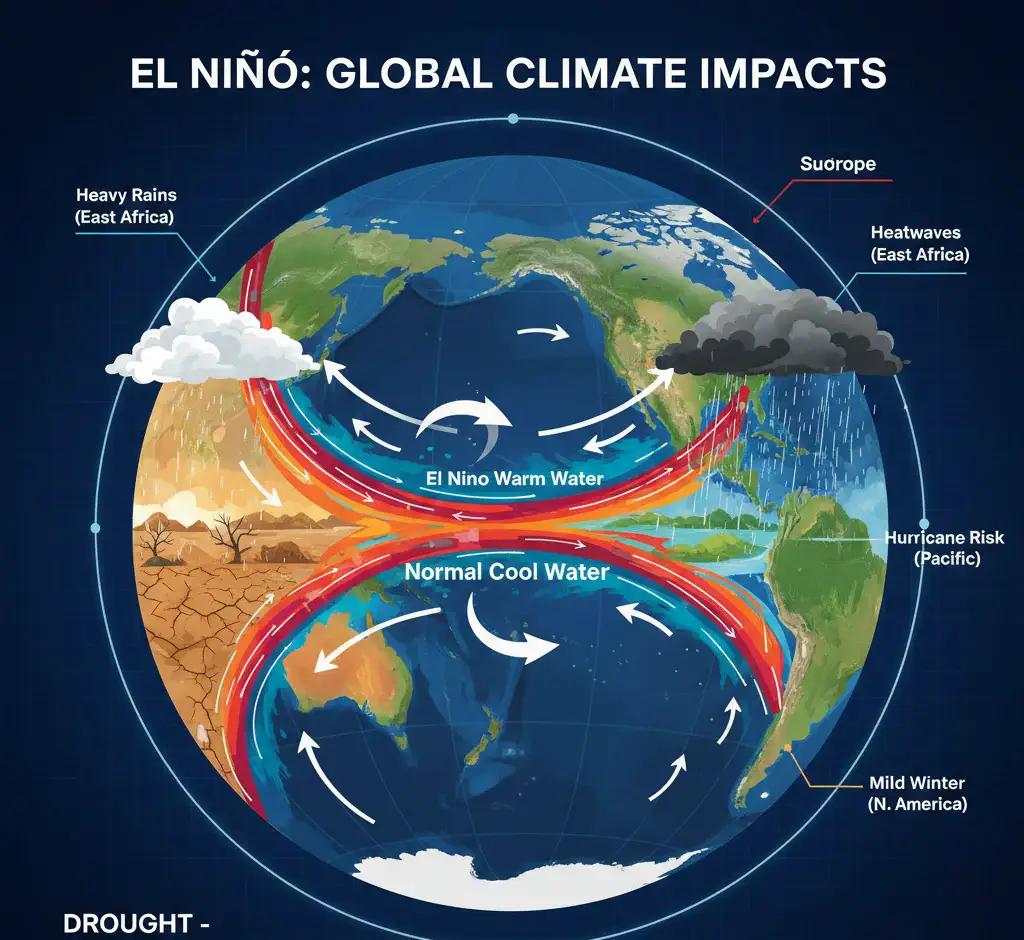
El Niño is a naturally occurring climate phenomenon caused by unusually warm sea-surface temperatures across the central and eastern Pacific Ocean.
Although it begins over the Pacific, its effects extend across the entire planet. It alters atmospheric circulation, changes rainfall patterns, influences monsoon systems and increases the likelihood of extreme weather events.
Scientists explain that El Niño does not create climate change, but it amplifies the effects of global warming, making already dangerous weather conditions even more severe.
UN: One of the Strongest El Niño Events Could Be Developing
According to the latest WMO assessment, ocean temperatures in the tropical Pacific are rising rapidly.
Forecast models indicate that El Niño will continue strengthening through August and could peak between November and February, a period when its global impacts are usually at their highest.
Climate experts believe this event has the potential to become one of the strongest observed in more than seven decades.
WMO has urged governments to begin preparations immediately instead of waiting until disasters occur.
49 Million More People Could Face Hunger
Perhaps the most alarming warning comes from the World Food Programme.
According to the UN agency, the combination of:
- El Niño,
- existing conflicts,
- rising food prices,
- and reduced humanitarian funding
could push an additional 49 million people into acute food insecurity before the end of next year.
That would affect some of the world’s most vulnerable populations, especially communities already struggling with drought, poverty and conflict.
Which Regions Are Most at Risk?
The UN believes different regions will experience different impacts.
Africa
Southern Africa is expected to experience prolonged drought conditions, threatening maize production and drinking water supplies.
Several countries could witness significant crop failures, increasing dependence on food imports and humanitarian assistance.
Asia
Parts of South and Southeast Asia could experience delayed monsoons, irregular rainfall and extended periods of extreme heat.
Agricultural production may decline if rainfall becomes inconsistent during critical growing seasons.
Latin America
Central America and parts of South America face a combination of severe droughts and sudden flooding.
Countries such as Peru and Ecuador historically experience major disruptions during strong El Niño events because of intense rainfall and landslides.
Heatwaves Becoming More Dangerous
Scientists say the biggest concern is not simply rising temperatures but the frequency and intensity of extreme heat events.
Many parts of Europe and North America have already experienced prolonged heatwaves this summer.
Record ocean temperatures have also been observed across large portions of the world’s oceans, adding more energy to the atmosphere and increasing the likelihood of stronger storms and heavier rainfall.
Agriculture Faces Serious Challenges
Agriculture remains one of the sectors most vulnerable to El Niño.
Possible consequences include:
- Reduced crop yields
- Water shortages
- Livestock stress
- Lower food production
- Rising food prices
- Increased dependence on imports
Developing nations that rely heavily on seasonal rainfall could face particularly severe consequences if weather patterns become increasingly unpredictable.
Could India Be Affected?
Although the exact impact on India will depend on regional weather systems, climate experts say El Niño often weakens the Indian summer monsoon or causes uneven rainfall distribution.
This can result in:
- Localized flooding
- Rainfall deficits in some states
- Heatwaves continuing for longer periods
- Pressure on agriculture
- Water management challenges
The India Meteorological Department (IMD) continues to monitor developments alongside international climate agencies.
Governments Asked to Prepare Early
The UN has urged countries to strengthen disaster preparedness instead of reacting only after disasters occur.
Recommended actions include:
- Improving early warning systems.
- Protecting vulnerable communities.
- Securing food supplies.
- Managing water resources efficiently.
- Supporting farmers with climate forecasts.
- Expanding emergency relief programs.
The WMO says modern forecasting now allows governments several months to prepare, potentially saving thousands of lives.
Climate Change Is Making El Niño Worse
Scientists emphasize that today’s El Niño is occurring against a much warmer planet than previous decades.
Human-caused greenhouse gas emissions have already increased average global temperatures, meaning El Niño now starts from a higher baseline.
According to climate researchers, this combination significantly increases the risk of:
- Record-breaking heat
- More destructive wildfires
- Stronger storms
- Longer droughts
- Higher ocean temperatures
Experts warn that these events are becoming more frequent because climate change is intensifying natural weather cycles.
Why the World Is Paying Close Attention
El Niño has historically influenced some of the world’s largest natural disasters.
Previous strong events have caused:
- Multi-billion-dollar economic losses.
- Crop failures across continents.
- Severe flooding.
- Long-lasting droughts.
- Public health emergencies.
- Disruptions to global food markets.
The possibility that the current event could become the strongest since 1950 has therefore attracted global attention from governments, humanitarian organizations and financial markets alike.
What Happens Next?
Scientists expect El Niño to continue strengthening over the coming months.
The period between late 2026 and early 2027 will be critical in determining how severe the impacts become.
Weather agencies worldwide will continue monitoring ocean temperatures, rainfall patterns and atmospheric conditions to provide updated forecasts and early warnings.
Conclusion
The United Nations’ latest warning highlights the growing risks posed by a rapidly intensifying El Niño at a time when the planet is already experiencing unprecedented warming. From extreme heat and drought to floods and food insecurity, the coming months could present significant challenges for millions of people around the world. While scientists stress that the exact impacts will vary by region, they agree on one message: early preparation will be the key to reducing human and economic losses.