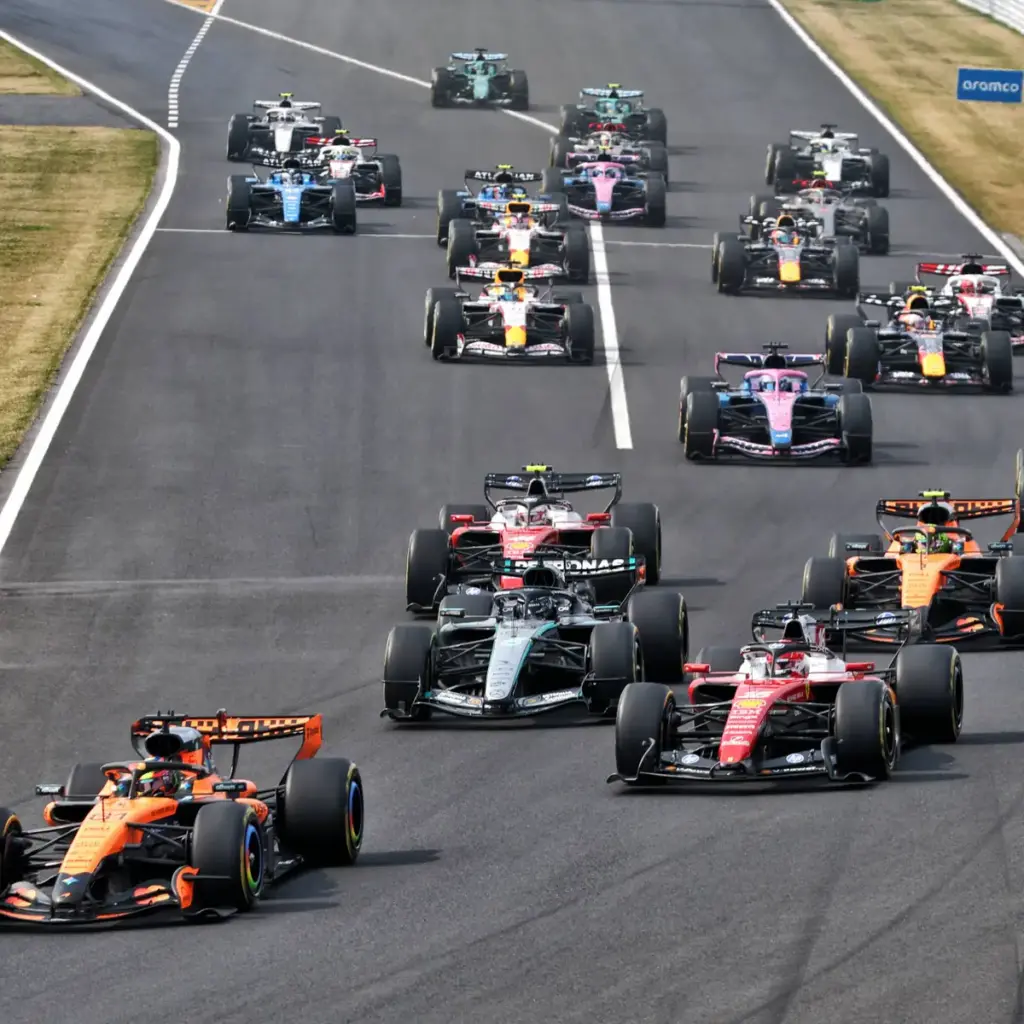
Formula 1, commonly known as F1, is often described as the highest level of motorsport. But F1 is much more than cars racing around a track. It is a combination of cutting-edge technology, engineering, strategy, competition, entertainment, global business and celebrity culture.
Over the years, Formula 1 has transformed from a sport followed mainly by traditional motorsport fans into a global entertainment phenomenon. Millions of people now watch races, follow drivers on social media, discuss team strategies and travel across the world to attend Grand Prix events.
At the same time, F1 is one of the most expensive sports in the world. Building a competitive car, developing an engine, operating a racing team, transporting equipment around the globe and maintaining hundreds of highly skilled employees requires enormous amounts of money.
So, why exactly is Formula 1 so popular and so expensive?
The answer lies in a combination of technology, competition, human drama and business.
What Makes Formula 1 Different?
Formula 1 is not simply a competition where the fastest car wins.
Every team has to design and develop its own car according to highly complicated technical regulations. Engineers work on aerodynamics, suspension, braking systems, cooling, electronics, tyres and power units.
The drivers then have to extract maximum performance from these machines while dealing with extremely high speeds, intense physical pressure and constantly changing race conditions.
A modern F1 race therefore involves several competitions happening simultaneously.
There is the battle between drivers.
There is the battle between teams.
There is the engineering competition.
There is the strategic competition.
And there is the financial competition.
This combination makes F1 unlike most other major sports.
1. The Speed Creates an Incredible Spectacle
One of the simplest reasons people love F1 is speed.
Modern Formula 1 cars can reach speeds of more than 300 km/h on certain circuits. But the impressive part is not just their top speed.
F1 cars can accelerate extremely quickly, brake incredibly late and generate enormous amounts of aerodynamic grip.
Drivers can take corners at speeds that would be impossible for ordinary road cars.
Watching a Formula 1 car pass within a few metres of a barrier at extremely high speed creates a level of excitement that is difficult to reproduce in other sports.
Every corner presents a potential mistake.
One small error can cause a crash, destroy a car or completely change the result of a race.
That sense of danger and precision keeps viewers interested.
2. F1 Is Also an Engineering Competition
Perhaps the biggest difference between Formula 1 and many other sports is the importance of technology.
In football, for example, every team uses essentially the same type of ball and plays on the same basic field.
In Formula 1, teams design sophisticated racing machines specifically to compete against one another.
Aerodynamics is particularly important.
Engineers constantly study how air moves around the car. They design wings, floors and other aerodynamic components to generate downforce while trying to reduce drag.
More downforce allows a car to take corners faster.
Less drag helps it reach higher speeds on straights.
The challenge is finding the right balance.
This creates a technological arms race between teams.
A small aerodynamic improvement can sometimes mean a difference of only a few hundredths of a second per lap—but those tiny differences can determine whether a driver starts first or tenth.
3. The Cars Are Extremely Expensive
A Formula 1 car is not an ordinary automobile.
It is a highly specialized racing machine containing thousands of components.
The car uses advanced materials such as carbon fibre and sophisticated electronic systems. Its power unit combines a turbocharged internal combustion engine with hybrid technology.
Teams also continuously develop new components throughout a season.
A front wing, for example, is not simply manufactured once and used forever. Teams can produce different versions depending on the circuit and aerodynamic requirements.
Crash damage can also create enormous costs.
If a driver hits a barrier and damages the chassis, suspension, gearbox and aerodynamic components, the team may have to manufacture replacements.
This is one of the major reasons F1 is so expensive.
4. Formula 1 Is a Global Sport
Another reason F1 is so popular is its international nature.
The championship travels across different countries and continents during a season.
Fans can watch races in Europe, Asia, the Middle East, North America and other parts of the world.
Each Grand Prix has its own identity.
Monaco is associated with glamour and luxury.
Monza is famous for its passionate Italian fans and historic racing culture.
Silverstone represents the deep connection between Britain and motorsport.
Singapore is famous for its night race.
Las Vegas has added another layer of entertainment and spectacle.
This global calendar allows F1 to reach completely different audiences.
Instead of being associated with one country, Formula 1 has become an international entertainment brand.
5. The Drivers Become Global Stars
Formula 1 would not be nearly as popular without its drivers.
People do not simply support teams. They develop strong connections with individual drivers.
Drivers such as Lewis Hamilton, Max Verstappen, Charles Leclerc, Lando Norris and Fernando Alonso have become global sporting personalities.
Their personalities, rivalries and achievements attract fans who may not initially understand the technical side of motorsport.
A viewer might start watching because they like a particular driver.
Eventually, they become interested in the team, strategy, technical development and history of the sport.
This creates a powerful cycle.
Driver → team → race → strategy → technology → deeper F1 interest.
6. Rivalries Make F1 More Exciting
Sport becomes much more interesting when there are strong rivalries.
Formula 1 has produced some of the most famous rivalries in motorsport history.
Drivers and teams fight for championships over many months, creating storylines that continue from one race to another.
A disagreement at one Grand Prix can become part of the conversation at the next.
A controversial overtaking move can be discussed for weeks.
A championship battle can come down to the final race.
This creates something similar to a television series.
Each Grand Prix is effectively another episode.
There are heroes, rivals, unexpected winners, failures and dramatic comebacks.
7. Strategy Is a Huge Part of the Sport
Many people initially think F1 is simply about driving faster than everyone else.
It is not.
Strategy can completely change the result.
Teams have to decide when their drivers should pit for new tyres.
They have to consider tyre degradation, weather, fuel management, safety cars and traffic.
Imagine a driver running in third position.
A team might decide to pit early and put on faster tyres. The driver could then use the extra grip to complete several extremely fast laps.
Another team might keep its driver on the track longer.
Both strategies involve risks.
If rain suddenly arrives, the entire race strategy can change within minutes.
This uncertainty is one of the reasons experienced F1 fans enjoy the sport so much.
8. F1 Is a Battle of Hundreds of People
When viewers see an F1 car on television, they usually focus on the driver.
But a Formula 1 team is much larger than two drivers.
Behind every car are aerodynamicists, mechanical engineers, software engineers, strategists, mechanics, data analysts, designers, manufacturing specialists and many other professionals.
During a race weekend, engineers constantly analyse data.
They monitor tyre temperatures.
They monitor engine performance.
They study competitors.
They calculate lap times.
They communicate with the driver.
They decide when to pit.
The driver may be physically inside the car, but the race is being managed by an enormous team working behind the scenes.
9. The Technology Is Extremely Advanced
Formula 1 has always been connected to technological innovation.
Teams collect huge amounts of data during testing and racing.
Sensors placed throughout the car provide information about temperatures, pressures, suspension behaviour, tyre performance and other parameters.
Engineers analyse this information to improve performance.
The technology developed for motorsport can also influence the wider automotive industry.
Hybrid power systems, lightweight materials, aerodynamic concepts, braking technology and energy recovery systems have all been areas of technological development within motorsport.
This gives F1 another appeal.
It is not only about who can drive fastest.
It is about who can engineer the fastest complete system.
10. Why Does Formula 1 Cost So Much?
Now comes the biggest question.
Why does F1 require so much money?
The answer is simple:
Everything is expensive.
Teams need factories, wind tunnels, simulators, research facilities, manufacturing equipment and highly qualified employees.
They also need to transport cars, spare parts, tools and equipment across multiple countries.
Then there are development costs.
Teams are constantly trying to improve their cars.
A new floor design might require weeks of research and manufacturing.
A new aerodynamic component must be tested and analysed.
A damaged part must be replaced.
Engines and power units require highly specialized development.
Even before a car reaches a race track, enormous amounts of money have already been spent.
11. The Cost of Research and Development
One of the biggest expenses is research and development.
Imagine two teams that are separated by only 0.2 seconds per lap.
That tiny difference can determine which team qualifies at the front.
Engineers therefore search for extremely small improvements.
They might spend huge amounts of money trying to find an aerodynamic improvement that saves only a few hundredths of a second.
This may sound excessive.
But in Formula 1, those hundredths can determine championships.
The sport operates at a level where small improvements have enormous value.
12. Building an F1 Factory Is Expensive
An F1 team needs much more than a garage.
Modern teams operate sophisticated technical facilities.
These can include:
- Design departments
- Manufacturing facilities
- Computer simulation systems
- Research laboratories
- Aerodynamic development facilities
- Vehicle simulators
- Data analysis centres
- Engine facilities
- Warehouses and logistics operations
The facilities themselves require huge investments.
They also need constant upgrades because technology changes rapidly.
13. Travelling Around the World Costs Millions
Formula 1 is a global championship.
That means teams have to transport enormous amounts of equipment from one country to another.
Cars cannot simply be loaded onto a normal truck and driven across the country.
Teams need to move:
- Racing cars
- Spare parts
- Tyres
- Garage equipment
- Computers
- Tools
- Hospitality equipment
- Engineering systems
- Communications equipment
Moving this equipment around the world requires complex logistics.
The cost increases further when teams have to operate on multiple continents within a short period.
14. The Human Cost Is Also Huge
F1 teams employ hundreds of highly skilled people.
Engineers with specialized knowledge can command high salaries.
The same applies to experienced mechanics, designers, strategists, software developers and technical managers.
The sport requires people who can work under enormous pressure.
A mistake during a race can cost a team valuable championship points.
Therefore, teams invest heavily in recruiting and retaining the best talent.
15. F1 Also Has a Massive Business Side
Formula 1 is not only a sport.
It is a massive commercial industry.
Teams earn money through sponsorships, prize-related income, partnerships, merchandise and other commercial activities.
Sponsors want to associate their brands with F1 because the championship reaches a huge international audience.
Major companies can place their logos on cars, drivers’ clothing, helmets and team facilities.
For sponsors, F1 provides something extremely valuable:
Global visibility.
A single race can be watched by millions of people across multiple countries.
16. Netflix Helped Introduce F1 to a New Generation
One of the biggest changes in F1’s popularity came from the Netflix series Drive to Survive.
The series introduced Formula 1 to viewers who had never followed motorsport closely.
Instead of focusing only on lap times, it showed the personalities, rivalries, pressure and behind-the-scenes drama of the sport.
This made F1 easier to understand for casual viewers.
Someone who knew nothing about tyre strategies could suddenly become interested in a team’s decisions.
Someone who had never watched qualifying could become invested in a driver’s championship battle.
The result was a significant expansion of F1’s audience, particularly among younger fans.
17. Social Media Made F1 More Accessible
Formula 1 has also adapted to modern digital culture.
Drivers and teams are active on platforms such as Instagram, YouTube, TikTok and other social media platforms.
Fans can see:
- Behind-the-scenes videos
- Team radio
- Driver interviews
- Memes
- Race highlights
- Technical explanations
- Garage footage
This has made the sport much more accessible.
Fans no longer have to watch a three-hour broadcast to follow what happened.
They can experience F1 through short videos and social media content throughout the week.
18. The Luxury and Lifestyle Factor
F1 also has a strong connection with luxury.
Some races take place in cities associated with wealth, entertainment and tourism.
Monaco is perhaps the most famous example.
Yachts, luxury hotels, celebrities and expensive hospitality experiences have become part of the F1 image.
This makes Formula 1 different from many traditional sports.
It combines competition with entertainment and lifestyle.
For some fans, attending an F1 race is not simply about watching cars.
It is an experience.
19. But Is F1 Too Expensive?
There is an important debate around the cost of Formula 1.
If teams were allowed to spend unlimited amounts of money, the richest manufacturers and organisations could potentially gain an enormous advantage.
That is why Formula 1 introduced a cost cap for teams.
The purpose is to control certain categories of spending and make competition more sustainable.
However, even with financial regulations, F1 remains an extremely expensive sport.
The cost cap does not mean teams only spend a small amount of money.
It simply creates boundaries around certain forms of expenditure.
The goal is to encourage closer competition while allowing teams to maintain the technology and sophistication that make F1 special.
The Real Reason F1 Is So Popular
Ultimately, Formula 1’s popularity comes from the fact that it combines several forms of entertainment at once.
It has the speed of motorsport.
The strategy of chess.
The technology of engineering.
The drama of a television series.
The personalities of celebrity culture.
The global reach of international sport.
And the business scale of a major entertainment industry.
That combination is extremely difficult to replicate.
A race can begin with one driver starting from pole position and end with an unexpected winner because of rain, strategy, safety cars or a mechanical problem.
Anything can happen.
And that uncertainty keeps people watching.
Conclusion
Formula 1 is expensive because it operates at the absolute limit of technology, engineering and human performance.
Teams spend enormous amounts on research, manufacturing, transportation, facilities, employees and racing operations because even the smallest performance advantage can make the difference between victory and defeat.
But money alone does not explain F1’s popularity.
The sport succeeds because it tells stories.
Every driver has a story.
Every team has a history.
Every race creates new drama.
Every championship creates new rivalries.
And every technological development represents another attempt to find an advantage.
For a casual viewer, F1 can simply be a thrilling race involving incredibly fast cars.
For a dedicated fan, it is much deeper—a constantly evolving competition between drivers, engineers, strategists, designers and teams.
That is why Formula 1 has become one of the world’s most recognizable sporting brands.
It is not merely about driving around a circuit.
It is a global battle of speed, technology, money, strategy and human ambition—and that is exactly what makes Formula 1 so fascinating.