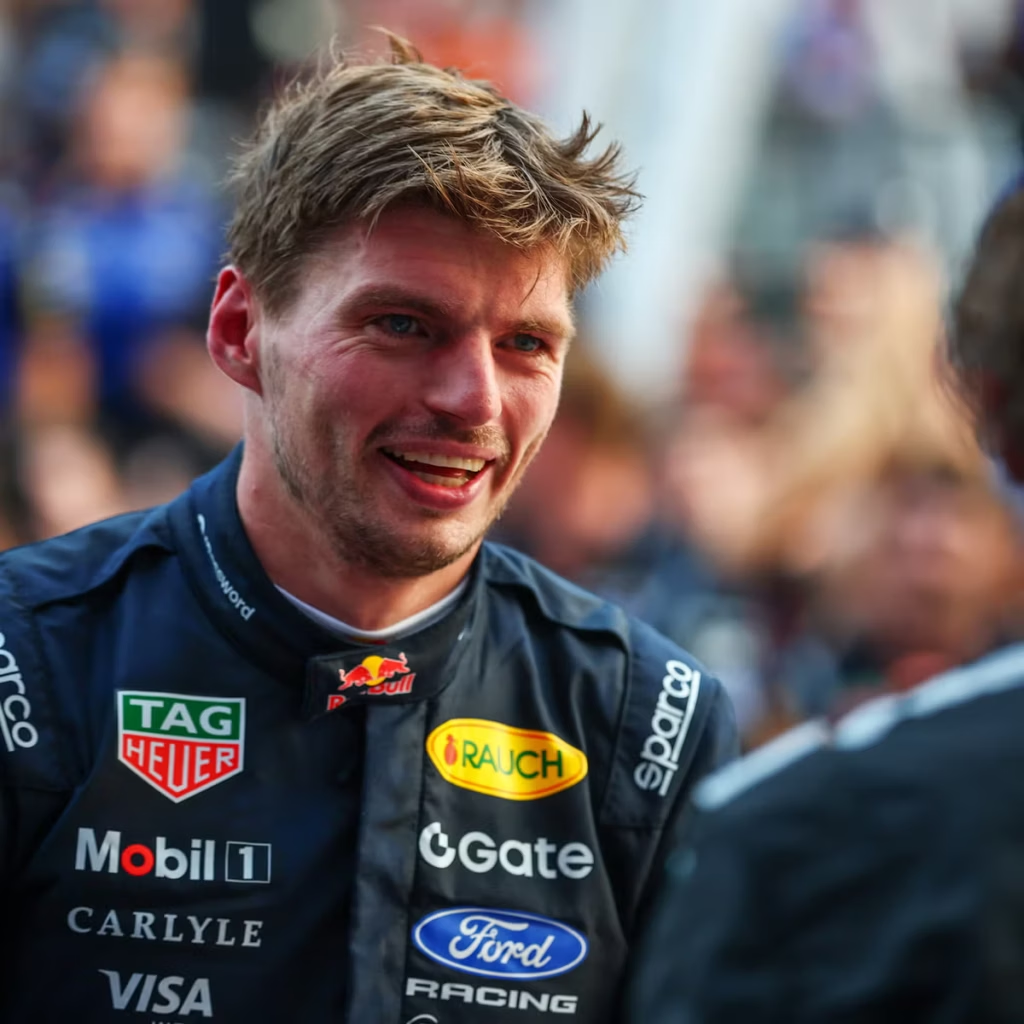
After a difficult and unpredictable start to the 2026 Formula 1 season, Max Verstappen is finally back on the top step of the podium.
The four-time Formula 1 world champion won the 2026 Bahrain Grand Prix in Malaysia on October 4, securing his first Grand Prix victory of the season and Red Bull Racing’s first win of the campaign. The victory came after a dramatic race affected by heavy rain, a delayed start, changing tyre conditions, Safety Car periods and intense battles throughout the field.
For Verstappen, the victory was particularly important because 2026 has been very different from the dominant seasons that fans have become accustomed to.
For much of the year, Verstappen has been fighting to keep up with the leading Mercedes and Ferrari drivers rather than controlling races from the front.
His first podium of the season came much earlier, at the Canadian Grand Prix, where he finished third behind Kimi Antonelli and Lewis Hamilton. That was his first top-three finish of 2026.
But a podium was not enough for the Dutchman.
He wanted a win.
And after months of waiting, he finally got one.
A Difficult Start to the 2026 Season
Max Verstappen entered the 2026 season as one of the biggest favourites for the championship.
After winning four consecutive world championships from 2021 to 2024, expectations around Verstappen and Red Bull were enormous.
However, the 2026 season introduced major technical changes to Formula 1, creating a new competitive landscape.
Red Bull also faced the enormous challenge of developing its own power unit through Red Bull Ford Powertrains.
The team had invested heavily in creating an engine programme from the ground up, making 2026 a major technological challenge for the organisation.
The results were not immediately perfect.
Reliability problems and performance limitations prevented Verstappen from dominating races in the way he had during previous championship campaigns.
The difference became particularly noticeable during the opening races.
While Mercedes emerged as a strong force, Verstappen was often forced to fight for podium positions rather than victories.
His First Podium Finally Came in Canada
Verstappen had to wait until the fifth round of the 2026 championship, the Canadian Grand Prix, to score his first podium.
He finished third in Montreal behind race winner Kimi Antonelli and second-placed Lewis Hamilton.
It was an unusual situation for a driver who had become so accustomed to standing on the top step of the podium.
After the race, Verstappen himself described the podium as positive progress for Red Bull.
The result showed that Red Bull was moving in the right direction.
But there was still a major difference between being competitive and actually winning.
Verstappen wanted to return to victory.
Why the First Win Took So Long
The delayed victory is significant because Verstappen has built a reputation for winning races consistently.
The 2026 regulations created a different competitive environment.
Mercedes became extremely competitive, with Kimi Antonelli and George Russell regularly fighting at the front.
Ferrari also remained a major threat, with Lewis Hamilton and Charles Leclerc capable of challenging for podiums.
Meanwhile, Red Bull had to understand an entirely new generation of regulations and power-unit technology.
That meant Verstappen could not simply rely on the same level of dominance he had enjoyed during Red Bull’s strongest years.
The team had to develop.
The car had to improve.
The power unit had to become more reliable.
And Verstappen had to wait for the right opportunity.
That opportunity finally arrived in Malaysia.
The Bahrain Grand Prix Turns Into a Thriller
The 2026 Bahrain Grand Prix was originally expected to be a major test of the drivers and teams.
Instead, the race became one of the most unpredictable events of the season.
Heavy rain affected the start of the Grand Prix.
The conditions became so difficult that the start procedure was suspended after several drivers struggled to maintain speed during the formation lap.
Eventually, the race began in mixed conditions.
Some drivers started on intermediate tyres while others were on slick compounds.
That immediately created opportunities and risks.
Verstappen started from pole position, giving Red Bull an important advantage. He had already demonstrated strong pace during qualifying, beating Lewis Hamilton by almost three-tenths of a second.
But starting first did not mean the race would be easy.
Verstappen Loses the Lead at the Start
When the race finally began, Verstappen was immediately challenged by the two Mercedes drivers.
Kimi Antonelli and George Russell managed to get ahead of the Red Bull at the opening stage.
For a moment, it looked as though Verstappen’s pole position advantage had disappeared.
But instead of panicking, Verstappen settled into the race.
The changing weather and tyre conditions created a complicated strategic battle.
As the track improved, teams had to decide when to move from intermediate tyres to slick tyres.
This was one of the most important moments of the race.
The teams that timed the transition correctly could gain enormous amounts of time.
Those who made the wrong decision could lose several positions.
Red Bull Makes the Right Decisions
The Safety Car provided an important opportunity.
Several drivers were able to change tyres during the Safety Car period, reducing the time lost in the pit lane.
Verstappen and Red Bull used the opportunity effectively.
Once the Dutchman returned to competitive pace, he began closing the gap to the Mercedes cars.
Eventually, Verstappen moved back into first position.
From that point forward, he began to control the race.
Despite the difficult conditions and changing strategies, the Red Bull remained fast and stable.
Verstappen gradually created a gap to his rivals.
Max Finally Gets His First Win
When the chequered flag finally fell, Verstappen had done it.
He crossed the finish line in first place, ahead of Kimi Antonelli and Lewis Hamilton.
The official finishing order was:
1. Max Verstappen — Red Bull
2. Kimi Antonelli — Mercedes
3. Lewis Hamilton — Ferrari
4. Charles Leclerc — Ferrari
5. Isack Hadjar — Red Bull
The victory gave Verstappen his first Grand Prix win of the 2026 season.
More importantly, it was also Red Bull’s first victory of the year.
For the team, this was a major breakthrough.
For Verstappen, it was a reminder that he and Red Bull were still capable of winning.
A Special Victory for Red Bull Ford Powertrains
The victory has an additional historical significance.
The 2026 season marks the beginning of a new era for Red Bull’s power-unit programme.
Red Bull has invested heavily in developing its own power unit through Red Bull Ford Powertrains.
Winning a Grand Prix with this new power-unit project makes the Bahrain victory particularly important for the team.
It demonstrates that Red Bull’s enormous investment in its engine programme can potentially produce championship-level performance.
For Verstappen, however, the biggest achievement was much simpler:
He finally won.
From First Podium to First Victory
There is an interesting story in Verstappen’s 2026 season.
His first podium came at the Canadian Grand Prix.
He finished third.
That result was considered a positive step because it showed that Red Bull was becoming competitive again.
But Verstappen did not stop there.
Over the following races, Red Bull continued improving.
The team learned more about its car.
The engineers developed updates.
Verstappen continued providing feedback.
Eventually, the pieces came together.
At the Azerbaijan Grand Prix, Verstappen came close to winning, finishing only around two-tenths away from victory according to Formula 1’s analysis.
Then came Malaysia.
This time, Verstappen completed the job.
Why This Victory Matters for Max
For a four-time world champion, winning one race might not normally appear extraordinary.
But context matters.
Verstappen entered 2026 after years of dominance.
He had become accustomed to fighting for championships and victories.
Suddenly, he found himself in a situation where the first win of the season was still missing deep into the campaign.
That creates psychological pressure.
Every race without a victory creates more questions.
Is the car competitive enough?
Can Red Bull challenge Mercedes?
Can Verstappen fight for another championship?
Has the competitive order changed permanently?
The Bahrain victory does not answer every question, but it sends a powerful message:
Max Verstappen and Red Bull are still dangerous.
The Importance of Pole Position
Another important factor was Verstappen’s qualifying performance.
He secured pole position before the race, demonstrating that Red Bull had found significant pace.
Starting first is particularly valuable in Formula 1 because track position can determine the entire strategy of a race.
However, Verstappen still had to convert pole into victory.
That was not easy.
He initially lost positions.
The weather was unpredictable.
The Mercedes cars were fast.
Tyre strategy was complicated.
And Safety Car periods could have changed everything.
Yet Verstappen remained calm.
That ability to stay focused when a race becomes chaotic is one of his greatest strengths.
Verstappen’s Mentality
One of the characteristics that has defined Verstappen’s career is his aggressive but controlled racing mentality.
He does not like losing.
His official Formula 1 profile even quotes him saying:
“I HATE LOSING!”
That mentality has been visible throughout his career.
During 2026, that mentality has been tested.
He has had to accept finishes that would have been disappointing by his previous standards.
But instead of giving up, he and Red Bull continued working.
The Bahrain victory is therefore not simply a result.
It is the outcome of a long process of adaptation.
What Does This Mean for the Championship?
The victory is important, but Verstappen still faces a major challenge in the 2026 championship.
According to Formula 1’s current driver statistics, Verstappen has 188 championship points, with 176 coming from Grand Prix races and another 12 from Sprint events. He is currently sixth in the championship standings.
That means winning one race does not immediately transform the championship situation.
The gap to the championship leaders remains significant.
However, the victory could change the momentum.
If Red Bull can continue developing the car and avoid reliability problems, Verstappen could potentially become a much bigger threat in the remaining races.
The championship may be difficult, but the season is not over.
A Warning to the Rivals
The biggest message from Bahrain may not be about the championship points.
It may be about the future.
Red Bull has now demonstrated that its 2026 car and power unit are capable of winning.
Mercedes and Ferrari cannot afford to assume that Red Bull will remain behind them.
Verstappen has already shown what happens when he gets a competitive car.
Give him the machinery, and he can turn opportunities into victories.
The Bahrain Grand Prix may therefore represent the beginning of a new phase of the 2026 season.
What Makes the Victory Special for F1 Fans?
Formula 1 is at its best when the competition is unpredictable.
During some of Red Bull’s most dominant years, fans already expected Verstappen to be fighting for victory almost every weekend.
The 2026 season has been different.
Mercedes has become stronger.
Ferrari remains competitive.
Young drivers such as Kimi Antonelli are fighting at the front.
And Red Bull has had to rebuild its competitive position.
That makes Verstappen’s victory more exciting.
It was not simply another win.
It was a comeback.
It showed that even when a champion struggles, he can return to the top.
Conclusion
Max Verstappen’s first Grand Prix victory of the 2026 Formula 1 season is much more than a statistic.
It represents months of hard work from Verstappen, Red Bull’s engineers and the entire Red Bull Ford Powertrains programme.
His first podium came at the Canadian Grand Prix, but the team wanted more. After several races of development and a near miss in Azerbaijan, Verstappen finally returned to the top step in Malaysia.
The Bahrain Grand Prix was chaotic.
Rain delayed the start.
Drivers struggled with changing conditions.
Mercedes initially took the advantage.
Tyre strategy became crucial.
Safety Cars changed the race.
But when it mattered most, Verstappen delivered.
He converted pole position into victory and gave Red Bull its first win of the 2026 season.
For a driver who has spent years at the very top of Formula 1, waiting so long for a first victory was unusual.
But perhaps that is exactly what makes this win so meaningful.
Max Verstappen is back on top—and if Red Bull continues improving, the rest of the F1 grid may have a serious problem.