Saudi Arabia is preparing a potential military offensive against Iran-backed Houthi forces in Yemen in an effort to regain control of territory around the Bab el-Mandeb strait, according to people familiar with the preparations. Any major escalation could have consequences well beyond Yemen because the waterway is a critical route for international shipping.
Saudi Arabia is preparing for a possible military operation against Houthi forces in Yemen as Riyadh seeks to reduce the threat to one of the world’s most important maritime routes.
According to Reuters, Saudi Arabia is considering options ranging from a targeted coastal offensive to a broader multi-front operation.
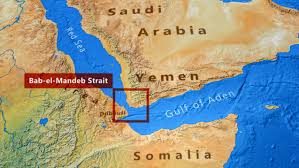
The objective would be to regain greater control over areas around the Bab el-Mandeb Strait, a strategically important passage connecting the Red Sea with the Gulf of Aden.
The operation would reportedly be led by Yemeni forces supported by Saudi air power, while the United States is providing intelligence assistance.
The development represents a significant escalation in the security situation around the Red Sea.
Why Bab el-Mandeb matters to the global economy
The Bab el-Mandeb is one of the world’s most strategically important maritime passages.
Ships traveling between the Indian Ocean and the Mediterranean can use the Red Sea and the Suez Canal as a major international trade route.
That makes the region particularly important for:
- Oil shipments
- Container shipping
- Consumer goods
- Industrial materials
- Food supplies
- Global supply chains
When shipping companies consider the route unsafe, they may choose to send vessels around the Cape of Good Hope instead.
That route is significantly longer.
A longer journey means:
More fuel.
More crew time.
Higher insurance costs.
Delayed deliveries.
Higher transportation costs.
Those additional expenses can eventually reach consumers.
Saudi Arabia is considering a large-scale operation
Reuters reported that Saudi officials are considering different military options.
One option would involve a coastal operation designed specifically to secure the maritime route.
Another possibility would be a broader offensive involving multiple fronts inside Yemen.
The exact scale has not been finalized.
According to people familiar with the planning, the operation could potentially involve more than 100,000 Yemeni troops, depending on the final strategy.
The large number illustrates the potential scale of the operation.
However, troop numbers discussed in planning do not necessarily mean that all personnel would participate directly in combat.
Saudi Arabia’s long history with the Yemen conflict
Saudi Arabia has been directly involved in Yemen’s civil war since 2015.
Riyadh entered the conflict at the head of a coalition supporting Yemen’s internationally recognized government after the Houthis seized control of the capital, Sanaa.
The conflict has since become one of the Middle East’s most complicated wars.
Multiple Yemeni factions operate in the country.
Regional powers have supported different groups.
The Houthis have received support from Iran.
Saudi Arabia has supported forces aligned with the internationally recognized government.
This fragmented political and military environment makes any large-scale operation extremely complicated.
Why Saudi Arabia wants control of the maritime route
The Bab el-Mandeb is not merely a Yemeni security issue.
It is a strategic economic corridor.
If Houthi forces can threaten shipping through the area, the consequences can extend far beyond Saudi Arabia.
International shipping companies may have to reroute vessels.
Insurance costs can rise.
Delivery times can increase.
Energy markets can become more volatile.
That makes maritime security a direct economic concern for Saudi Arabia and other regional countries.
The United States is providing intelligence support
According to Reuters, the United States is providing intelligence support to Saudi Arabia.
However, Washington is not expected to participate directly in the proposed combat operation.
President Donald Trump has reportedly resisted direct U.S. military involvement in another large-scale Yemen conflict.
This distinction is important.
Intelligence, surveillance and logistical assistance can significantly influence a military operation without U.S. forces directly entering combat.
It also allows Washington to support regional partners while attempting to avoid a deeper military commitment.
Other countries are becoming involved
The situation has attracted attention from several other countries.
Reuters reports that Pakistan and Turkey have provided military equipment, while Pakistan has deployed troops to defend Saudi territory.
France is expected to provide defensive assets.
These countries are not necessarily preparing to participate directly in offensive combat operations.
Instead, their involvement demonstrates how the conflict is increasingly connected to broader regional security arrangements.
Iran’s role is another major factor
The Houthis are supported by Iran, making the conflict part of the broader strategic competition between Iran and regional powers.
Any Saudi military offensive therefore carries the possibility of increasing tensions between Riyadh and Tehran.
That is one reason the situation is being watched closely beyond Yemen.
An escalation could potentially affect other areas of the Middle East.
It could also influence energy markets if investors begin pricing in a greater risk to regional oil infrastructure or shipping routes.
The operation carries significant risks
A military campaign against the Houthis would not be straightforward.
Yemen’s geography is difficult.
The country contains mountainous areas, desert regions and densely populated settlements.
The Houthis have extensive experience operating in the country’s terrain.
A large offensive could therefore face strong resistance.
There is also the possibility of civilian casualties and humanitarian consequences.
Yemen has already experienced years of conflict and humanitarian hardship.
Any new military escalation could worsen the situation for civilians.
Saudi Arabia does not want an endless war
The Saudi government has spent years attempting to reduce its direct involvement in Yemen.
That creates a strategic contradiction.
On one hand, Riyadh wants to reduce the Houthi threat to Saudi territory and maritime routes.
On the other, another major ground campaign could create the same kind of prolonged military commitment Saudi Arabia has previously tried to avoid.
The current planning therefore appears to be focused on achieving a specific strategic objective rather than simply expanding the conflict indefinitely.
According to Reuters, Saudi Arabia is unwilling to negotiate while the Houthis maintain control over the Bab el-Mandeb area.
Global shipping companies are watching closely
The commercial consequences could become significant if fighting intensifies around the Red Sea.
Shipping companies will assess:
- Missile threats
- Drone attacks
- Insurance premiums
- Port security
- Naval protection
- Fuel costs
- Transit times
Companies that determine the route is too risky may reroute vessels.
This can create a chain reaction.
A longer shipping route increases costs.
Higher costs can raise prices.
Longer delivery times can create supply shortages.
And higher energy consumption can add further pressure to transportation costs.
Oil markets could also react
The Middle East remains central to the global energy system.
Although the Bab el-Mandeb itself is primarily a shipping chokepoint rather than an oil field, disruption to regional shipping can influence market expectations.
Oil prices often react not only to actual supply disruptions but also to perceived future risks.
If investors believe that a conflict could spread toward major energy infrastructure, prices can move before physical supply is affected.
That is why the Saudi-Houthi situation could matter to economies far outside the Middle East.
India has a direct interest in Red Sea stability
India is particularly exposed to developments in the Red Sea because of its position as a major trading nation.
Indian exporters and importers use international shipping routes connecting Asia, Europe and the Middle East.
A major disruption could increase transportation costs and extend delivery times.
Indian oil markets could also be affected by changes in global energy prices.
This is particularly important because India’s government has already warned that geopolitical tensions and elevated crude oil prices could increase imported inflation.
The Red Sea situation therefore connects directly with India’s broader economic concerns.
The situation could become a wider regional crisis
The biggest concern is escalation.
The conflict currently involves several regional and international actors.
Saudi Arabia is preparing military options.
The Houthis remain armed and operational.
Iran provides support to the Houthis.
The United States is providing intelligence assistance.
Other countries are supplying defensive equipment.
A major military operation could therefore quickly become connected to the wider geopolitical competition across the Middle East.
That does not mean a broader war is inevitable.
But the number of actors involved makes the situation difficult to predict.
What happens next?
Saudi Arabia has not publicly announced the exact timing or final scale of the reported operation.
The planning remains subject to political and military decisions.
The immediate questions are therefore:
Will Saudi Arabia launch the operation?
How large will it be?
Will the Houthis respond by targeting Saudi infrastructure or international shipping?
Will the United States become more directly involved?
Can the Bab el-Mandeb be kept open for commercial shipping?
The answers could affect not only Yemen and Saudi Arabia but also global shipping, energy markets and inflation.
For now, the Red Sea remains another major pressure point in an already complicated global geopolitical environment.
The proposed Saudi offensive shows that control over maritime routes has become a central part of the regional security equation—and any major disruption around the Bab el-Mandeb could quickly become an international economic issue.