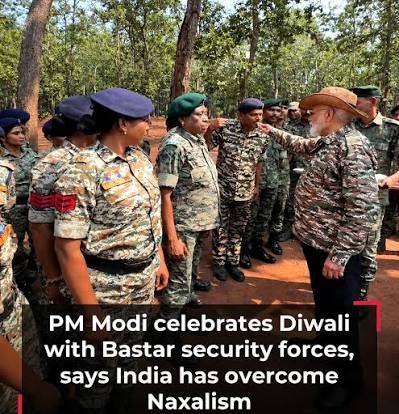
NEW DELHI, November 8, 2026: Prime Minister Narendra Modi celebrated Diwali with security personnel in Bastar, Chhattisgarh, on Sunday, highlighting the sacrifices of India’s armed and security forces and the transformation taking place in a region that was once among the country’s most affected areas by Naxalite violence.
The visit carries considerable national significance as the government continues to highlight its efforts to eliminate Left-Wing Extremism (LWE), commonly known as Naxalism. Addressing security personnel, the Prime Minister described the occasion as a historic moment for Bastar, which has experienced decades of violence, insecurity and development challenges.
During his interaction with the personnel, Modi praised their courage, dedication and contribution to restoring peace in the region. He also spoke about the importance of ensuring that the benefits of development reach communities that have historically remained isolated from mainstream economic and social opportunities.
Why Bastar Is Important in India’s Fight Against Naxalism
Bastar, located in southern Chhattisgarh, has long been considered one of the major centres of Maoist insurgency in India. Its dense forests, difficult geographical terrain and remote tribal settlements made the region particularly challenging for security operations and government administration.
For several decades, Naxalite groups operated across parts of Bastar and surrounding districts, creating serious security concerns. Armed attacks, encounters, extortion and threats to infrastructure projects affected the daily lives of residents.
The violence also created obstacles for schools, hospitals, roads, electricity networks and other essential public services. In many areas, government officials and development workers faced difficulties reaching remote communities.
Over the years, security operations, intelligence coordination and increased administrative presence have been central to efforts to reduce the influence of Maoist groups.
Government’s Strategy Against Left-Wing Extremism
India’s approach towards tackling Naxalism has involved a combination of security operations and development initiatives. Central forces and state police have worked together to conduct operations, establish security camps and improve surveillance in vulnerable areas.
The government has also focused on improving road connectivity, telecommunications, education, healthcare and employment opportunities in affected districts.
The objective is not simply to weaken armed groups but also to address the social and economic conditions that have contributed to the persistence of extremism.
Improved connectivity is particularly important because remote villages need reliable access to markets, hospitals, schools and government services. Better infrastructure can also help local businesses, farmers and small entrepreneurs participate in the wider economy.
The government has repeatedly emphasised that lasting peace requires both effective security arrangements and meaningful development.
Importance of Development for Tribal Communities
One of the most important aspects of the transformation of Bastar is its potential impact on local tribal communities.
The region is home to diverse indigenous communities with rich cultural traditions, languages, art forms and lifestyles. However, decades of instability have affected economic opportunities and access to essential services.
As security conditions improve, there is greater scope for developing tourism, agriculture, forest-based industries, education and local entrepreneurship.
Bastar is also known for its natural beauty, traditional handicrafts, tribal culture and unique festivals. With improved safety and infrastructure, these attractions could support tourism and create employment opportunities for local residents.
Ensuring that development reaches ordinary families will be essential to building long-term trust between communities and government institutions.
A Symbolic Message to India’s Security Forces
The Prime Minister’s decision to celebrate Diwali with security personnel carries a message beyond the festival itself. Security forces deployed in remote and sensitive areas frequently spend important occasions away from their families while performing their duties.
Diwali celebrations with personnel stationed in difficult regions recognise their contribution and highlight the importance of their service to national security.
The visit also draws attention to the sacrifices made by police personnel, paramilitary forces and other security agencies involved in counter-insurgency operations.
The Road Ahead
Although significant progress has been reported in India’s campaign against Left-Wing Extremism, maintaining peace in previously affected regions remains an important responsibility.
Security improvements must be supported by stronger institutions, better education, healthcare facilities, employment opportunities and protection of the rights of local communities.
The government will also need to ensure that young people in these areas have access to opportunities that allow them to build successful futures without being affected by violence or extremism.
Prime Minister Modi’s Diwali visit to Bastar represents an important symbolic moment in this broader national effort. It highlights the contribution of security personnel while drawing attention to the possibilities emerging from improved stability.
For Bastar, the real measure of success will be whether peace translates into better living conditions, economic opportunities and a brighter future for its people.
The region’s journey from prolonged conflict towards stability could become an important example of how security, infrastructure and inclusive development can work together to transform communities.