NVIDIA announces an immediate leadership change as controversy surrounding its founder raises questions about corporate governance, national security and the future of the artificial intelligence industry.
In a major development for the global technology industry, Jensen Huang has resigned as President and Chief Executive Officer of NVIDIA, bringing an end to his 33-year tenure at the company he co-founded in 1993. NVIDIA announced the decision on November 12, 2026, confirming that Huang’s resignation is effective immediately. The company has appointed its long-serving Chief Financial Officer, Colette Kress, as interim CEO while the board begins searching for a permanent replacement.
The announcement marks an extraordinary turning point for one of the world’s most influential technology companies. Huang has been the public face of NVIDIA’s transformation from a graphics processing unit (GPU) manufacturer into a central supplier of the hardware powering the artificial intelligence revolution. His departure comes amid growing controversy involving his personal conduct and national security concerns that prompted an independent investigation by the company’s board.
NVIDIA Officially Confirms Jensen Huang’s Resignation
In an official press release dated November 12, NVIDIA confirmed that Huang had stepped down from three positions: President, Chief Executive Officer and member of the company’s Board of Directors.
The resignation took effect immediately, rather than following a lengthy transition period. The company also announced that Colette Kress would assume the interim CEO position while retaining her existing responsibilities as Executive Vice President and Chief Financial Officer.
NVIDIA’s board has initiated a search for a permanent chief executive and confirmed that it will consider both internal and external candidates.
Another significant development is the appointment of Harvey C. Jones as NVIDIA’s first-ever Chairman of the Board. Jones is an experienced technology executive, entrepreneur and venture investor who has spent more than three decades in the technology industry. He previously served as CEO and Executive Chairman of Synopsys.
In its announcement, the board expressed confidence in Kress and the existing leadership team. It also indicated that NVIDIA’s business operations, customer commitments and product roadmap are expected to continue without interruption.
Importantly, NVIDIA’s official resignation announcement did not provide a detailed explanation for Huang’s departure.
Controversy Behind the Leadership Crisis
The resignation follows several days of intense scrutiny surrounding Huang’s personal relationships and their potential national security implications.
On November 8, NVIDIA published a message from Huang addressed to employees, in which he acknowledged being unfaithful to his wife and apologised to his family, colleagues, board members and shareholders. He accepted responsibility for his actions and acknowledged that he had fallen short of the standards expected of him as the company’s leader.
The controversy became more serious following media reports concerning Alice Huang, a former executive at Singapore-based technology company Megaspeed International. Reports alleged that she had connections to Chinese intelligence and that her relationship with Huang had attracted the attention of US intelligence officials.
The allegations raised questions about whether a senior executive leading one of America’s most strategically important technology companies could have been exposed to foreign intelligence operations.
However, it is important to distinguish allegations from established facts. The Associated Press reported that it could not independently confirm the reported affairs or the claims surrounding the alleged intelligence operation. China has also rejected accusations that it attempted to target Huang.
On November 8, NVIDIA’s board announced an independent investigation into reports that its founder and CEO had been targeted by a foreign intelligence effort. The investigation was to be supervised by independent directors with assistance from external legal counsel.
At that stage, the board stated that it had no reason to believe that NVIDIA’s confidential information or national security interests had been compromised. Huang publicly supported the investigation and committed to cooperating with it.
The board’s investigation and the growing controversy preceded the November 12 resignation announcement.
Who Is Colette Kress, NVIDIA’s New Interim CEO?
Colette Kress is now responsible for leading NVIDIA through one of the most important leadership transitions in its history.
She joined NVIDIA in September 2013 and has served as its Executive Vice President and Chief Financial Officer for more than a decade. During this period, she has overseen the company’s financial organisation through its transformation into a global leader in accelerated computing and artificial intelligence.
Before joining NVIDIA, Kress spent nearly 25 years working in financial leadership positions at major technology companies, including Cisco and Microsoft.
Her appointment is particularly significant because she already understands NVIDIA’s financial structure, major business operations, customers and long-term growth strategy.
According to Harvey C. Jones, Kress has played an important role in NVIDIA’s expansion and understands the company’s operational and financial position.
However, serving as interim CEO and becoming the company’s permanent chief executive are two different responsibilities. NVIDIA has not announced a permanent successor, and its board will evaluate potential candidates from inside and outside the organisation.
Kress will continue handling the CFO position while serving as interim CEO until a permanent appointment is made.
What Jensen Huang Built During His 33 Years at NVIDIA
Huang’s departure represents more than an ordinary corporate leadership change. He was one of the central figures behind NVIDIA’s development into a major force in modern computing.
Founded in 1993 by Jensen Huang, Chris Malachowsky and Curtis Priem, NVIDIA initially focused on graphics technology, particularly GPUs designed to improve computer graphics and gaming experiences.
Over the following decades, the company expanded beyond gaming graphics into professional visualisation, scientific computing, data centres and artificial intelligence.
One of NVIDIA’s most important technological developments was CUDA, its parallel computing platform introduced in 2006. CUDA allowed developers to use NVIDIA GPUs for general-purpose computing, opening opportunities beyond traditional graphics processing.
This became particularly important as researchers increasingly used GPUs to train and operate artificial intelligence models.
The rapid expansion of generative AI significantly increased demand for NVIDIA’s powerful processors. Its GPU platforms, networking technologies and software ecosystem became essential components of many large-scale AI data centres.
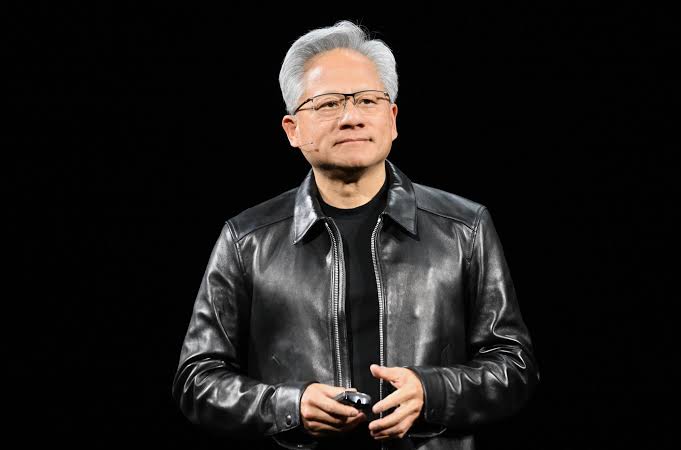
Huang also became internationally recognised for his distinctive black leather jacket, energetic product presentations and frequent appearances at major technology events.
His leadership helped turn NVIDIA into a company whose decisions could influence the wider semiconductor industry, global technology investment and the direction of artificial intelligence development.
Impact on NVIDIA, AI Companies and Global Markets
The resignation creates an important question for investors: can NVIDIA maintain its technological and commercial momentum without the founder who led it for more than three decades?
NVIDIA operates in a highly competitive industry involving major players such as AMD, Intel and several companies developing their own AI processors. Its competitive position depends not only on chip performance but also on software, networking, manufacturing partnerships and relationships with major cloud computing customers.
Huang’s departure could create uncertainty around long-term leadership and strategic decision-making.
According to the Associated Press, NVIDIA shares fell approximately 10% in premarket trading following the resignation announcement. Such a reaction reflects the importance investors attach to leadership stability at the company.
Nevertheless, a change in CEO does not automatically mean that NVIDIA’s technology development or business operations will stop. The company has an established executive team, engineering workforce, international customer base and long-term product development programmes.
The immediate challenge for the board will be reassuring investors, employees, developers and customers that NVIDIA’s strategic direction remains stable.