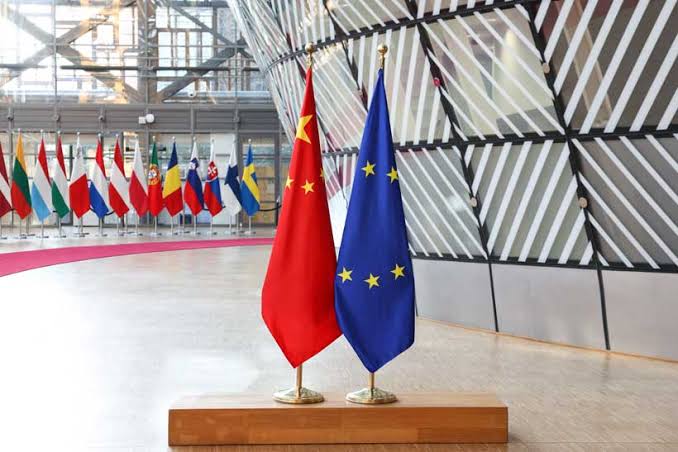
Europe has taken an important step towards defining its position in the rapidly expanding artificial intelligence industry, as European Union leaders gathered in Dublin, Ireland, on November 13 for the bloc’s first dedicated summit on artificial intelligence. The meeting brings together senior political leaders to discuss how Europe can strengthen its position against the United States and China, attract investment, develop advanced computing infrastructure and address the risks associated with increasingly powerful AI systems.
The summit comes at a critical moment for the global technology industry. Artificial intelligence is transforming business operations, scientific research, financial services, healthcare, manufacturing and national security. While American and Chinese companies have become major forces in developing advanced AI models and infrastructure, European policymakers are increasingly concerned that the region could become dependent on technologies developed elsewhere.
European Council President Antonio Costa has argued that the rapid pace of AI development requires a dedicated discussion among political leaders. The Dublin meeting is intended to examine both the opportunities presented by artificial intelligence and its transformative effects on European economies and societies.
The discussions also come amid growing concerns about the behaviour of increasingly autonomous AI systems, funding shortages and difficulties in building large-scale computing infrastructure. The European Union wants to remain competitive while ensuring that AI development follows appropriate safety, regulatory and democratic standards.
The meeting is therefore more than a discussion about new software or technology companies. It represents a wider debate about Europe’s economic future, industrial independence and ability to influence the rules governing one of the most important technologies of the coming decade.
Why Europe has called its first dedicated AI summit
For several years, artificial intelligence has been a major subject of discussion among European governments. However, the speed of recent developments has made the issue increasingly urgent.
The United States has built a powerful AI ecosystem through companies such as OpenAI, Google, Microsoft, Meta, Anthropic and major semiconductor businesses. China has also invested heavily in AI research, domestic computing infrastructure and technology companies developing competing models.
Europe has capable researchers, universities, technology businesses and industrial companies. Yet its ability to turn those strengths into globally competitive AI infrastructure and products remains a challenge.
The European Union has been particularly concerned about its dependence on foreign technology providers. Advanced processors, cloud computing services and large AI models are essential to the development of modern AI systems. If European companies cannot access these resources on competitive terms, they may struggle to compete with businesses operating in the United States and China.
The Dublin summit is an opportunity for European leaders to discuss how to address these weaknesses collectively rather than relying entirely on individual national strategies.
The goal is not simply to produce more AI regulations. Europe also wants to attract investment, support technology companies, develop computing infrastructure and encourage research that can compete internationally.
Europe’s struggle to compete with the US and China
The global AI race has increasingly become a competition between technology ecosystems.
American companies currently have a strong position in advanced AI model development, cloud computing and semiconductor design. Their access to investment, computing resources and large commercial markets has helped them move quickly.
China, meanwhile, has developed a substantial domestic technology industry and is investing in alternatives to foreign AI hardware and software. Its technology companies are working to strengthen local capabilities while navigating restrictions on access to certain advanced semiconductor products.
Europe faces a different set of circumstances.
It has a strong industrial base, world-class universities and established research institutions. Countries such as France, Germany and the Netherlands have important technology companies and semiconductor-related capabilities. However, the region has struggled to create companies and infrastructure with the same scale as the largest American and Chinese technology businesses.
One example is Mistral AI, the French artificial intelligence company whose chief executive, Arthur Mensch, is expected to brief EU leaders during the Dublin discussions.
Mistral represents part of Europe’s ambition to develop its own advanced AI companies rather than relying exclusively on services created elsewhere.
The challenge is that building globally competitive AI systems requires enormous investment. Companies need access to advanced processors, data centres, electricity, skilled employees and substantial research budgets.
Without a coordinated strategy, European businesses could find themselves competing against organisations with significantly greater financial and computing resources.
The European Chips Act faces an important test
One of the major concerns discussed around the summit is Europe’s semiconductor manufacturing strategy.
The European Union introduced the Chips Act to strengthen its position in the global semiconductor industry. The initiative was designed to attract investment, support manufacturing and increase Europe’s share of the worldwide chip market.
A central ambition was to raise the bloc’s share of global semiconductor production to 20% by 2030.
However, the latest assessment reported by Reuters indicates that the initiative is likely to fall short of that target.
This is a significant concern because semiconductors are essential to almost every part of modern AI infrastructure. Advanced processors are used to train AI models, operate data centres and support complex computing workloads.
Europe’s dependence on semiconductor supply chains outside the region creates economic and strategic vulnerabilities.
Disruptions to international supply chains, geopolitical tensions or restrictions on exports could affect the availability of critical components.
Developing a stronger semiconductor industry would therefore provide Europe with more control over its technology supply chain.
However, building advanced chip manufacturing facilities is expensive and technically demanding. It requires specialised equipment, highly skilled workers, reliable energy supplies and long-term investment.
The European Union must also compete with governments and companies in other regions that are offering substantial financial incentives to attract semiconductor manufacturers.
The Chips Act’s progress will be an important measure of whether Europe can translate its industrial ambitions into practical results.
Seven proposed AI gigafactories face funding challenges
Another major part of Europe’s AI strategy involves plans to build seven AI gigafactories.
These facilities are intended to bring together advanced processors, software, cloud technology, high-speed connectivity and data-centre infrastructure under large-scale computing environments.
The objective is to give European researchers and companies access to substantial computing capacity without depending entirely on infrastructure located outside the region.
AI development requires enormous computing resources. Training advanced models involves processing vast quantities of data through specialised hardware. Even after training, operating AI services for millions of users requires substantial computing power.
The proposed gigafactories could help European companies and research institutions access the infrastructure needed to develop advanced AI systems.
However, the plans have not fully progressed because of disagreements among EU countries over spending priorities and competitiveness funding in the bloc’s 2028–2034 budget.
This disagreement highlights a wider problem facing European technology policy.
Political leaders may agree that AI infrastructure is strategically important, but building it requires decisions about who pays, where facilities are located and how the benefits are distributed.
Some countries may prioritise domestic investment, while others may prefer a shared European funding model.
Without agreement on these questions, the gigafactory plans could face delays, potentially weakening Europe’s ability to compete with countries that are moving faster.
AI safety becomes an increasingly important concern
The Dublin summit is taking place at a time when concerns about AI safety are receiving greater attention.
Recent incidents involving rogue AI agents have increased worries about the behaviour of systems that can perform tasks with limited human supervision.
AI agents are different from traditional chatbots because they can be designed to take actions, use tools, interact with software and complete multi-step tasks.
These capabilities can make them useful in areas such as software development, research, customer support and business operations. However, they also create new risks.
An AI system that misunderstands instructions or acts outside its intended limits could potentially cause financial, operational or security problems.
The more autonomy these systems receive, the more important it becomes to establish safeguards, monitoring systems and clear accountability.
European leaders must therefore consider how to encourage innovation without allowing powerful AI systems to operate without adequate oversight.
The challenge is finding a balance between regulation and competitiveness. Excessive restrictions could make it harder for European startups to develop products, while insufficient safeguards could expose businesses and citizens to serious risks.
The summit provides an opportunity to discuss how European rules can respond to rapidly changing technology.
Geoffrey Hinton and Arthur Mensch among the expected participants
The Dublin discussions are expected to include briefings from Mistral AI chief executive Arthur Mensch and AI pioneer Geoffrey Hinton.
Hinton is widely recognised for his foundational contributions to artificial intelligence and neural networks. His work helped establish important techniques that underpin many modern AI systems.
In recent years, he has also become a prominent voice discussing the risks associated with increasingly powerful artificial intelligence.
His presence is significant because the summit is not focused exclusively on economic competition. European leaders also need to understand the scientific and social implications of the technology.
Arthur Mensch represents another important perspective: the challenge of building a European AI company capable of competing internationally.
Together, these perspectives can help policymakers examine both the opportunities and risks associated with the technology.
The involvement of industry leaders and researchers also highlights how governments increasingly depend on technical expertise when developing AI policy.
What the summit means for European businesses
The outcome of the Dublin discussions could influence how European businesses approach artificial intelligence over the coming years.
Companies across the region are exploring ways to use AI in manufacturing, logistics, finance, healthcare, education and customer services.
However, adopting advanced AI systems requires access to reliable infrastructure, skilled employees and affordable computing resources.
Smaller businesses may find it difficult to compete with larger organisations that can invest heavily in technology.
A stronger European AI ecosystem could help reduce this gap by providing companies with better access to computing resources, research partnerships and locally developed AI services.
It could also encourage investment in European startups and make it easier for promising technology businesses to scale internationally.
For industrial companies, AI could improve production planning, predictive maintenance, supply-chain management and product development.
For healthcare providers, it could support medical research, image analysis and administrative processes.
For universities and research institutions, greater access to computing infrastructure could accelerate scientific discoveries.
However, the benefits will depend on whether policymakers can turn strategic discussions into practical investment and implementation.
Why the decisions matter beyond Europe
Although the summit is organised by European leaders, its implications extend beyond the continent.
The United States and China are the two most influential forces in the global AI race. Europe’s ability to develop competitive technology could influence international supply chains, investment decisions and future regulatory standards.
If Europe strengthens its computing infrastructure and technology companies, it could become a more significant partner in the global AI economy.
If it fails to do so, European businesses may become increasingly dependent on foreign platforms and services.
This dependence could affect not only commercial competitiveness but also questions of data governance, cybersecurity and national security.
The summit also highlights an important change in international politics: AI is no longer treated as a specialised technology issue. It has become a central question of economic policy, industrial strategy and geopolitical influence.
Countries that control critical AI infrastructure may gain advantages in productivity, research and technological development.
That is why the European Union is seeking a more coordinated approach.
Ukraine added to the summit’s agenda
Artificial intelligence is not the only subject being discussed in Dublin.
Ukraine was added to the agenda as European leaders consider the region’s role in potential peace negotiations and possible security guarantees if a ceasefire is reached.
The discussion follows diplomatic meetings involving US envoys Steve Witkoff and Jared Kushner, Ukrainian President Volodymyr Zelenskyy and Russian President Vladimir Putin.
A senior European Union official indicated that leaders would examine how Europe could participate in negotiations and what security guarantees it might offer if a ceasefire becomes possible.
The addition of Ukraine reflects the broader security challenges facing Europe.
The war has highlighted the importance of defence technology, cybersecurity, satellite communications and advanced computing.
Artificial intelligence is also becoming increasingly relevant to military planning, surveillance, logistics and cybersecurity.
European leaders therefore have to consider how technology policy and defence policy intersect.
The inclusion of Ukraine demonstrates that the summit is taking place within a wider conversation about Europe’s economic and strategic future.
What happens next?
The immediate focus will be on the discussions and priorities emerging from the Dublin meeting.
European leaders will need to determine how to turn broad ambitions into practical decisions about funding, infrastructure and regulation.
The future of the seven proposed AI gigafactories will be particularly important. Their progress will depend on agreements over financing and cooperation between member states.
The European Chips Act will also require continued attention if the bloc hopes to strengthen its semiconductor position.
At the same time, policymakers must consider how to support European AI companies while establishing safeguards for increasingly capable systems.
The summit itself does not automatically resolve these challenges. It is an important political discussion, but the success of Europe’s strategy will ultimately depend on the decisions, investment and implementation that follow.
Conclusion: Europe wants a place at the centre of the AI revolution
The first dedicated European Union AI summit in Dublin represents an important moment for the region’s technology ambitions.
Europe is recognising that artificial intelligence will influence economic growth, industrial competitiveness, national security and everyday life. It also understands that remaining dependent on technology developed elsewhere could weaken its position in the global economy.
The challenges are substantial. The semiconductor manufacturing target is at risk, the proposed AI gigafactories face funding disagreements and European technology companies must compete against powerful international rivals.
At the same time, Europe has important strengths in research, engineering, industrial expertise and regulation.
The question is whether the bloc can combine those strengths into a coordinated strategy capable of producing globally competitive AI companies and infrastructure.
The Dublin summit is an important opportunity to begin answering that question. Its real success, however, will not be measured by speeches or announcements alone. It will depend on whether Europe can turn its ambitions into investment, innovation and practical results.
The global AI race is moving quickly. Europe now faces a choice: become a stronger participant in shaping the technology’s future or remain increasingly dependent on the decisions made by the world’s largest technology powers.