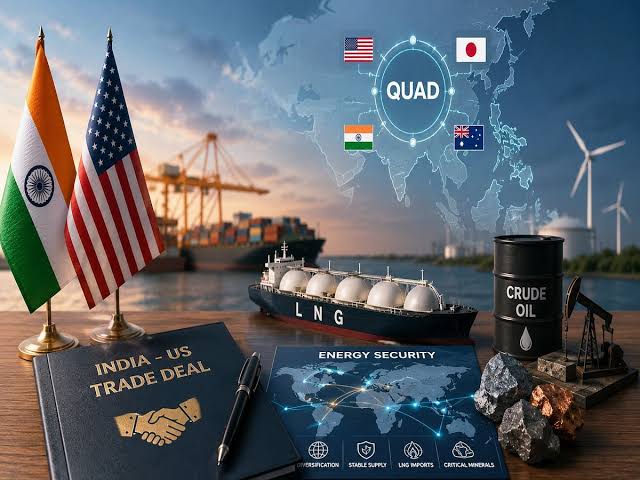
Negotiations gain momentum amid competing economic priorities
India and the United States are seeking to advance a bilateral trade agreement as both governments attempt to strengthen economic cooperation while managing disagreements over tariffs, energy purchases and market access. Recent discussions between officials have brought renewed attention to the possibility of a deal that could influence businesses and investment in both countries.
The negotiations are taking place against a complicated international backdrop. Governments are reassessing supply chains, energy security and trade relationships, while companies are trying to reduce uncertainty around import costs and access to major markets.
A trade agreement could establish clearer rules for selected goods and services, reduce certain barriers and create a more predictable environment for businesses. However, negotiations involving two large economies are rarely straightforward because changes that benefit one industry may create difficulties for another.
Energy security remains a central concern
India relies heavily on imported crude oil to meet its energy needs. Oil prices and supply arrangements affect transport, manufacturing, aviation, agriculture and the wider cost of living.
The United States has raised concerns about countries purchasing Russian energy, linking its wider policy towards Russia with economic and strategic considerations. India, meanwhile, has emphasised its need to secure reliable supplies at competitive prices.
Changing suppliers is not simply a matter of selecting another seller. Refineries are designed to process particular grades of crude, and different sources may require adjustments in purchasing, transport and operations. Sudden changes can increase costs or create logistical uncertainty.
The United States has also shown interest in expanding the role of alternative energy suppliers, including Venezuelan crude. Any shift in India’s purchasing patterns would depend on commercial terms, supply reliability, refinery requirements and the wider international environment.
For Indian policymakers, the challenge is to balance strategic relationships with the practical requirement of maintaining affordable energy supplies.
What a trade agreement could mean for businesses
Trade negotiations matter because tariffs and regulations influence the cost of selling goods across borders. A reduction in selected tariffs could help exporters compete more effectively, while clearer rules may encourage companies to invest in production facilities and distribution networks.
Indian industries that sell pharmaceuticals, textiles, engineering products, electronics and other manufactured goods could be affected by changes in market access. American companies seeking opportunities in India may also pay close attention to regulations, import duties and investment conditions.
However, the effects would differ by sector. Lower tariffs can benefit exporters and consumers, but domestic producers may face stronger competition from imported products. Governments therefore need to consider the interests of consumers, workers and businesses when negotiating changes.
Small companies can face particular challenges because they often have fewer resources to absorb sudden regulatory or cost changes. Clear implementation schedules and accessible information can help businesses prepare.
Technology and defence remain important areas of cooperation
The India–US relationship extends beyond trade in physical goods. Technology, defence cooperation, critical supply chains and regional security are also important parts of the relationship.
Both countries have an interest in developing resilient supply chains for advanced manufacturing and emerging technologies. Cooperation in these areas can involve investment, research, industrial partnerships and the movement of specialised components.
Defence cooperation also provides a framework for continued engagement, although trade negotiations and defence discussions have different requirements and should not be treated as a single agreement.
Progress in one area may help maintain dialogue when another issue becomes difficult, but it does not guarantee that every disagreement will be resolved.
What happens next?
The main question is whether both governments can convert ongoing discussions into a formal agreement with clearly defined obligations. Until the terms are officially confirmed, businesses should avoid assuming that proposed tariff changes or market-access arrangements have already taken effect.
The final outcome will depend on compromises over sensitive industries, energy policy and the broader economic relationship. Even after an agreement is announced, implementation rules and timelines will determine how quickly businesses experience any benefits.
For India, the priority is to protect economic interests while maintaining constructive relations with a major trading partner. For the United States, the challenge is to pursue its trade and strategic objectives while sustaining commercial ties with one of the world’s largest markets.
The negotiations could become an important development for bilateral commerce, but their real significance will be measured by the agreement’s details and its eventual effects on trade, investment and employment.