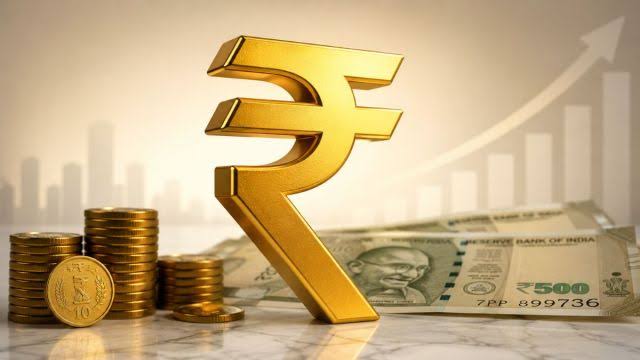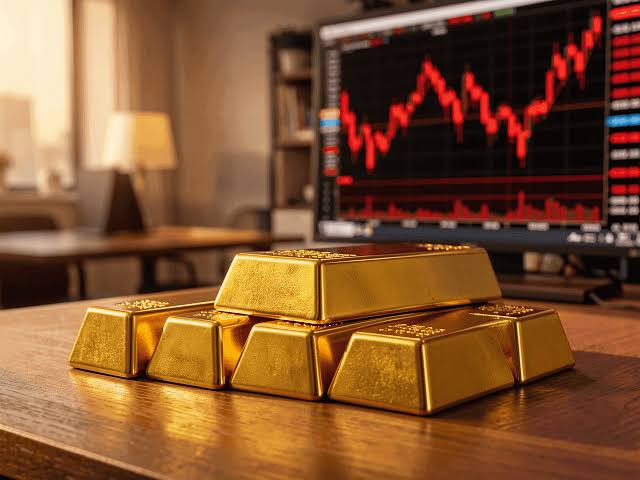
Gold has always been one of the most popular investment choices in India. Whether it is purchased for weddings, festivals, jewellery, or long-term savings, millions of Indian households consider gold an important part of their financial planning.
However, gold prices have experienced significant fluctuations, creating uncertainty among buyers and investors.
Now, a possible downside scenario highlighted by Bank of America has attracted attention in the gold market. The bank’s technical analysis has identified a potential price level of $3,250 per ounce, which could become relevant if the international gold market experiences further weakness.
If international gold prices fall to this level, Indian buyers could potentially benefit from lower domestic prices. Some estimates have suggested that 24K gold could approach ₹98,000 per 10 grams under certain currency and pricing assumptions.
But there is an important detail: $3,250 is not Bank of America’s main gold-price forecast. It is a lower technical support and potential buying zone in a bearish scenario.
So, could gold really become cheaper in India? Why is Bank of America highlighting lower price levels? And should buyers wait before purchasing gold?
Let’s understand the complete situation.
1. Why Are Gold Prices Facing Pressure?
Gold is traditionally considered a safe-haven investment. During economic uncertainty, geopolitical conflicts, and financial instability, investors often move towards gold to protect their wealth.
However, gold prices do not always increase during uncertain economic conditions.
Several factors can put pressure on gold prices.
Higher Interest Rates: When interest rates remain high, investors may prefer interest-bearing assets such as government bonds instead of gold. Since gold does not generate regular interest income, higher bond yields can make it less attractive.
Strong US Dollar: International gold prices are generally quoted in US dollars. When the dollar becomes stronger, gold can become more expensive for buyers using other currencies, potentially reducing demand.
Inflation Concerns: Rising energy prices and inflation can influence central bank decisions. If central banks maintain higher interest rates to control inflation, gold may face additional pressure.
Weak Physical Demand: Jewellery buyers and physical gold investors may reduce purchases when prices become extremely high. Lower physical demand can contribute to market weakness.
Bank of America has highlighted several of these factors in its recent analysis, including higher yields, inflation concerns, and weaker physical demand in important gold markets.
2. What Is Bank of America’s $3,250 Gold Price Level?
The $3,250-per-ounce level has attracted attention because it represents a possible lower price zone in Bank of America’s technical analysis.
In July 2026, Bank of America’s technical analyst Paul Ciana discussed the possibility of gold testing lower support levels during its market correction.
The analysis identified approximately $3,600 per ounce as a potential support area, with the $3,450–$3,250 range highlighted as a possible zone for accumulating gold if prices declined further.
This does not mean Bank of America expects gold to definitely fall to $3,250.
Instead, it represents a possible scenario that could develop if selling pressure continues.
It is also important to distinguish this technical outlook from the bank’s broader price forecast.
In October 2026, Bank of America maintained a cautious near-term outlook, expecting gold to average around $4,000 per ounce in the fourth quarter of 2026. It also projected an average price of approximately $4,813 per ounce for 2027.
This suggests that the bank sees potential short-term weakness while maintaining a higher longer-term outlook.
3. Could Gold Prices Fall to ₹98,000 in India?
One of the biggest questions for Indian buyers is whether a decline in international gold prices could bring domestic prices close to ₹98,000 per 10 grams.
The connection between international and Indian gold prices is important.
India imports a significant portion of the gold it consumes. Therefore, domestic gold prices are influenced by international bullion prices and the value of the Indian rupee against the US dollar.
If international gold prices decline, Indian gold prices may also fall.
However, the actual domestic price depends on several additional factors:
- International gold prices.
- US dollar to Indian rupee exchange rate.
- Import duties and other applicable taxes.
- GST.
- Local market premiums and jeweller charges.
For example, if international gold prices decline substantially but the Indian rupee weakens against the dollar, the reduction in domestic prices may be smaller than expected.
Similarly, import duties and GST increase the final cost of gold in India.
Therefore, the ₹98,000 figure should be treated as an illustrative possibility based on particular assumptions, not as a confirmed Bank of America prediction for Indian gold prices.
4. Why Is the US Dollar Important for Indian Gold Prices?
The US dollar plays a major role in determining gold prices in India.
International gold is generally traded in US dollars per troy ounce, while Indian buyers purchase gold in rupees per gram or per 10 grams.
This creates a direct relationship between currency exchange rates and domestic gold prices.
Let’s understand this with a simple example.
Suppose international gold prices decline by 10%.
At the same time, imagine that the Indian rupee becomes weaker against the US dollar.
The weaker rupee makes imported gold more expensive in India, reducing the benefit of the international price decline.
On the other hand, if international gold prices fall and the rupee remains stable or strengthens, Indian buyers could experience a larger reduction in prices.
This is why international gold forecasts cannot be directly converted into Indian retail prices without considering exchange rates, duties, taxes, and local market conditions.
5. What Could Happen If Gold Falls to $3,250?
If gold prices reach $3,250 per ounce, it could create different opportunities and challenges for market participants.
For Jewellery Buyers
Lower gold prices could provide relief to people planning weddings, festivals, and jewellery purchases.
Indian families often purchase gold jewellery for important occasions. A meaningful reduction in gold prices could make these purchases more affordable.
For Long-Term Investors
Investors who believe in gold’s long-term potential may consider a market correction an opportunity to accumulate gold gradually.
However, buying during a falling market also involves risk because prices could decline further.
For Short-Term Traders
A decline towards $3,250 could create opportunities for traders who closely monitor technical support levels.
However, short-term gold trading is risky because prices can change rapidly due to economic announcements, currency movements, and geopolitical developments.
For Existing Gold Holders
People who already own gold may see the market value of their holdings decline if international prices fall.
However, long-term investors should consider their financial goals rather than reacting to every short-term market movement.
6. What Factors Could Push Gold Prices Lower?
There are several developments that could increase selling pressure in the international gold market.
Stronger US Dollar
A stronger dollar can make gold less attractive to international buyers and put pressure on its price.
Higher Bond Yields
If government bond yields remain elevated, investors may move some of their money away from gold.
Reduced Central Bank Buying
Central banks have been important buyers of gold in recent years. A slowdown in their purchases could reduce one source of market support.
Lower Investment Demand
If investors withdraw money from gold-backed exchange-traded funds (ETFs), it could increase selling pressure.
Reduced Geopolitical Uncertainty
Gold often attracts investors during international conflicts and political uncertainty. If these risks decline, demand for safe-haven assets could weaken.
However, these factors do not guarantee a price decline. Unexpected economic developments or renewed geopolitical tensions could support gold prices again.
7. Could Gold Prices Rise Again Instead of Falling?
Yes. Despite the possibility of a correction, gold continues to have several long-term supporting factors.
One important factor is central bank demand.
Many central banks purchase gold to diversify their foreign exchange reserves and reduce dependence on other currencies.
Another factor is global economic uncertainty.
Concerns about government debt, inflation, currency stability, and geopolitical developments can increase interest in gold as a long-term store of value.
Bank of America’s October outlook also reflects this difference between short-term and long-term expectations.
While the bank expects gold to average approximately $4,000 per ounce in the fourth quarter of 2026, it sees a higher average of around $4,813 per ounce in 2027.
Therefore, investors should not assume that a possible decline towards $3,250 represents the beginning of a permanent downward trend.
8. Should You Buy Gold Now or Wait for Lower Prices?
This is probably the biggest question for people planning to purchase gold.
Should you buy gold at current market prices, or wait for a possible correction?
There is no single answer because the right decision depends on why you are purchasing gold.
If You Are Buying Jewellery
If you need jewellery for an upcoming wedding or family occasion, waiting indefinitely for lower prices may not be practical.
You can compare prices across different jewellers and monitor market movements before making your purchase.
Remember that making charges, wastage charges, and GST also affect the final jewellery bill.
If You Are Investing for the Long Term
Investors with a long-term investment horizon may consider buying gold in smaller portions instead of investing the entire amount at once.
This approach is sometimes called staggered buying.
It can reduce the risk of investing all your money at a single price, although it does not guarantee profits or protect against losses.
If You Are Waiting for ₹98,000 Gold
It is important not to make a buying decision based only on a possible price target.
The ₹98,000 estimate depends on multiple assumptions, and the actual Indian market price could be higher or lower.
A forecast is not a guarantee, and prices may move in either direction.
9. What Should Indian Gold Buyers Watch Next?
Before making a major gold purchase, buyers should monitor a few important indicators.
- International Gold Prices: Watch the movement of gold in the global market, especially around important support and resistance levels.
- US Dollar Movement: Changes in the dollar’s value can directly influence Indian gold prices.
- Federal Reserve Decisions: US interest rate announcements can affect investment demand for gold.
- Central Bank Purchases: Changes in central bank gold buying can influence long-term market sentiment.
- Indian Import Duties: Changes in customs duties can affect the final domestic price.
- Local Gold Rates: Compare the daily 22K and 24K prices in your city before purchasing.
Following these indicators can help buyers make more informed decisions instead of relying entirely on social media predictions.
Conclusion
The possibility of gold falling towards $3,250 per ounce has attracted attention among investors and jewellery buyers.
Bank of America’s technical analysis has highlighted this level as a potential lower buying zone in a bearish scenario. If such a decline happens, Indian buyers could benefit from lower gold prices.
However, the suggestion that 24K gold could reach ₹98,000 per 10 grams is an illustrative estimate rather than an official Bank of America forecast.
The bank’s broader outlook remains higher, with an average gold-price forecast of around $4,000 per ounce for the fourth quarter of 2026 and $4,813 for 2027.
For Indian buyers, the final price will depend on international gold rates, currency movements, import duties, taxes, and local market conditions.
So, should you buy gold now or wait for a possible correction?
The answer depends on your financial goals, purchasing needs, and risk tolerance. Rather than trying to predict the exact lowest price, it is important to make a decision based on reliable information and a sensible buying strategy.
Would you wait for gold to become cheaper before buying, or would you purchase it at current prices?
Frequently Asked Questions (FAQs)
1. Can gold prices fall to $3,250 per ounce?
Gold could potentially reach $3,250 per ounce in a bearish scenario identified in Bank of America’s technical analysis. However, this is not a confirmed price target or guaranteed outcome.
2. What is Bank of America’s gold forecast for 2026?
Bank of America’s October 2026 outlook indicated an average gold price of approximately $4,000 per ounce for the fourth quarter of 2026.
3. Can 24K gold fall to ₹98,000 per 10 grams in India?
It is a possible illustrative estimate under certain international price and currency assumptions, but it is not a confirmed domestic price forecast. Import duties, GST, exchange rates, and local premiums will affect the actual price.
4. Why do international gold prices affect India?
India imports much of its gold. Therefore, international gold prices and the rupee-dollar exchange rate play important roles in determining domestic gold rates.
5. Is this a good time to buy gold?
The decision depends on your financial goals and purchasing requirements. Buyers can consider gradual purchases rather than trying to predict the exact market bottom.
6. Why do gold prices increase during economic uncertainty?
Gold is considered a safe-haven asset. Investors may purchase it during periods of inflation concerns, geopolitical tensions, and financial instability.