India is approaching a historic milestone that could redefine its position in the world. As the country moves towards the centenary of its independence in 2047, the vision of transforming India into a developed nation has become a major national aspiration.
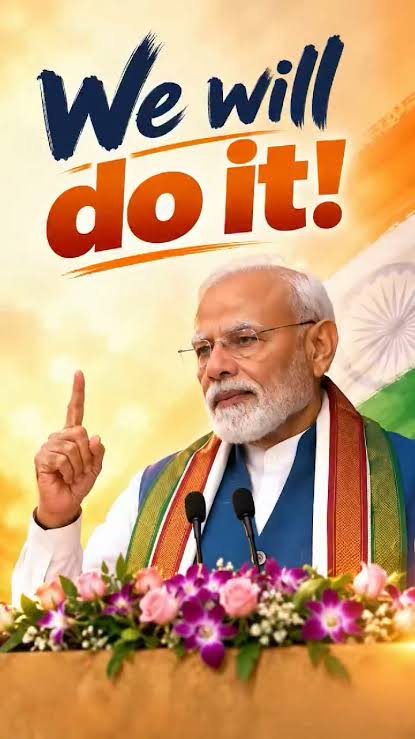
Prime Minister Narendra Modi has expressed an ambitious vision for India’s future, stating that by 2047, the country will be among the world’s top three economies, achieve greater self-reliance, emerge as a global manufacturing hub, host the Olympic Games, and send an Indian astronaut to the Moon.
The statement reflects a broader ambition to transform India’s economy, strengthen its technological capabilities, improve living standards, and expand its influence on the international stage.
The year 2047 represents more than a date on the calendar. It marks 100 years since India gained independence from British rule in 1947. For millions of Indians, it provides an opportunity to imagine what the country could achieve over the next two decades.
However, turning this vision into reality will require sustained economic growth, investment in education and infrastructure, scientific innovation, employment generation, and improvements in public services.
From advanced manufacturing and space exploration to global sporting events, India’s journey towards 2047 could shape the opportunities available to future generations.
What Is India’s Vision for 2047?
India’s 2047 vision is closely associated with the goal of Viksit Bharat, or Developed India.
The idea is to build a nation with a strong economy, modern infrastructure, advanced industries, technological leadership, and a high quality of life for its citizens.
The Prime Minister’s statement highlights five major ambitions:
- Becoming one of the world’s three largest economies.
- Building a more self-reliant economy.
- Establishing India as a global manufacturing hub.
- Hosting the Olympic Games.
- Sending an Indian astronaut to the Moon.
These goals cover different aspects of national development. Economic growth can create resources for public investment, manufacturing can generate jobs and strengthen exports, and scientific achievements can encourage innovation and inspire young people.
Hosting the Olympics would represent another kind of achievement, requiring extensive infrastructure, international coordination, and the development of India’s sporting ecosystem.
Together, these ambitions describe a future in which India seeks to become not only economically stronger but also more technologically advanced and internationally influential.
1. India Among the World’s Top Three Economies
One of the most significant ambitions in the 2047 vision is for India to become one of the world’s three largest economies.
India has already emerged as a major economic power, supported by a large domestic market, a young workforce, expanding digital services, entrepreneurship, and rising demand for goods and services.
The country’s technology sector, financial services, infrastructure development, and consumer industries have contributed to its economic transformation.
Achieving a place among the world’s top three economies would further strengthen India’s international position and could increase its influence in global trade, investment, and economic policy.
However, the size of an economy is only one measure of development. India’s progress will also depend on how economic growth translates into higher household incomes, better employment opportunities, improved healthcare, and quality education.
The country will need to raise productivity, attract investment, strengthen its industrial base, and create opportunities for businesses of different sizes.
Infrastructure projects, improved logistics, stable policies, and access to finance will be important in supporting this growth.
Equally important will be the distribution of economic opportunities. A developed nation must aim to ensure that prosperity reaches rural communities, smaller cities, and disadvantaged populations rather than being concentrated in a few regions.
If India can combine sustained growth with broader improvements in living standards, its ambition of becoming a leading global economy could contribute to a more comprehensive transformation by 2047.
2. Building a Self-Reliant India
Another important pillar of the vision is Atmanirbhar Bharat, or Self-Reliant India.
Self-reliance does not necessarily mean producing everything domestically or avoiding international trade. Instead, it involves developing the capabilities needed to manufacture essential goods, innovate independently, strengthen domestic businesses, and reduce excessive dependence on vulnerable international supply chains.
The COVID-19 pandemic demonstrated how disruptions in global supply chains can affect access to medicines, electronics, industrial components, and other essential products.
For India, strengthening domestic production can improve economic resilience while creating opportunities for entrepreneurs and workers.
Important sectors include:
- Electronics and semiconductor manufacturing.
- Defence equipment and aerospace.
- Pharmaceuticals and medical technology.
- Renewable energy and battery production.
- Agricultural processing and food technology.
- Advanced machinery and industrial components.
Developing these industries requires more than establishing factories. India will also need skilled workers, research facilities, reliable electricity, efficient transport, access to capital, and strong connections between universities and industry.
Small and medium-sized enterprises will have an important role to play because they supply components, provide services, and generate employment across the country.
At the same time, domestic manufacturers must remain competitive in quality, price, and innovation. International partnerships and access to global markets can support self-reliance rather than contradict it.
A stronger industrial ecosystem could help India move towards higher-value production and create more opportunities for its growing workforce.
3. Transforming India into a Global Manufacturing Hub
The ambition to make India a global manufacturing hub is closely connected to economic growth and self-reliance.
Manufacturing can generate large numbers of jobs, support exports, encourage technological development, and create demand for transportation, logistics, energy, and professional services.
India has several potential advantages, including its large workforce, growing consumer market, established pharmaceutical industry, expanding electronics sector, and improving infrastructure.
Government initiatives intended to support manufacturing and investment have also sought to encourage businesses to establish or expand production facilities in India.
Nevertheless, becoming a leading global manufacturing destination will require sustained improvements in several areas.
Infrastructure and Logistics
Factories depend on reliable electricity, efficient roads, ports, railways, warehouses, and digital infrastructure.
Reducing transport delays and logistics costs can make Indian products more competitive internationally.
Skilled Workforce
Modern manufacturing increasingly depends on automation, robotics, precision engineering, data analysis, and advanced production techniques.
Vocational education, technical training, and industry partnerships will be essential to prepare workers for these changes.
Research and Innovation
India will need to move beyond assembling products and increase its capacity to design technologies, develop intellectual property, and manufacture complex components.
Investment in research and development can help Indian companies compete in high-value industries.
Global Investment
International companies consider factors such as regulatory predictability, supplier networks, labour skills, and market access when deciding where to manufacture products.
Creating a supportive business environment can encourage investment while helping domestic companies grow.
If these conditions improve consistently, India could strengthen its position in global manufacturing and create opportunities for both established industries and emerging businesses.
4. India’s Ambition to Host the Olympic Games
Hosting the Olympic Games would be a major milestone in India’s sporting history.
The Olympics are among the world’s most prominent sporting events, bringing together athletes, spectators, broadcasters, sponsors, and visitors from across the globe.
For India, hosting the Games could increase international visibility, encourage investment in sports infrastructure, and inspire greater participation in athletics among young people.
It could also create opportunities in tourism, hospitality, transportation, construction, event management, and sports technology.
However, hosting an Olympics requires years of planning, substantial financial resources, extensive sporting facilities, reliable public transport, accommodation, security, and coordination among government agencies.
India would also need to demonstrate that its plans meet the requirements of the International Olympic Committee and the relevant international sports federations.
The potential benefits would depend on how effectively the infrastructure is planned and used after the event. Facilities designed for the Olympics should ideally support local communities and athletes for many years.
Equally important is the development of India’s sporting ecosystem. Better coaching, grassroots facilities, athlete welfare, nutrition, sports science, and transparent selection processes can help Indian athletes compete more effectively at the highest level.
Hosting the Olympics would therefore involve two connected ambitions: organising a successful international event and building a stronger sporting culture throughout the country.
The Prime Minister’s statement expresses this ambition, but a specific hosting year and the formal status of India’s bid should be confirmed through official announcements.
5. Sending an Indian to the Moon
Perhaps the most inspiring part of the 2047 vision is the ambition to see an Indian reach the Moon.
India has made considerable progress in space exploration through the Indian Space Research Organisation (ISRO). The Chandrayaan missions have strengthened the country’s scientific reputation and demonstrated its ability to conduct complex space missions.
Chandrayaan-3 achieved a successful landing near the Moon’s south polar region in August 2023, marking a historic milestone for India’s space programme.
The country has also been developing human spaceflight capabilities through the Gaganyaan programme, which aims to demonstrate India’s ability to send astronauts into space and return them safely.
Sending an Indian astronaut to the Moon, however, would represent a much more complex undertaking than launching an astronaut into low Earth orbit.
A crewed lunar mission would require advanced launch systems, spacecraft capable of travelling to the Moon, life-support technologies, astronaut training, reliable communications, and extensive safety testing.
Depending on the mission architecture, international cooperation could also play an important role.
A successful lunar mission would demonstrate scientific and engineering capabilities while potentially encouraging investment in robotics, materials science, artificial intelligence, communications, and advanced manufacturing.
Space exploration can also create practical benefits on Earth through technologies developed for navigation, weather forecasting, telecommunications, disaster management, and remote sensing.
For young Indians interested in science and engineering, the prospect of an Indian walking on the Moon could become a powerful source of inspiration.
The goal is ambitious, and its feasibility will depend on future programme decisions, technical progress, funding, and mission timelines.
6. The Role of India’s Youth in Achieving the 2047 Vision
India’s young population will be central to the country’s development over the coming decades.
Students and young professionals entering the workforce today will play important roles in technology, healthcare, manufacturing, scientific research, entrepreneurship, and public administration by 2047.
Their ability to contribute will depend on access to quality education, practical training, employment opportunities, and the freedom to develop new ideas.
Digital technologies and artificial intelligence are already changing how companies operate. Future workers will increasingly need a combination of technical expertise, communication skills, problem-solving ability, and adaptability.
Universities and training institutions can help by connecting education with industry requirements and encouraging research, innovation, and entrepreneurship.
Young people can also contribute by building businesses, developing locally relevant technologies, participating in scientific research, and finding solutions to problems in agriculture, healthcare, transportation, and environmental sustainability.
However, demographic advantages are not automatic. They depend on whether enough productive jobs are created and whether young people have the skills and opportunities needed to access them.
A developed India will require not only economic growth but also a workforce that can participate in and benefit from that growth.
7. Challenges India Must Overcome Before 2047
While the vision is ambitious, reaching it will require addressing several long-term challenges.
Employment generation: India must create sufficient productive jobs for its growing workforce, including opportunities in manufacturing and other labour-intensive industries.
Education and healthcare: Better learning outcomes, affordable healthcare, nutrition, and access to essential services are important foundations of human development.
Income inequality: Economic progress must create opportunities across regions and communities, including rural areas and smaller cities.
Environmental sustainability: Rapid development must be balanced with cleaner energy, water conservation, pollution control, and climate resilience.
Research and development: Greater investment in scientific research and advanced technologies will help Indian businesses compete globally.
Governance and implementation: Policies must be implemented effectively, with transparent institutions, reliable public services, and accountability for results.
These challenges are interconnected. For example, improved education can strengthen productivity, while better infrastructure can encourage investment and employment.
The success of the 2047 vision will depend on consistent progress across these areas rather than achievements in only a few high-profile sectors.
Conclusion
Prime Minister Narendra Modi’s vision for India in 2047 presents an ambitious picture of a country seeking to strengthen its economy, become more self-reliant, emerge as a global manufacturing centre, host the Olympic Games, and send an Indian astronaut to the Moon.
These ambitions reflect the many dimensions of national development, from industrial competitiveness and employment to scientific discovery and international sporting recognition.
Achieving them will require sustained investment, technological innovation, skilled workers, effective institutions, and opportunities that reach people across the country.
The journey towards a developed India will not be measured only by the size of its economy or the success of major space missions. It will also be measured by the quality of life enjoyed by ordinary citizens, the availability of good jobs, the strength of public services, and the ability of future generations to pursue their ambitions.
As India approaches 2047, the challenge is to turn a national vision into measurable progress.
A developed India will ultimately be built through the combined efforts of its citizens, scientists, entrepreneurs, workers, educators, institutions, and leaders. The ambition is bold; achieving it will depend on the decisions and actions taken every year between now and the centenary of independence.