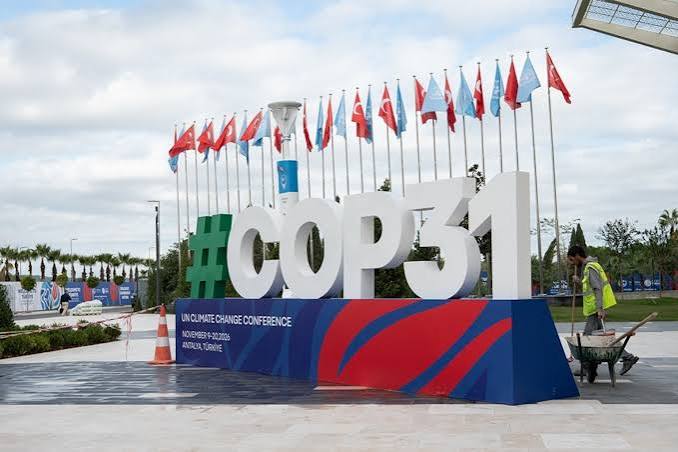
ANTALYA, TURKEY, November 8, 2026: World leaders, climate scientists, environmental organisations and government representatives are gathering in Antalya, Turkey, for the 31st United Nations Climate Change Conference, widely known as COP31. The international summit comes at a critical moment as rising global temperatures, extreme weather events, melting glaciers and increasing environmental damage continue to threaten communities and economies worldwide.
United Nations Secretary-General António Guterres has urged governments to take immediate and meaningful action, describing the climate negotiations as a defining moment for the international community. His warning reflects growing concerns that existing climate commitments are not sufficient to address the scale and speed of global warming.
The summit is taking place against a complicated international backdrop, with geopolitical tensions, economic uncertainty, energy security concerns and ongoing conflicts competing for governments’ attention.
What Is COP31 and Why Is It Important?
COP stands for Conference of the Parties, an annual international climate conference organised under the United Nations Framework Convention on Climate Change (UNFCCC).
The conference brings together countries that have agreed to cooperate on addressing climate change. Governments use the platform to negotiate emissions reduction targets, discuss financial assistance for developing nations, share technological solutions and review progress under international climate agreements.
The first COP conference was held in Berlin in 1995. Since then, these meetings have become among the most important international platforms for environmental diplomacy.
The Paris Agreement, adopted at COP21 in 2015, remains one of the most significant outcomes of these negotiations. Under the agreement, countries committed to limiting global warming to well below 2°C above pre-industrial levels while pursuing efforts to restrict the increase to 1.5°C.
However, scientists have repeatedly warned that achieving these objectives requires much faster reductions in greenhouse gas emissions.
Why Is the World Facing a Climate Emergency?
Climate change is primarily driven by the increasing concentration of greenhouse gases, including carbon dioxide and methane, in the atmosphere.
These gases trap heat and contribute to rising global temperatures. Human activities such as burning coal, oil and natural gas, industrial production, deforestation and certain agricultural practices are major sources of emissions.
The consequences are becoming increasingly visible across different parts of the world.
Several countries have experienced devastating floods, prolonged droughts, intense heatwaves, destructive wildfires and powerful storms. Rising sea levels are threatening coastal settlements, while changing rainfall patterns are creating challenges for agriculture and freshwater availability.
Extreme temperatures also affect human health, labour productivity, electricity consumption and food production.
Developing countries are particularly vulnerable because many have limited financial resources and infrastructure to respond to large-scale climate disasters.
The 1.5°C Target Under Growing Pressure
One of the central issues at COP31 is the international commitment to limit global warming to 1.5°C.
This target became a major focus of the Paris Agreement because even relatively small increases in global temperatures can significantly intensify climate-related risks.
Scientists have warned that the world is approaching a dangerous threshold, with current emissions trajectories making the 1.5°C objective increasingly difficult to achieve.
Crossing this threshold does not mean that every environmental consequence will occur immediately. However, the likelihood and intensity of several dangerous climate impacts increase as temperatures rise.
The international community therefore faces an urgent challenge: reducing emissions while maintaining economic development, energy access and industrial growth.
Climate Finance: A Major Challenge for Developing Nations
One of the most difficult subjects in international climate negotiations is climate finance.
Developing countries argue that wealthy industrialised nations should provide greater financial assistance because they have historically contributed a larger share of accumulated greenhouse gas emissions.
Many vulnerable countries need substantial investments to strengthen flood protection systems, improve agricultural resilience, develop renewable energy infrastructure and prepare for extreme weather events.
Climate finance is also essential for countries that suffer irreversible losses because of climate-related disasters.
Although international commitments have increased over the years, developing nations continue to raise concerns about the gap between promised funding and the financial support actually reaching vulnerable communities.
At COP31, representatives are under pressure to establish more effective financing arrangements and ensure that climate assistance reaches the countries that need it most.
Renewable Energy and the Future of Global Electricity
The transition towards cleaner energy is another major issue at the summit.
Solar power, wind energy, hydropower and other low-carbon technologies are increasingly important alternatives to fossil fuels.
Many governments are investing in renewable energy projects to reduce dependence on coal, oil and natural gas. Advances in battery storage, electric vehicles and smart electricity grids are also changing the global energy landscape.
However, the transition is not straightforward. Several countries still depend heavily on fossil fuels for electricity generation, transportation and industrial production.
Energy security, affordability and employment are major considerations, particularly for developing economies.
COP31 discussions are expected to place considerable emphasis on accelerating clean-energy deployment while ensuring that the transition remains economically practical and socially inclusive.
What Does COP31 Mean for India?
Climate negotiations have particular importance for India, one of the world’s largest developing economies.
India faces several climate-related challenges, including extreme summer temperatures, irregular monsoon rainfall, urban flooding, water shortages and pressure on agricultural production.
At the same time, the country has substantial energy requirements because of its growing population, expanding industries and rapid urbanisation.
India has been expanding its renewable energy capacity, particularly solar and wind power. It has also promoted electric mobility, energy efficiency and international cooperation through initiatives such as the International Solar Alliance.
However, balancing economic growth with environmental protection remains a major challenge.
India’s position in global climate negotiations generally emphasises climate justice, affordable access to energy, technology transfer and adequate financial support for developing countries.
The outcome of COP31 could influence future international climate financing arrangements and the pace of renewable energy investment.
What Happens Next?
The success of COP31 will depend on whether participating countries can translate their climate commitments into measurable action.
Announcements and diplomatic agreements are important, but their effectiveness ultimately depends on implementation.
Governments must strengthen national climate policies, reduce dependence on high-emission energy sources, protect vulnerable communities and invest in technologies that support sustainable development.
Businesses, financial institutions and ordinary citizens also have an important role in reducing environmental damage through responsible consumption, energy efficiency and sustainable practices.
COP31 represents another opportunity for the international community to demonstrate that climate change can be addressed through cooperation rather than isolated national efforts.
The decisions made in Antalya could influence environmental policy, international investment and energy development for years to come.
The message from the United Nations is increasingly clear: the world cannot afford to delay meaningful climate action. The challenge is no longer simply recognising the climate crisis, but ensuring that governments act quickly enough to protect future generations.