The Union Public Service Commission (UPSC) Civil Services Examination is widely regarded as one of the toughest and most prestigious competitive exams in India. Every year, lakhs of aspirants dedicate years of disciplined hard work to secure a position in the civil services. However, controversy sparked following the UPSC Prelims 2026 examination when social media filled with allegations regarding a potential paper leak.
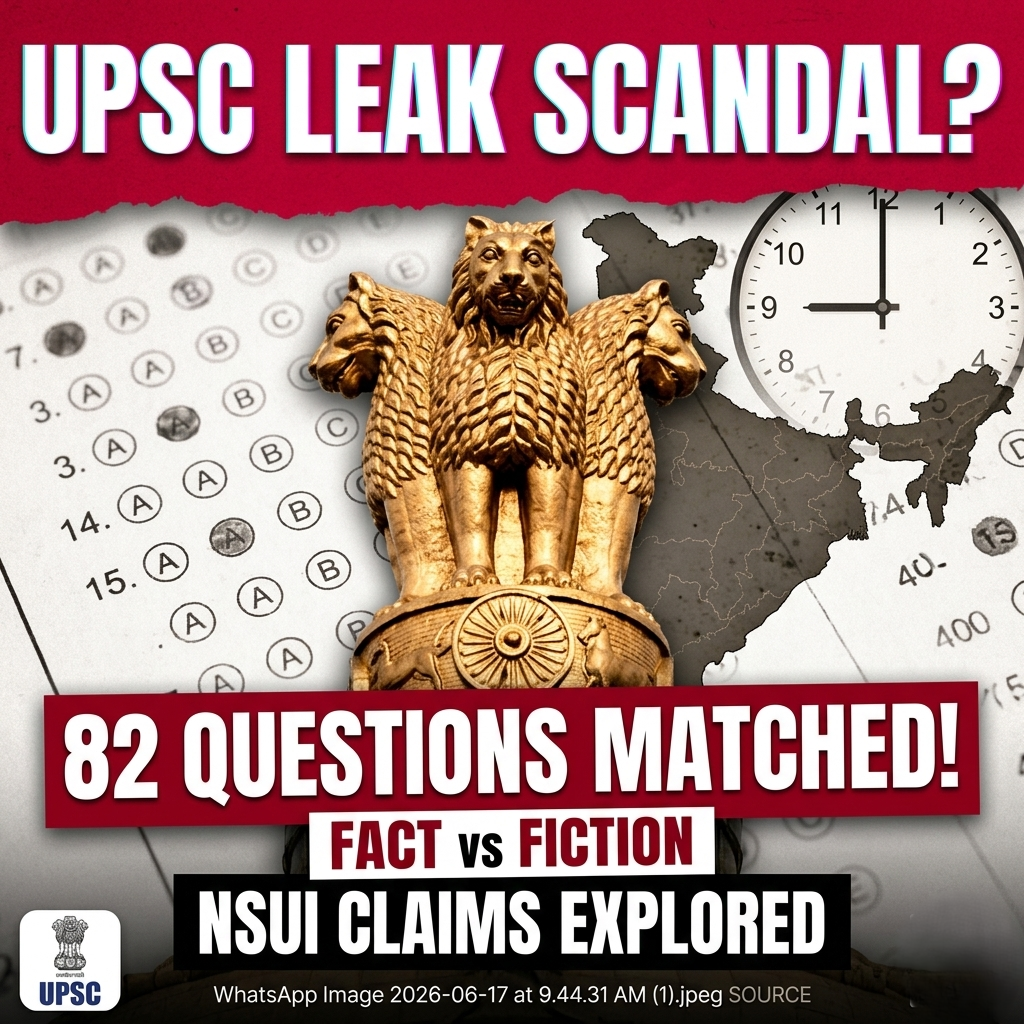
The spark was ignited by an Instagram post from media portals like thetatvaindia—as captured in WhatsApp Image 2026-06-17 at 9.44.31 AM (1).jpeg—highlighting claims made by the National Students’ Union of India (NSUI). The headline boldly stated: “UPSC prelims paper was leaked as 82 questions exactly matched coaching centre’s notes: NSUI.”
As an aspirant or an observer, it is crucial to separate sensational headlines from reality. Let us unpack what exactly happened, what the allegations were, and how the Central Government and the accused coaching institute responded.
The Core Allegations: What Did the NSUI Claim?
The controversy surfaced right after the completion of the UPSC Civil Services Preliminary Examination 2026. The NSUI, the student wing of the Indian National Congress, formally raised serious concerns over the integrity of General Studies Paper-I.
- The 82/100 Question Match: NSUI National President Vinod Jakhar alleged that 82 out of 100 questions asked in the examination closely mirrored the study material provided by a Delhi-based coaching institute named Anantam IAS.
- Similarities in Phrasing: The student body claimed that the questions did not merely touch upon the same topics but heavily resembled the specific wording, presentation, and structural pattern found in the institute’s notes.
- Suspected Backdating & Collusion: The NSUI further alleged that timestamps and publish dates on the coaching institute’s website indicated the material was available before the exam concluded, implying internal collusion or a massive leak.
The student group demanded an immediate, impartial, and transparent probe by the UPSC to protect the future of lakhs of dedicated students.
Fact Check: Government Response Debunks the “Leak”
As panic began to spread among the student community, the Central Government quickly intervened to clear the air.
The Press Information Bureau (PIB) Fact Check unit officially evaluated the claims circulating across various social media platforms. Following a thorough assessment, the PIB officially declared the news regarding the UPSC Prelims 2026 paper leak as completely fake.
Key Points from the Government’s Clarification:
- Meticulous Standard Procedures: The PIB restated that UPSC question papers are meticulously developed by highly qualified, independent subject-matter experts selected confidentially from across India.
- Zero Evidence of Compromise: No structural vulnerabilities or leaks were detected in the distribution or execution of the May 24 examination.
- Advisory Against Rumors: Authorities urged students and the general public to refrain from sharing unverified and misleading social media claims, advising them to rely exclusively on official announcements from the official UPSC portal.
The Coaching Institute’s Explanation: Why the Timestamps Matched
The center of the storm, Anantam IAS, also issued a comprehensive public clarification to address the allegations head-on. They explained that the entire controversy stemmed from a routine technical practice in digital content management.
Official Clarification from Anantam IAS:
“Once the paper was in the public domain, our faculty did what we do every year: solved General Studies Paper-I, prepared a detailed answer key, and wrote a set of in-depth articles explaining each answer… Publishing dozens of detailed explanations at once… would have fired off a flood of push notifications and newsletter emails to our subscribers in a single burst… So we did something routine for a big content series: we backdated the publish dates of some of those articles so the explanations sat in a logical sequence.”
Essentially, the website’s articles appeared to pre-date the exam because they were deliberately organized into a clean, backward-flowing chronological feed. This chronological sequencing was intended to keep the user experience tidy for students looking up solutions post-exam rather than indicating a pre-exam leak.
The Impact of Examination Rumors on Aspirants
The Civil Services Examination demands immense psychological resilience. In an environment already filled with high stress, unverified rumors about structural leaks can be incredibly damaging to student morale.
While the student bodies argue that pointing out discrepancies keeps testing agencies accountable, spreading unverified claims before factual verification risks causing widespread panic. Fortunately, the rapid response from the PIB Fact Check unit and the clear technical explanation provided by the institute helped settle fears within 48 hours of the post going viral.
Final Thoughts: Look to Official Sources
The case highlighted by the image WhatsApp Image 2026-06-17 at 9.44.31 AM (1).jpeg serves as an important reminder of the digital age: correlation does not equal causation. A coaching center accurately matching topics or modifying website timestamps for editorial convenience is not proof of an examination compromise.
As the UPSC Prelims 2026 results transition into preparation for the Mains stage, aspirants should shift their focus back to their studies and ignore the social media noise. Always cross-verify sensational headlines with the official UPSC or PIB notifications before reacting.