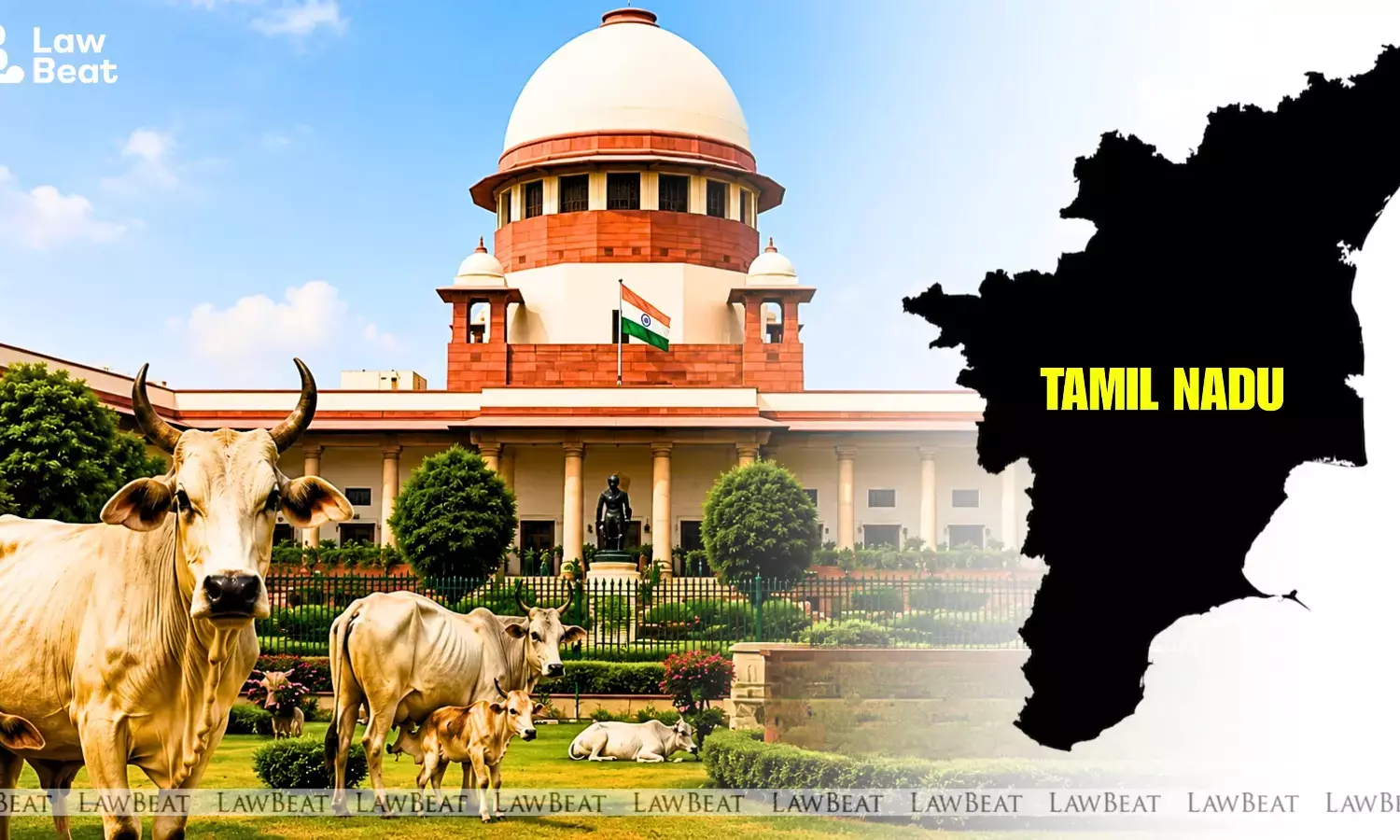
The legal battle surrounding cattle slaughter laws in Tamil Nadu has entered a new phase after the Tamil Nadu government approached the Supreme Court, challenging a recent order of the Madras High Court that reportedly imposed a complete ban on cow slaughter. The state government argues that the High Court’s ruling exceeds the powers granted under existing laws and could have far-reaching consequences for governance, livestock management, and livelihoods.
The development has sparked nationwide discussions involving constitutional law, animal welfare, farmers’ rights, religious sentiments, and state legislative powers. While emotions surrounding the issue remain strong, the case is now set to be examined by the country’s highest judicial authority, which will determine whether the High Court’s interpretation aligns with constitutional and statutory provisions.
What Is the Case About?
According to reports, the Madras High Court issued an order that effectively resulted in a complete prohibition on cow slaughter in Tamil Nadu. The state government has challenged this decision before the Supreme Court, contending that the High Court exceeded its judicial authority by imposing restrictions beyond what the existing legislation permits.
The Tamil Nadu government maintains that policy decisions relating to cattle slaughter are governed by state laws enacted through the legislative process. It argues that judicial orders should remain within the framework established by those laws rather than introducing broader restrictions.
The Supreme Court will now examine whether the High Court’s order was legally justified or whether it interfered with the powers of the legislature and executive.
Why Has the Tamil Nadu Government Approached the Supreme Court?
The state’s primary argument is based on the principle of judicial restraint.
According to the government, courts are responsible for interpreting laws, but creating or expanding public policy falls within the jurisdiction of elected legislatures and governments.
Officials reportedly believe that the High Court’s order effectively introduced a blanket restriction that goes beyond the scope of the applicable law governing cattle slaughter in Tamil Nadu.
By approaching the Supreme Court, the government seeks legal clarity regarding:
- The limits of judicial intervention.
- Interpretation of existing cattle preservation laws.
- Powers of state governments in regulating livestock.
- Constitutional balance between the judiciary and legislature.
The Existing Legal Framework
India does not have a single nationwide law governing cow slaughter. Instead, each state has enacted its own legislation based on local agricultural practices, cultural considerations, and policy priorities.
As a result:
- Some states enforce complete bans on cow slaughter.
- Others permit slaughter under specific conditions, such as age, health, or certification by competent authorities.
- Regulations differ significantly across the country.
Tamil Nadu has historically followed its own legal framework, balancing livestock preservation with agricultural and economic considerations.
The present dispute is therefore not only about cattle slaughter but also about whether judicial orders can alter the implementation of existing state legislation.
Constitutional Questions Raised
This case raises several important constitutional issues.
Separation of Powers
One of the core principles of India’s Constitution is the separation of powers between the legislature, executive, and judiciary.
While courts have the authority to review laws and government actions, legislatures are generally responsible for making laws and public policy.
The Supreme Court may examine whether the High Court remained within its constitutional role while issuing the disputed order.
Federal Structure
Since livestock and agriculture largely fall within the jurisdiction of state governments, the case may also involve questions regarding federalism and the extent of a state’s legislative authority.
Economic Impact
Beyond constitutional questions, the case has practical implications for several sectors.
Farmers
Many farmers depend on livestock throughout its productive life. Policies governing aging or unproductive cattle directly influence farming costs, land use, and animal management.
Dairy Industry
The dairy sector forms a significant part of Tamil Nadu’s rural economy. Any legal changes affecting cattle management could influence operational practices and associated industries.
Leather Industry
India’s leather sector supports thousands of jobs and contributes to exports. Regulations surrounding cattle slaughter can have indirect effects on raw material availability, although different leather products come from various animal sources and legal supply chains.
Animal Welfare Perspective
Animal welfare organizations often advocate for stronger protections against cruelty and emphasize humane treatment of animals.
Supporters of stricter restrictions argue that protecting cattle reflects ethical responsibilities and aligns with constitutional directives encouraging animal welfare.
At the same time, experts note that legal regulation must balance welfare concerns with agricultural realities, economic interests, and constitutional principles.
Political Reactions
The issue has also attracted political attention, with different parties expressing varying viewpoints based on their ideological positions and policy priorities.
Some groups have welcomed stronger protections for cattle, while others argue that decisions of this nature should remain within the framework established by elected governments and existing legislation.
As the matter is now before the Supreme Court, political debates are likely to continue alongside the legal proceedings.
What Happens Next?
The Supreme Court will hear arguments from both the Tamil Nadu government and the parties supporting the High Court’s decision.
The Court may examine:
- Whether the High Court correctly interpreted the applicable law.
- Whether the order exceeded judicial authority.
- The constitutional balance between courts and elected governments.
- The broader implications for state powers and judicial review.
Until the Supreme Court delivers its judgment, the legal position may continue to evolve depending on interim directions issued during the proceedings.
Why This Case Matters
Although the case centers on cattle slaughter laws, its significance extends far beyond that single issue.
It touches upon several fundamental constitutional principles, including:
- Separation of powers.
- Judicial review.
- Federalism.
- Legislative authority.
- Rule of law.
The eventual judgment could influence how courts approach public policy matters in future cases and clarify the limits of judicial intervention in areas traditionally governed by legislatures.
Conclusion
The Tamil Nadu government’s decision to challenge the Madras High Court’s order before the Supreme Court marks an important constitutional development. While public attention has largely focused on the issue of cow slaughter, the legal questions involved are much broader.
The Supreme Court’s ruling is expected to provide clarity on the balance between judicial interpretation and legislative policymaking. Whatever the outcome, the judgment is likely to become an important reference point for future cases involving constitutional governance, state powers, and judicial oversight.
As the matter remains under judicial consideration, the final legal position will depend on the Supreme Court’s interpretation of the Constitution and the relevant state laws.