
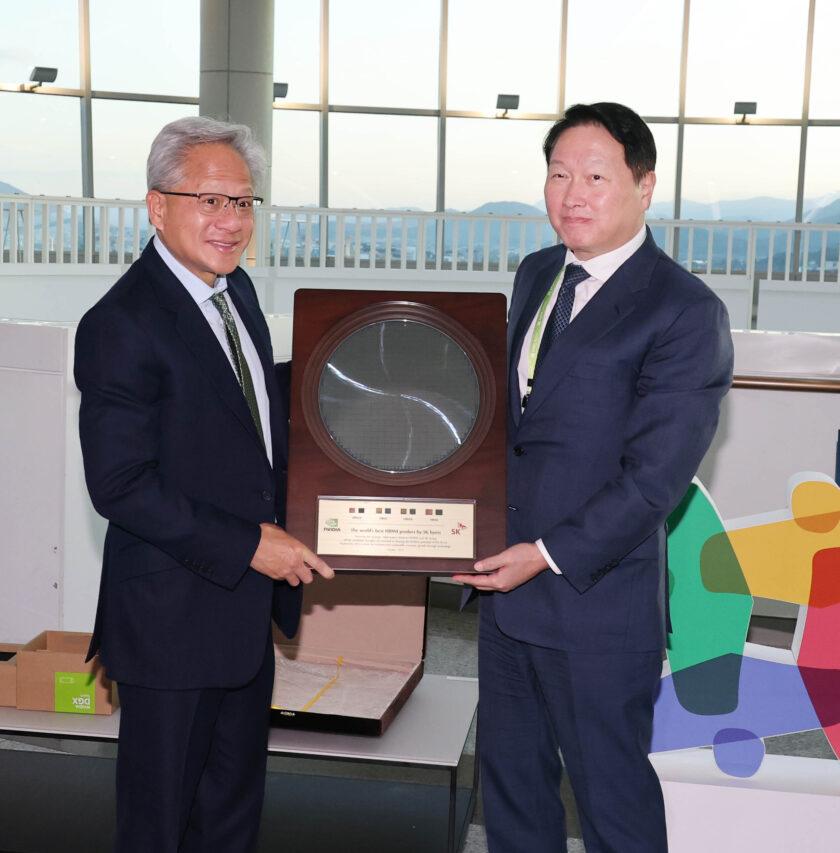
The global artificial intelligence race entered a new phase this week as Nvidia announced a series of major partnerships with South Korea’s biggest technology companies. The agreements, unveiled during CEO Jensen Huang’s high-profile visit to Seoul, strengthen Nvidia’s position at the center of the world’s AI infrastructure boom and highlight South Korea’s growing importance in the future of artificial intelligence.
The deals involve some of South Korea’s most influential companies, including SK Hynix, SK Telecom, Naver, LG Group, and Hyundai Motor Group. Together, these agreements represent one of Nvidia’s most ambitious international expansion efforts since the AI revolution began.
Why South Korea Matters
For years, South Korea has been one of the world’s most important technology manufacturing hubs. The country plays a critical role in semiconductor production, memory chips, telecommunications infrastructure, and advanced electronics.
Now, as AI demand continues to explode worldwide, Nvidia is deepening its relationships with Korean companies that supply critical components needed for next-generation AI systems. Jensen Huang recently described Korea as a “critical part” of Nvidia’s ecosystem and emphasized that the coming years will be “incredibly busy” due to surging AI demand.
Industry analysts believe these partnerships are designed not only to secure Nvidia’s future supply chain but also to help build entirely new AI infrastructure capable of supporting the next wave of AI applications.
The SK Hynix Partnership
The most significant announcement involves SK Hynix, one of the world’s largest memory chip manufacturers and Nvidia’s primary supplier of high-bandwidth memory (HBM).
Under a new multi-year agreement, Nvidia and SK Hynix will jointly develop advanced memory technologies specifically designed for future AI data centers. The deal is intended to ensure that memory supply can keep pace with Nvidia’s rapidly expanding ambitions across AI, robotics, supercomputing, and future consumer products.
This partnership is particularly important because memory chips have become one of the biggest bottlenecks in AI development.
Modern AI systems require enormous amounts of:
- High-bandwidth memory
- Advanced GPUs
- Data-center networking
- Power infrastructure
Demand has become so intense that Nvidia executives have warned that shortages of key AI components could continue for years.
For SK Hynix, the agreement represents another major victory in its competition with other memory manufacturers for dominance in the AI era.
Building AI Factories at Gigawatt Scale
Another major announcement involved Naver, often described as South Korea’s equivalent of Google.
Nvidia revealed that Naver plans to build “gigawatt-scale AI factories” powered by Nvidia technology. These facilities will be designed to process massive AI workloads and support future AI services across Asia, Europe, and the Middle East.
The term “AI factory” has become increasingly popular within the technology industry. Rather than simply storing data, these facilities are designed to generate AI outputs continuously, functioning as industrial-scale intelligence production centers.
Experts believe AI factories could become one of the defining technologies of the next decade.
AI Cloud Infrastructure Expansion
Nvidia also announced a major partnership with SK Telecom focused on building large-scale AI cloud infrastructure.
According to the companies, the project aims to create gigawatt-scale AI cloud services using Nvidia hardware and SK Telecom’s data-center expertise. The first facilities are expected to begin operations in 2027.
This move reflects a growing trend among governments and corporations worldwide.
Rather than relying solely on foreign AI infrastructure, many countries are now attempting to build domestic AI ecosystems that can support:
- National AI development
- Enterprise applications
- Research institutions
- Autonomous systems
- Future robotics industries
South Korea appears determined to become one of the leading players in this global competition.
Robotics Becomes Nvidia’s Next Frontier
While AI remains the central focus, Jensen Huang also used his visit to emphasize robotics as the next major growth sector.
During meetings with Korean executives, Huang stated that robotics could become South Korea’s next major technology industry. Nvidia announced collaborations with LG Group and Hyundai Motor Group involving robotics, automation, and future manufacturing technologies.
The partnership with LG includes work on:
- Humanoid robots
- Future data-center architecture
- Advanced mechanical systems
Meanwhile, Hyundai is expanding cooperation with Nvidia on AI-powered mobility systems and industrial robotics.
Many analysts believe robotics could become the next trillion-dollar technology market after generative AI.
The Global AI Arms Race
The South Korea announcements come during a period of unprecedented investment in artificial intelligence.
Governments and corporations around the world are spending hundreds of billions of dollars on:
- Data centers
- Semiconductor manufacturing
- AI infrastructure
- Cloud computing
- Energy systems
Nvidia has emerged as perhaps the biggest beneficiary of this trend.
Its GPUs remain the industry standard for training and operating advanced AI systems, making the company one of the most valuable businesses in the world.
However, maintaining that leadership requires constant expansion of supply chains and strategic partnerships.
The Korean agreements demonstrate how aggressively Nvidia is moving to secure both.
Market Reaction
Despite the significance of the announcements, technology markets experienced volatility this week due to broader concerns about global interest rates.
South Korea’s KOSPI index suffered a sharp decline as investors reacted to fears surrounding future U.S. Federal Reserve policy. Major technology stocks, including semiconductor companies, were affected despite positive long-term AI developments.
However, analysts generally view Nvidia’s Korean partnerships as strategically important long-term investments rather than short-term market events.
Most expect AI demand to continue growing rapidly throughout the remainder of the decade.
Why This Matters
The significance of these deals extends far beyond Nvidia itself.
The agreements reveal several major industry trends:
- AI infrastructure is becoming a national priority.
- Memory chips are now among the world’s most valuable technology assets.
- Robotics is emerging as the next major investment category.
- Asian technology companies are becoming increasingly central to global AI development.
- The race to build AI factories is accelerating worldwide.
Perhaps most importantly, the announcements demonstrate that the AI revolution is entering a new stage.
The focus is shifting from building AI models to constructing the enormous physical infrastructure required to power them.
Conclusion
Nvidia’s latest agreements with South Korean technology giants represent far more than a collection of corporate partnerships. They are a glimpse into the future architecture of the AI economy.
By securing long-term relationships with SK Hynix, SK Telecom, Naver, LG, and Hyundai, Nvidia is strengthening its position at the center of global AI development while helping South Korea establish itself as one of the world’s most important AI infrastructure hubs.
As competition intensifies among nations and corporations seeking leadership in artificial intelligence, these partnerships may ultimately be remembered as one of the key moments that shaped the next phase of the global AI race.