
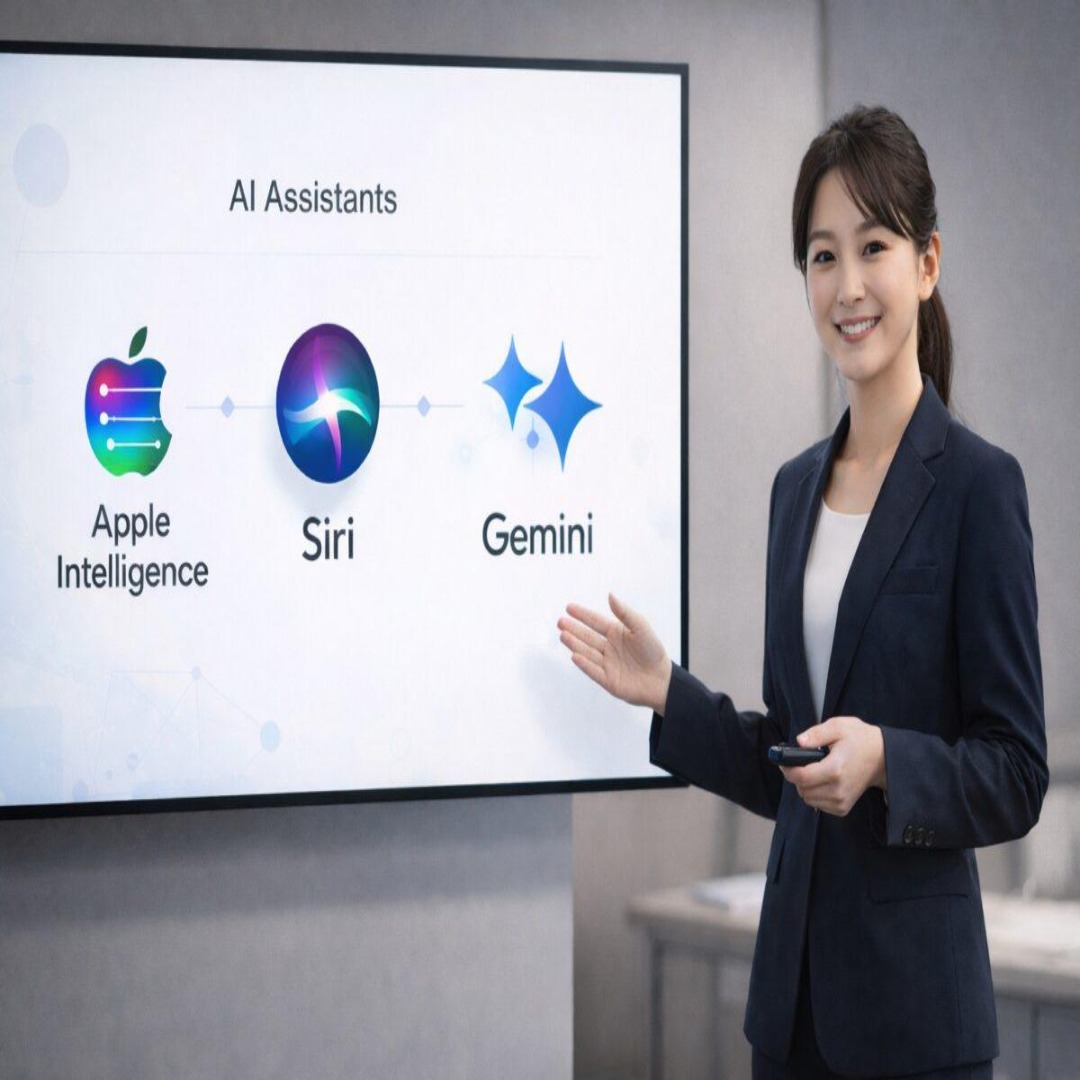
Apple is preparing for what many industry analysts consider the most important artificial intelligence event in the company’s modern history. As WWDC 2026 begins, the technology giant faces mounting pressure to prove that it can compete with rivals such as OpenAI, Google, Anthropic, and Microsoft in the rapidly evolving AI race.
For years, Apple has been viewed as one of the world’s most innovative technology companies. However, the rise of generative AI has created a rare situation where many analysts believe Apple is playing catch-up rather than leading the market. The company’s upcoming announcements are therefore being watched closely by investors, developers, competitors, and millions of Apple users worldwide. (reuters.com)
At the center of Apple’s strategy is Siri, the voice assistant that once helped define the smartphone era but now finds itself struggling against a new generation of AI assistants.
The Growing Pressure on Apple
When OpenAI launched ChatGPT in late 2022, the technology industry changed almost overnight.
Since then:
- Microsoft integrated AI across Windows and Office.
- Google launched Gemini across its ecosystem.
- OpenAI continued expanding ChatGPT’s capabilities.
- Anthropic gained momentum with Claude.
Meanwhile, Apple moved much more cautiously.
Although the company introduced Apple Intelligence in 2025, critics argued that many of its AI features arrived later than competitors and lacked the transformative impact seen elsewhere in the industry. (reuters.com)
As a result, WWDC 2026 is increasingly being viewed as a defining moment for Apple’s AI ambitions.
Siri’s Biggest Upgrade Yet
The centerpiece of Apple’s AI strategy is expected to be a complete transformation of Siri.
According to reports, Apple has spent the past two years rebuilding significant portions of the assistant’s architecture to make it more conversational, intelligent, and context-aware. (reuters.com)
Expected improvements include:
- More natural conversations
- Better contextual understanding
- Multi-step task execution
- Improved app integration
- Personalized responses
- Enhanced voice interaction
Apple reportedly wants Siri to function less like a traditional voice command system and more like an intelligent digital assistant capable of understanding user intent.
If successful, it would represent the biggest Siri upgrade since its original introduction.
The Advantage Apple Still Possesses
Despite concerns about falling behind, Apple maintains one enormous advantage that few competitors can match.
The company controls an ecosystem of more than 2.5 billion active devices worldwide. (reuters.com)
This ecosystem includes:
- iPhones
- iPads
- Macs
- Apple Watches
- AirPods
- Apple TVs
- Vision devices
Unlike many AI companies, Apple already has deep integration across users’ daily digital lives.
Siri potentially has access to:
- Calendars
- Messages
- Contacts
- Photos
- Notes
- Reminders
- Device activity
Industry analysts believe this ecosystem could become Apple’s strongest weapon if it successfully combines privacy with advanced AI capabilities.
Apple’s Privacy Challenge
However, Apple’s greatest strength is also creating one of its biggest challenges.
The company has built its reputation around privacy and on-device processing. While competitors often rely heavily on cloud-based AI systems and extensive data collection, Apple has traditionally taken a more restrictive approach.
This creates difficult questions:
- How much personal data should AI access?
- How can advanced AI function while preserving privacy?
- Can Apple deliver cutting-edge AI without compromising its principles?
Executives have repeatedly stated that privacy will remain central to Apple’s AI strategy. (apple.com)
Many analysts believe WWDC 2026 will reveal how Apple intends to balance those competing priorities.
Developers Are Watching Closely
Another major focus of WWDC will be developers.
Apple is expected to introduce new AI tools that allow developers to integrate Apple Intelligence features directly into applications.
Potential announcements include:
- New AI frameworks
- Improved developer APIs
- AI-assisted coding tools
- On-device AI model access
- Enhanced application automation
Developers are considered crucial to Apple’s AI strategy because third-party apps represent one of the company’s biggest competitive advantages.
If developers embrace Apple’s AI ecosystem, it could significantly accelerate adoption.
Competition Is Intensifying
The timing of WWDC 2026 is particularly important because Apple’s competitors are moving aggressively.
OpenAI recently expanded ChatGPT’s capabilities with increasingly sophisticated agent-like features.
Google continues integrating Gemini throughout Android, Search, Workspace, and Chrome.
Microsoft is embedding AI into nearly every major product it offers.
Anthropic continues attracting enterprise customers through Claude’s growing capabilities.
Against this backdrop, Apple can no longer afford incremental improvements.
Analysts believe users increasingly expect AI experiences that feel transformative rather than experimental.
Investor Expectations Remain High
Wall Street is also paying close attention.
Apple remains one of the world’s most valuable companies, but investors want evidence that it can remain competitive in an AI-driven future.
Several investment firms have identified WWDC 2026 as a critical event that could influence market confidence in Apple’s long-term strategy.
Investors are looking for answers regarding:
- Future revenue opportunities
- AI monetization plans
- Competitive positioning
- Device upgrade cycles
- Ecosystem growth
Strong announcements could boost confidence significantly, while disappointing updates may reinforce concerns that Apple is losing ground.
Why WWDC 2026 Matters Beyond Apple
The event is important not only for Apple but for the broader technology industry.
Apple’s decisions often influence:
- Smartphone development
- Consumer technology trends
- Software ecosystems
- Developer priorities
- Hardware design
A successful AI strategy from Apple could accelerate AI adoption among hundreds of millions of mainstream consumers.
Because of Apple’s scale, even relatively small changes can reshape entire markets.
The Stakes Have Never Been Higher
For years, Apple has been known for entering markets later than competitors but eventually refining products into mainstream successes.
The company followed that approach with:
- Smartphones
- Tablets
- Smartwatches
- Wireless earbuds
The question now is whether it can repeat that strategy in artificial intelligence.
Unlike previous technology transitions, the AI race is moving at extraordinary speed. Competitors are releasing major updates every few months, and consumer expectations continue rising.
This means Apple has less room for error than in previous product cycles.
Conclusion
WWDC 2026 may ultimately be remembered as one of the most important events in Apple’s recent history.
The company faces increasing pressure to demonstrate that it can compete effectively in the AI era while preserving the privacy-focused philosophy that has long defined its brand. (reuters.com)
With Siri expected to receive its biggest overhaul ever, new developer tools likely on the way, and investors closely monitoring every announcement, Apple enters WWDC 2026 with enormous expectations.
The coming days could determine whether Apple successfully establishes itself as a major AI player—or whether questions about its position in the AI race continue to grow.