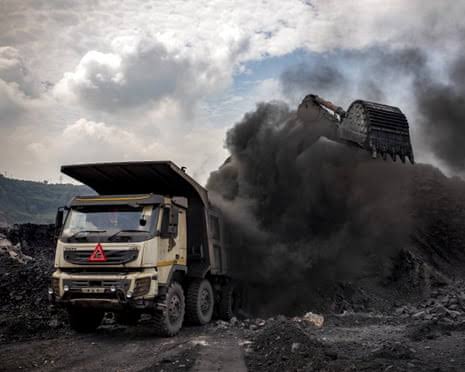
India is preparing for another major expansion in coal production as the country faces growing electricity demand. Coal continues to play a central role in India’s power sector, particularly during periods of extreme heat and high demand. The latest developments show how India is trying to balance energy security, economic growth and the transition toward cleaner energy.
According to recent reporting based on a Global Energy Monitor report, India is planning to increase coal production by nearly 100 million tonnes, with proposed output reaching around 1.15 billion tonnes in the 2025–26 financial year. India has become one of the major drivers of the global increase in planned coal-mining capacity.
Why Is India Increasing Coal Production?
The biggest reason is simple: India’s electricity demand is rising.
India has a huge and growing population, expanding industries, rapidly developing cities and increasing use of air conditioners and electrical appliances. During periods of extreme heat, electricity consumption can rise sharply as millions of households and businesses depend on cooling systems.
In June 2026, coal-fired electricity generation reached its highest level for that month in three years. Coal-fired generation increased by nearly 14% compared with June 2025, while electricity demand was pushed higher by heat and weaker rainfall.
This demonstrates why coal remains important to India’s electricity system, even as renewable energy capacity continues to expand.
Coal Still Powers a Large Part of India
India has made significant progress in renewable energy, particularly in solar and wind power. However, renewable generation depends on weather and time of day. Solar power, for example, cannot generate electricity at night, while hydropower can be affected by rainfall and water availability.
Coal-fired power plants, on the other hand, can provide electricity when demand is high, including during evening and nighttime periods.
Government data shows that coal and lignite-based generation capacity was around 230.8 GW in July 2026. Coal-based generation supplied approximately 69.54% of India’s electricity between April and June 2026. During non-solar peak-demand hours, coal-based plants accounted for around 75% of generation.
These numbers highlight the continuing importance of coal in India’s energy system.
India Has Already Crossed a Major Coal Milestone
India’s coal production has been increasing steadily over recent years.
According to the Ministry of Coal, India produced approximately 1,047.5 million tonnes of coal in 2024–25, compared with about 997.8 million tonnes in 2023–24. This represented growth of approximately 5%.
In March 2026, India also crossed the 1-billion-tonne annual coal production milestone for the second consecutive year. The government said the higher production was helping strengthen domestic energy security and support the power sector.
The government has also set a longer-term goal of increasing domestic coal production to around 1.5 billion tonnes by FY 2029–30.
The Electricity Demand Challenge
India’s growing economy requires a reliable supply of electricity. Industries, railways, digital infrastructure, homes, offices and commercial establishments all depend on uninterrupted power.
Peak electricity demand has been approaching record levels. In July 2026, India’s peak power demand came close to 270 GW, while the government had earlier projected demand could reach around 280 GW during the year.
When electricity demand rises suddenly, the country needs generation sources capable of responding reliably. This is one reason coal remains an important part of India’s energy strategy.
At the same time, India is expanding battery storage, pumped-storage projects, solar power and wind energy to reduce dependence on fossil fuels.
Renewable Energy Is Growing Too
The increase in coal production does not mean India has abandoned renewable energy.
In fact, renewable generation has been growing rapidly. In July 2026, renewable sources including solar and wind accounted for around 20% of India’s total electricity generation, reaching a record monthly output. At the same time, coal’s share fell compared with the previous month.
This shows that India’s energy story is not simply about coal versus renewables. For the foreseeable future, the country is likely to use a combination of different energy sources while gradually increasing the share of cleaner electricity.
The Environmental Debate
The expansion of coal mining also raises important environmental concerns.
Coal is a fossil fuel, and burning it produces carbon dioxide and other pollutants. Mining can also affect land, forests, water resources and local ecosystems if it is not carefully managed.
India therefore faces a difficult challenge. It needs enough affordable and reliable electricity to support development, while also reducing emissions and increasing the use of cleaner energy.
The government says coal production and mining projects are subject to environmental regulations, environmental clearances and land-reclamation requirements.
The long-term question will be how quickly India can increase renewable energy, storage and grid flexibility while maintaining reliable electricity supplies.
What Does This Mean for India?
The planned increase in coal production reflects the country’s immediate energy requirements. India is still heavily dependent on coal for electricity, and rising demand means that ensuring adequate fuel supplies remains a major priority.
However, the future of India’s energy sector will likely depend on finding a balance.
Coal can help provide reliable electricity during periods of high demand, while solar, wind, hydro and energy-storage technologies can gradually increase the share of cleaner power.
India’s challenge is therefore not simply to produce more energy, but to produce reliable, affordable and increasingly cleaner energy.
Conclusion
India’s decision to expand coal production highlights the realities of a rapidly developing economy. With electricity demand rising and coal still responsible for a large share of power generation, the fuel remains an important part of India’s energy security strategy.
At the same time, India’s rapid growth in renewable energy shows that the country’s energy future is changing.
The coming years will be crucial. India will need to maintain reliable electricity supplies while accelerating its transition toward cleaner sources of energy. The real success will be measured not only by how much coal India produces, but by how effectively it can build an energy system that supports economic growth while becoming more sustainable.