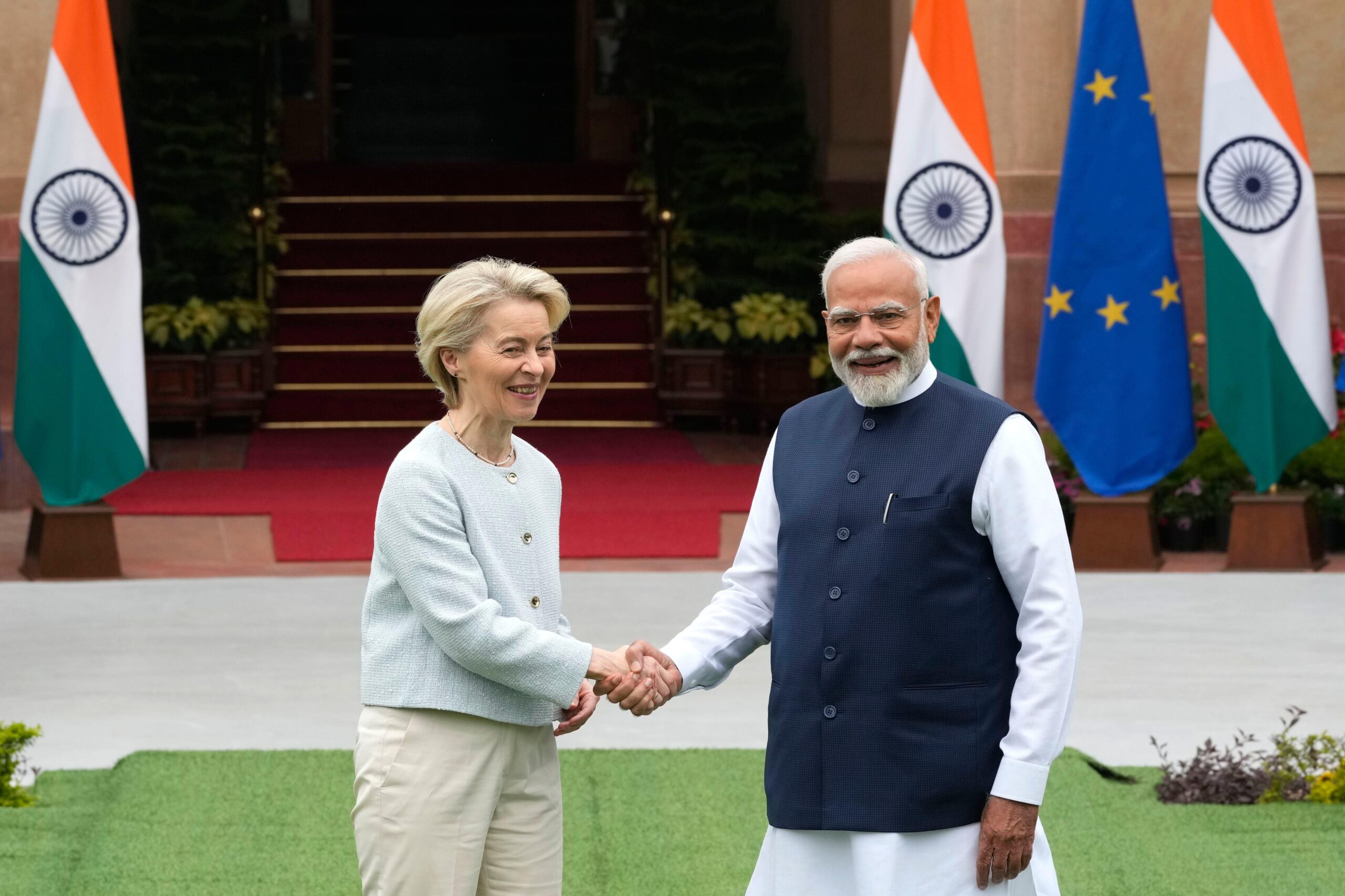
India and the European Union have taken another significant step toward strengthening their economic partnership, announcing that both sides are optimistic about finalizing an Investment Protection Agreement before the end of 2026. The announcement follows the conclusion of negotiations on the broader India–EU Free Trade Agreement (FTA) earlier this year and signals continued momentum toward one of the world’s largest trade partnerships.
The investment agreement is expected to complement the landmark Free Trade Agreement by providing greater legal certainty for investors, encouraging cross-border investment, and deepening economic cooperation between the two economies.
Building on a Historic Trade Breakthrough
Negotiations on the India–EU Free Trade Agreement concluded in January 2026, ending nearly two decades of discussions.
The agreement covers trade in goods and services, investment, regulatory cooperation, and market access, creating one of the world’s largest free-trade frameworks involving nearly two billion people.
Why the Investment Pact Matters
While the Free Trade Agreement focuses on reducing trade barriers, the proposed Investment Protection Agreement aims to:
- Increase confidence among investors.
- Provide stronger legal safeguards.
- Improve dispute-resolution mechanisms.
- Encourage long-term investment projects.
Officials believe the agreement will strengthen business confidence and support greater investment flows between India and EU member states.
The EU Remains India’s Largest Trading Partner
Economic ties between India and the European Union have expanded rapidly in recent years.
According to EU trade data:
- The EU accounted for €120 billion in trade in goods with India in 2024.
- Trade in services reached nearly €60 billion in 2023.
- The EU remains India’s largest trading partner.
Both sides believe the new agreements will further increase trade volumes while opening additional opportunities in technology, manufacturing, clean energy, pharmaceuticals, and digital services.
Strategic Importance
Beyond economics, analysts say the growing India–EU partnership reflects changing global geopolitical dynamics.
Both partners are seeking to diversify supply chains, strengthen resilient manufacturing, and reduce dependence on single markets for critical industries.
Officials have described the relationship as one of the most important strategic partnerships under development in the global economy.
What Happens Next?
Although negotiations have progressed significantly, the investment agreement must still be finalized before undergoing the required approval processes on both sides.
If completed on schedule, officials expect the agreement to become another major pillar of India–EU economic cooperation in the coming years.
Conclusion
India and the European Union continue to deepen one of the world’s most significant economic partnerships. With the landmark Free Trade Agreement already concluded and both sides now targeting an Investment Protection Agreement before the end of 2026, the relationship is entering a new phase focused on trade, investment, innovation, and long-term strategic cooperation. If finalized, the agreements are expected to reshape commercial ties between two of the world’s largest economies for decades to come.