Meta Description:
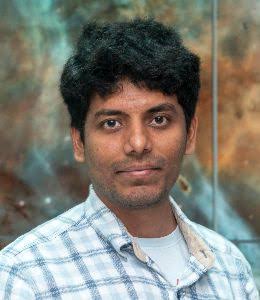
Jaykumar Vaidya’s journey from a small 8×10-foot room in Kurla, Mumbai, to NASA’s Goddard Space Flight Center is a powerful story of education, determination, struggle and scientific ambition.
From Limited Resources to Unlimited Dreams
Success is often associated with expensive education, comfortable surroundings and access to opportunities. But the journey of Jaykumar Vaidya shows that difficult circumstances do not necessarily have to determine the destination of a person’s life.
Jaykumar Vaidya, who grew up in an 8×10-foot room in Kurla, Mumbai, has gone on to work at NASA’s Goddard Space Flight Center, contributing to scientific instruments connected with the study of planetary atmospheres. His professional journey includes work related to Mars, Earth’s upper atmosphere and lunar exploration.
His story is particularly inspiring because his childhood was far removed from the sophisticated laboratories where he works today. According to reports about his life, his family faced serious financial difficulties, and there were periods when even paying school fees was a major challenge. Yet, instead of allowing poverty to define his future, Jaykumar continued to pursue education and science.
Today, his work involves highly specialized scientific instruments and technologies that help researchers understand planetary environments. His journey is therefore not simply a story about reaching NASA. It is a story about how curiosity, education, hard work and persistence can gradually transform a difficult beginning into an extraordinary career.
Growing Up in Kurla
Jaykumar’s early life was spent in Mumbai’s Kurla area. Reports describe his childhood home as an approximately 8×10-foot room, highlighting the limited space and resources available to his family.
For many children, such circumstances could make long-term educational goals seem almost impossible. For Jaykumar, however, education became one of the most important ways to change his circumstances.
His family experienced significant financial hardship. Reports have described his mother as the primary person supporting the family, while Jaykumar began taking up different kinds of work at a young age to contribute and support his education.
The contrast between his childhood and his current professional environment is remarkable. He moved from a small home where basic needs were difficult to manage to a research environment where scientists work on sophisticated instruments designed to study the atmospheres of planets and celestial bodies.
But the transition did not happen overnight.
It was the result of years of education, research, work and persistence.
When Education Became a Challenge
One of the most striking parts of Jaykumar Vaidya’s story is the financial difficulty his family faced during his schooling.
Recent reports state that there was a time when his school withheld his results because his mother could not pay the required fees.
For a student, receiving examination results is normally an ordinary part of academic life. For Jaykumar, however, even that basic milestone became connected to his family’s financial situation.
Such experiences could easily discourage a young student. Instead, they appear to have strengthened his determination to continue learning.
Reports also describe him studying under streetlights and surviving on very simple food during difficult periods. He also took up small jobs and taught students to earn money.
These experiences reveal an important aspect of his journey: education was not something that came easily to him. It was something he had to fight for.
Working While Studying
Jaykumar did not simply wait for circumstances to improve.
He began working and developing practical skills while continuing his education. Reports have mentioned work such as repairing televisions and teaching students.
These jobs may seem very different from his present work in planetary science, but they helped him develop valuable qualities.
Working while studying requires discipline.
It requires time management.
It requires patience.
Most importantly, it teaches a person how to continue moving forward even when conditions are not ideal.
Jaykumar’s experience demonstrates that early work does not necessarily have to be viewed only as a financial necessity. It can also become an opportunity to develop practical knowledge, communication skills and confidence.
Discovering a Passion for Science
Behind Jaykumar’s academic journey was a strong interest in science and space.
NASA’s own profile of Jaykumar explains that his fascination with space began during childhood. He was particularly inspired by missions such as the Voyager missions and early Mars rover explorations.
This childhood curiosity eventually became a professional ambition.
That transformation is important.
Many children are fascinated by space. They watch spacecraft launches, look at pictures of planets and dream about becoming scientists or astronauts.
But turning that curiosity into a career requires years of learning.
Jaykumar chose to build the technical foundation necessary to work in this field.
Studying Electrical Engineering
Jaykumar pursued Electrical Engineering, developing knowledge in electronics, instrumentation and related technical areas.
NASA’s official biography states that he earned his bachelor’s degree in Electrical Engineering from KJSCE in Mumbai and later completed a master’s degree in Electrical Engineering at the University of Virginia.
This educational path became extremely important for his later work.
Planetary science is not limited to studying planets through books or photographs. Modern space exploration depends heavily on engineering.
Spacecraft need sensors.
Scientific instruments need electronics.
Data needs to be collected and processed.
Instruments must operate under extremely demanding conditions.
Scientists need reliable measurements to understand the environments of other worlds.
Jaykumar’s background in electrical engineering gave him a technical foundation that could be applied to these challenges.
From Engineering to Research
After completing his engineering education, Jaykumar moved further into research.
NASA’s profile records that he worked as a Junior Research Fellow at the Tata Institute of Fundamental Research (TIFR) in Mumbai between 2016 and 2019.
His research experience included work involving advanced materials and nanofabrication.
This stage was significant because it represented a transition from simply learning engineering concepts to applying them in scientific research.
Research requires a different mindset.
There is often no simple answer.
Experiments may fail.
Equipment may need to be redesigned.
Measurements must be carefully analyzed.
Researchers have to keep asking questions and testing ideas.
These are the same qualities that later became valuable in his work at NASA.
The Road to NASA
Jaykumar eventually continued his studies in the United States at the University of Virginia.
NASA’s official profile states that he worked as a Graduate Student Researcher at the University of Virginia from 2019 to 2021. He subsequently worked in research and engineering roles connected with NASA’s Goddard Space Flight Center.
His entry into NASA was not simply the result of one lucky opportunity.
In his NASA Early Career Scientist Spotlight, Jaykumar explains that his work developed through opportunities in research and networking within the scientific community. He first worked in NASA’s Astrophysics Division and later found an opportunity in the Planetary Environments Laboratory.
This is an important lesson for students.
Career paths are not always perfectly straight.
A person may begin in one research area and later discover another field that better matches their interests.
The key is to remain open to opportunities while continuously developing useful skills.
What Does Jaykumar Do at NASA?
The most fascinating part of Jaykumar’s story is perhaps what he actually works on today.
According to NASA, Jaykumar is a Ground Support Equipment Engineering Lead and Ground Systems Operations Lead within the Planetary Environments Laboratory at NASA’s Goddard Space Flight Center.
His work involves sophisticated scientific instruments, including quadrupole mass spectrometers.
A mass spectrometer is an instrument used to analyze particles and determine information about their composition.
In planetary science, this technology can provide important information about the gases and ions present in planetary atmospheres.
Instead of simply looking at a planet from far away, scientists can use instruments to investigate what its atmosphere is made of.
That information can help researchers understand how planetary environments work and how they have changed over time.
Working on Mars Research
One of Jaykumar’s important areas of work involves NASA’s Mars Atmosphere and Volatile EvolutioN (MAVEN) mission.
NASA explains that the MAVEN mission studies Mars’ upper atmosphere and ionosphere, helping scientists understand how atmospheric gases have been lost from Mars to space over time.
Jaykumar works with the Neutral Gas and Ion Mass Spectrometer (NGIMS) associated with the mission.
His responsibilities include ground-system operations and maintaining a testbed that mirrors the functionality of the spaceborne instrument.
This work is important because scientific instruments must be tested and validated carefully before and during their operational use.
A tiny problem in an instrument can potentially affect scientific measurements.
Therefore, calibration, testing and operational readiness are essential parts of space science.
Studying Earth’s Upper Atmosphere
Jaykumar’s work is not limited to Mars.
NASA also identifies his involvement with instruments designed to study Earth’s upper atmosphere.
One example is MoSAIC, a modular spectrometer designed to measure characteristics of Earth’s thermosphere.
The thermosphere is a high region of Earth’s atmosphere where interesting interactions occur between charged particles and neutral gases.
Understanding such regions helps scientists improve their knowledge of Earth’s space environment.
This demonstrates how space research can also help us understand our own planet.
Work Related to the Moon
Jaykumar is also associated with NASA’s SEAL instrument.
NASA describes SEAL as an instrument designed to investigate interactions between lunar material and gases released by a lander’s propulsion system.
The instrument is intended to study molecules such as water and carbon dioxide around the lunar environment.
Understanding volatile substances on the Moon is important because resources such as water could have major implications for future exploration.
Water can potentially support human activities and may also be important for producing resources needed for space missions.
Therefore, instruments like SEAL can contribute to a broader understanding of the lunar environment and future exploration.
The DISSIPATION Mission
Jaykumar has also played a role in the DISSIPATION sounding rocket mission.
NASA records that DISSIPATION launched on November 8, 2023, from the Poker Flat Research Range in Alaska. Jaykumar contributed to the calibration and testing of the MoSAIC instrument used on the mission.
Sounding rockets provide researchers with an opportunity to study regions of the atmosphere that are difficult to investigate using conventional methods.
The mission demonstrates another side of Jaykumar’s career.
His work is not simply sitting in a laboratory and conducting theoretical research.
It involves building, testing and preparing real scientific hardware for demanding missions.
From Repairing TVs to Building Space Instruments
Perhaps the strongest contrast in Jaykumar Vaidya’s story is the difference between his early work and his current career.
As a young person, he reportedly repaired televisions to earn money.
Today, he works with sophisticated scientific instruments used for planetary research.
At first glance, these two activities seem completely unrelated.
But there is actually a connection.
Both involve electronics.
Both require troubleshooting.
Both require understanding how systems work.
Both require patience when something does not function correctly.
The difference is the scale and scientific purpose.
This demonstrates how skills developed in one stage of life can eventually become useful in another.
The Importance of Mentorship and Opportunity
Hard work is essential, but Jaykumar’s journey also demonstrates the importance of opportunity and support.
Reports have noted that various organizations and individuals supported his education during difficult periods.
His NASA profile also highlights the importance of networking within the scientific community in helping him discover research opportunities.
This is a valuable lesson for students.
Talent alone is not always enough.
Students also need mentors.
They need opportunities to participate in projects.
They need people who can guide them.
They need environments where their abilities can grow.
At the same time, students must actively search for those opportunities.
A Lesson for Students
Jaykumar Vaidya’s story is particularly relevant to students who feel that their current circumstances are limiting their future.
A student may not have access to expensive coaching.
A student may not have the latest laptop.
A student may come from a financially difficult family.
A student may fail an examination.
A student may be rejected from an internship.
None of these things automatically determines where that student will eventually end up.
Jaykumar’s story demonstrates the importance of continuing to build knowledge despite obstacles.
His career was built through multiple stages:
Education → Engineering → Research → Advanced Studies → NASA → Planetary Science
Each stage prepared him for the next.
Dreams Need a Process
It is easy to look at a photograph of someone working at NASA and think the success happened suddenly.
The reality is very different.
Behind that photograph are years of studying, working, research, applications, failures, networking and technical development.
A dream becomes realistic when it is converted into a process.
If a student wants to become a scientist, the first step may be learning mathematics and physics.
If someone wants to become an engineer, the first step may be developing programming, electronics or design skills.
If someone wants to work in space technology, they may begin with robotics, embedded systems, data analysis or scientific research.
The destination can be enormous.
The first step can be very small.
Why His Story Matters
Jaykumar Vaidya’s story matters because it challenges the idea that someone’s starting point determines their final destination.
He started in circumstances where even basic educational expenses were difficult to manage.
He worked to support himself and his family.
He continued his education.
He developed engineering expertise.
He entered scientific research.
He pursued advanced education.
And eventually, he became part of NASA’s scientific community.
His story therefore represents more than personal success.
It represents the transformative power of education.
The Bigger Meaning of Reaching NASA
Working at NASA is often seen as the ultimate achievement.
But in Jaykumar’s case, the deeper achievement is the journey that made it possible.
NASA’s work depends on thousands of engineers, scientists, researchers and technicians.
Jaykumar represents one part of this enormous scientific ecosystem.
His contribution involves instrumentation, calibration, ground systems and planetary atmospheric research.
Through this work, he contributes to humanity’s effort to understand other worlds.
That is a remarkable transition from a childhood spent dreaming about space to actually working on instruments designed to investigate planetary environments.
Inspiration Beyond Space Science
Not everyone reading Jaykumar’s story will become a NASA scientist.
That is not the main lesson.
The broader lesson is that difficult circumstances do not have to eliminate ambition.
A student interested in computer science can apply the same principle.
An aspiring entrepreneur can apply it.
An engineer can apply it.
A researcher can apply it.
Anyone can begin with limited resources and gradually build expertise.
The most important question is not always, “Where am I starting?”
Sometimes the more important question is:
“What can I do with what I have today?”
From a Small Room to a Bigger World
The image of an 8×10-foot room and a NASA laboratory creates a powerful contrast.
One represents the physical limitations of Jaykumar’s childhood.
The other represents the scale of his professional ambitions.
But the real transformation happened inside the person.
His curiosity grew.
His knowledge grew.
His skills grew.
His confidence grew.
And eventually, his opportunities grew.
The room did not determine his imagination.
The financial struggles did not eliminate his curiosity.
The obstacles did not stop him from learning.
A Message for the Next Generation
For young students, Jaykumar Vaidya’s journey carries a simple message:
Do not underestimate the power of consistent effort.
You do not need to achieve everything in one day.
Learn one skill.
Complete one project.
Read one research paper.
Ask one question.
Apply for one opportunity.
Learn from one failure.
Then repeat.
Over time, these small actions can create a completely different future.
Conclusion
Jaykumar Vaidya’s journey from an 8×10-foot room in Kurla to NASA’s Goddard Space Flight Center is one of determination, education and scientific curiosity.
His childhood was marked by financial challenges, and reports describe how his family struggled to meet basic educational expenses. He worked while studying and continued developing his technical abilities.
Years later, his engineering and research journey led him to NASA, where he now contributes to sophisticated instruments and missions studying planetary environments, including Mars, Earth’s upper atmosphere and the Moon.
His story reminds us that extraordinary careers do not always begin in extraordinary places.
Sometimes, they begin in a small room.
Sometimes, they begin with a student studying under a streetlight.
Sometimes, they begin with repairing a television or teaching another student.
And sometimes, they begin with nothing more than a young person’s decision to keep learning.
Jaykumar Vaidya’s journey shows that the size of your beginning does not determine the size of your dream.
What matters is the courage to keep moving toward it.