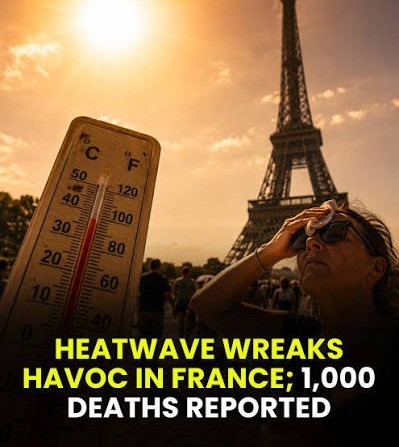
As climate change intensifies across the globe, heatwaves are no longer just uncomfortable summer events—they are becoming deadly disasters. France is once again facing the harsh reality of extreme weather, with reports indicating nearly 1,000 excess deaths linked to the recent record-breaking heatwave. Temperatures soaring above 43°C have not only claimed lives but also disrupted healthcare systems, public services, businesses, and everyday life.
This tragic event is another reminder that the climate crisis is no longer a distant concern. It is unfolding now, with devastating consequences for millions of people.
A Heatwave Unlike Any Other
During the recent heatwave, several regions across France experienced temperatures exceeding 43°C (109.4°F). Such extreme temperatures are highly unusual for many parts of Europe and placed enormous stress on both people and infrastructure.
According to public health reports, approximately 1,000 more deaths than normally expected were recorded during the heatwave period. Most of these fatalities occurred among people aged 65 years and older, highlighting how dangerous extreme heat can be for vulnerable populations.
Unlike storms or floods that cause immediate destruction, heatwaves are often called “silent killers.” Their effects build gradually, leading to dehydration, heatstroke, cardiovascular complications, and respiratory illnesses that can quickly become fatal.
Why Are Heatwaves So Dangerous?
Many people underestimate the risks associated with extreme heat. However, prolonged exposure to high temperatures affects the body’s ability to regulate its internal temperature.
When the human body cannot cool itself efficiently, it may experience:
- Severe dehydration
- Heat exhaustion
- Heatstroke
- Organ failure
- Increased strain on the heart
- Worsening of chronic diseases
The elderly, young children, pregnant women, outdoor workers, and people with existing medical conditions face the highest risk.
Hospitals across France reportedly witnessed a surge in emergency admissions as healthcare workers struggled to manage the increasing number of heat-related illnesses.
Impact Beyond Human Lives
The consequences of the heatwave extended far beyond public health.
Extreme temperatures forced authorities to cancel public events and outdoor activities to protect citizens. Construction work in several areas was temporarily suspended because working under direct sunlight became unsafe.
Businesses, especially restaurants and local shops, experienced reduced customer activity as people stayed indoors to escape the unbearable heat. Tourism, one of France’s strongest economic sectors, also faced disruptions due to travel advisories and extreme weather conditions.
Public transportation systems encountered operational challenges, while electricity demand surged as millions relied on air conditioning and cooling devices.
The heatwave demonstrated how a single climate event can affect nearly every sector of society.
Climate Change: The Bigger Picture
Scientists have consistently warned that climate change is making heatwaves more frequent, more intense, and longer-lasting.
As greenhouse gas emissions continue to warm the Earth’s atmosphere, Europe has become one of the fastest-warming continents.
Events that were once considered rare are becoming increasingly common. Heatwaves similar to the recent one in France are expected to occur more often unless significant global efforts are made to reduce carbon emissions.
Climate experts emphasize that while individual weather events cannot always be attributed solely to climate change, rising global temperatures significantly increase the likelihood and severity of such extreme conditions.
Lessons from the 2003 European Heatwave
France has painful memories of the devastating 2003 European heatwave, during which approximately 15,000 people died in France alone.
Following that tragedy, the country introduced improved heat alert systems, emergency response plans, public awareness campaigns, and cooling centers for vulnerable residents.
While these measures have undoubtedly saved lives, the latest heatwave shows that even well-prepared nations continue to face enormous challenges as temperatures reach unprecedented levels.
Protecting Yourself During Extreme Heat
As heatwaves become more common worldwide, personal safety measures are becoming increasingly important.
Here are some essential precautions:
- Drink plenty of water, even if you don’t feel thirsty.
- Avoid outdoor activities during peak afternoon hours.
- Wear lightweight, loose-fitting clothing.
- Stay in shaded or air-conditioned environments whenever possible.
- Check regularly on elderly relatives, neighbors, and vulnerable individuals.
- Never leave children or pets inside parked vehicles.
- Learn to recognize symptoms of heat exhaustion and heatstroke.
Small preventive actions can make a significant difference during extreme weather conditions.
Governments Must Adapt
The recent tragedy also raises important questions about climate resilience.
Governments worldwide need to invest in:
- Heat-resistant urban infrastructure
- Green spaces and tree plantation
- Better emergency healthcare preparedness
- Public cooling centers
- Early warning systems
- Sustainable energy solutions
- Climate adaptation strategies
Cities designed decades ago are struggling to cope with today’s rising temperatures. Urban planning must evolve to meet the realities of a warming world.
A Global Warning
France’s experience serves as a warning not only for Europe but for every country facing rising temperatures.
Many regions across Asia, Africa, North America, and Australia are already experiencing increasingly severe heatwaves. Developing countries, where access to cooling systems and healthcare may be limited, could face even greater risks.
Climate change is no longer just an environmental issue—it is a public health challenge, an economic challenge, and a humanitarian challenge.
Conclusion
The recent heatwave in France, with temperatures reaching 43°C and approximately 1,000 excess deaths, highlights the growing dangers of extreme weather in a warming world.
While emergency response systems have improved significantly over the years, no country is immune to the effects of climate change. Protecting vulnerable populations, strengthening healthcare infrastructure, reducing greenhouse gas emissions, and preparing communities for future heatwaves must become global priorities.
As temperatures continue to rise, the question is no longer whether extreme heat will return—but whether societies are prepared to face it. France’s tragic experience should inspire urgent action, greater awareness, and stronger international cooperation to combat one of the greatest challenges of our time.