Investment becomes a key measure of economic momentum
India’s investment outlook is receiving renewed attention as infrastructure development and improving corporate balance sheets create conditions that could encourage businesses to expand. After a period in which government capital expenditure played an important role in supporting economic activity, policymakers and analysts are watching for stronger participation from private companies.
Private investment matters because it helps expand the economy’s productive capacity. When businesses build factories, purchase machinery, establish warehouses or develop technology infrastructure, they can increase output and potentially create jobs.
A sustained investment cycle can also improve productivity. New equipment and more efficient facilities may help companies produce goods at lower cost, compete in export markets and respond to rising demand.
However, investment decisions depend on more than the availability of infrastructure. Companies must also believe that future demand will justify the cost of expanding their operations.
How public infrastructure can encourage private spending
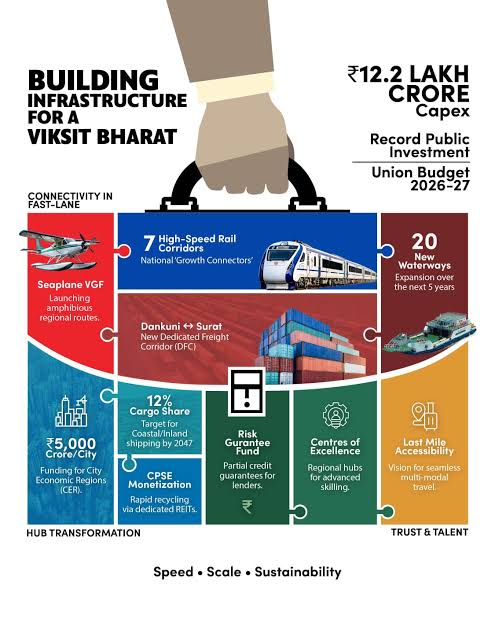
Government investment in roads, railways, ports and power infrastructure can reduce the cost of doing business. Better transport connections make it easier to move raw materials and finished products, while reliable electricity and logistics help businesses plan production.
These improvements may encourage companies to establish new facilities or expand existing ones. Industrial clusters can become more attractive when suppliers, workers and transport networks are located nearby.
Infrastructure spending can also support economic activity during construction, creating demand for materials, equipment and services. The longer-term benefit emerges when the completed infrastructure improves the efficiency of businesses and households.
Yet public spending cannot replace private investment indefinitely. Government projects must be funded, and excessive pressure on public finances can limit the resources available for other priorities.
A healthy investment cycle therefore depends on both effective public infrastructure and the willingness of private companies to commit capital.
What the investment figures can—and cannot—tell us
National accounts use gross fixed capital formation to measure spending on long-term productive assets. Growth in this indicator can signal that the economy is adding capacity, but it does not automatically show how much investment came from private companies.
The composition of investment matters. Spending on machinery, industrial buildings and technology can have different effects from investment concentrated in a narrower range of construction projects.
It is also important to distinguish between announcements and completed projects. A company may announce a large investment plan but take several years to obtain approvals, arrange financing and begin production.
For that reason, actual expenditure, new capacity, employment and productivity provide useful measures of whether investment commitments are translating into economic activity.
Challenges facing businesses
Companies can delay investment when borrowing costs are high, demand is uncertain or regulations are difficult to navigate. International trade tensions and fluctuations in energy prices can add further uncertainty, particularly for manufacturers that depend on imported materials or overseas markets.
Small and medium-sized businesses may face additional difficulties because they have less access to affordable finance and fewer resources to absorb unexpected costs.
Simpler approval processes, reliable infrastructure, access to credit and predictable regulations can help reduce these barriers. Workforce training is also important because new factories and technology-intensive industries require workers with appropriate skills.
Investment that creates employment and strengthens domestic supply chains can have wider benefits than projects that increase output without generating substantial local economic activity.
What comes next?
The coming quarters will show whether improving conditions lead to a sustained rise in private investment. Businesses’ capital spending, factory activity, new project implementation and employment figures will be important indicators.
India’s long-term growth prospects depend partly on its ability to increase productive capacity and create jobs for a large workforce. Public infrastructure can provide a foundation, but private companies must also be willing to invest in new products, facilities and technologies.
The investment outlook is therefore encouraging only if the signs of improvement develop into sustained activity. A durable expansion would require confidence among businesses, access to finance and demand strong enough to justify long-term commitments.