
Formula 1 is preparing for one of the most significant chapters in its modern history. On October 13, 2026, the championship officially announced its return to Africa through a new 10-year agreement to host the African Grand Prix in Rwanda, while FIA President Mohammed Ben Sulayem revealed that the return of V8 engines is targeted for 2030. Together, these developments could bring a historic race to a new part of the world and restore the distinctive engine sound that many longtime F1 fans have missed.
Although the African Grand Prix is confirmed for the early 2030s rather than a specific 2030 race date, Ben Sulayem’s latest comments have raised the possibility that Rwanda could host the championship’s first race under the proposed V8 regulations. Here is everything known about these developments, their significance, and the challenges that lie ahead.
Formula 1 Officially Announces Its Return to Africa
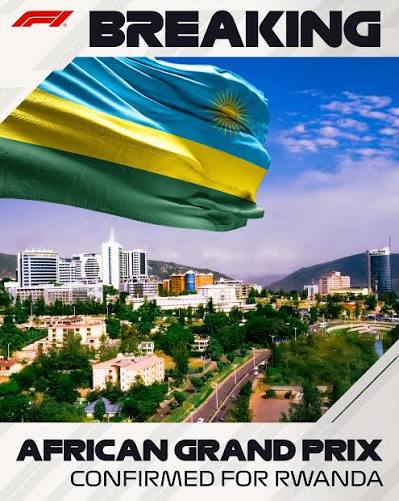
Formula 1 has been absent from the African continent since the 1993 South African Grand Prix at Kyalami. After more than three decades, the championship has finally secured an agreement to return, with Rwanda selected as the host nation.
Announced on October 13, 2026, the agreement establishes a 10-year partnership for the Formula 1 African Grand Prix, presented by Visit Rwanda. The inaugural event is scheduled for the early 2030s, although the precise year and race date have not yet been confirmed by Formula 1.
Formula One World Championship Limited
The decision represents an important milestone for a championship that has spent years exploring opportunities to race in Africa. Several potential destinations, including South Africa and Morocco, have attracted attention during discussions about F1’s return. However, Rwanda has now secured the announced agreement.
The move also fulfils a long-standing ambition expressed by seven-time world champion Lewis Hamilton, who has repeatedly called for Formula 1 to return to Africa. The continent has a substantial and growing motorsport audience, making its absence from the calendar increasingly noticeable as the championship expands into new markets.
Where Will the African Grand Prix Take Place?
Unlike traditional races held at established circuits, Rwanda’s Grand Prix will use a new, purpose-built facility in Bugesera, approximately 40 kilometres south of Kigali, the country’s capital.
The circuit is planned near the new Kigali International Airport, forming part of a wider development project focused on sports, tourism, infrastructure and commercial investment.
According to Formula 1’s announcement, the venue will be developed to FIA Grade 1 standards, the certification required for hosting Formula 1 races. Design work involves WurzDesign, headed by former F1 driver Alex Wurz, and Tilke Engineers and Architects, known for designing numerous modern racing circuits. The layout is intended to use the region’s natural elevation changes to create a challenging driving experience.
The circuit is also intended to operate beyond race weekends, potentially hosting other motorsport events, conferences, entertainment and international gatherings.
Nevertheless, important details remain outstanding. The circuit must be completed and meet the necessary safety and homologation requirements before the race can take place. Formula 1 has stated that further details about the inaugural event and development milestones will be announced later.
V8 Engines Could Return to Formula 1 in 2030

While the African Grand Prix announcement has attracted global attention, the potential return of V8 engines could be equally significant for F1’s future.
Speaking at the Rwanda announcement on October 13, FIA President Mohammed Ben Sulayem said the launch of the new V8 engine regulations was planned for 2030. He also indicated that Rwanda’s first Grand Prix would feature the new engine if the planned timeline is achieved.
V8 engines were last used in Formula 1 during the 2013 season. They were replaced in 2014 by 1.6-litre V6 turbo-hybrid power units, which combined internal combustion engines with energy recovery and electric power.
The V8 era remains memorable for its high-revving engines, distinctive sound and the driving characteristics of cars from that period. Drivers such as Sebastian Vettel, Fernando Alonso and Lewis Hamilton competed during those seasons, making the engine configuration an important part of modern F1 history.
The proposed return is intended to deliver a simpler and lighter power unit, with significantly less electrification than the current generation. Ben Sulayem has previously discussed a possible reduction in development costs and an engine package that could be approximately 80 kilograms lighter, although the final technical specifications have not been established.
However, the proposed 2030 introduction should not be confused with a fully published and finalised technical rulebook. The precise engine architecture, level of hybrid assistance and implementation details remain subject to the regulatory process.
Why Does Formula 1 Want V8 Engines Back?
The debate over engine regulations involves more than nostalgia. The 2026 power units introduced a much greater role for electrical power, with an approximately 50:50 balance between combustion and electrical output at peak power.
Although the regulations support electrification and the use of sustainable fuel, the increased importance of battery management and energy deployment has generated debate among drivers, teams and fans.
A simpler V8-based power unit could reduce technical complexity and development expenditure while allowing F1 to restore more of the engine character associated with earlier generations of cars.
Sound is another important factor. Naturally aspirated V8 engines produced a high-pitched, rising note that became a defining feature of Formula 1 between 2006 and 2013. Their potential return could appeal to fans who prefer that sound, although the final noise characteristics will depend on the engine design and any retained hybrid technology.
Sustainability will also remain a key consideration. The FIA has previously discussed retaining sustainable fuels alongside a return to combustion-focused engines. The final regulations will determine how electrification, fuel efficiency, emissions targets and performance are balanced.
What These Developments Mean for F1’s Future
The combination of an African Grand Prix and a potential V8 comeback could make the early 2030s a defining period for Formula 1. Rwanda would introduce the championship to a new host nation, while the engine changes could reshape the technical identity of the cars.
For Rwanda, the race offers opportunities to attract international visitors, create jobs, develop local expertise and encourage investment. For Formula 1, it represents an opportunity to connect with a large audience across a continent that has been missing from the championship calendar for more than 30 years.
However, the project’s success will depend on practical execution. Circuit construction, transport infrastructure, event funding, safety certification and long-term financial sustainability will all be crucial. Similarly, the proposed engine changes must balance fan expectations with manufacturers’ technical and commercial interests.
Conclusion
Formula 1’s return to Africa is now backed by an official 10-year agreement with Rwanda, with the inaugural African Grand Prix planned for the early 2030s. At the same time, FIA President Mohammed Ben Sulayem has identified 2030 as the target for bringing V8 engines back to the championship.
While the exact inaugural race date and final engine specifications remain to be confirmed, the direction is becoming clearer. If both plans progress as intended, the early 2030s could deliver a new destination for F1 fans and a return to a more combustion-focused engine philosophy.
For a sport constantly balancing innovation, sustainability and tradition, these developments represent a potentially historic new chapter.