India has reiterated that peace and stability along its disputed border with China remain essential to the broader relationship between the two countries, as fresh reports of tensions in the Himalayas emerge ahead of a major diplomatic meeting in New Delhi. The development comes as India prepares to host the 2026 BRICS summit, which is expected to bring Chinese President Xi Jinping and other world leaders to India.
The latest situation has attracted attention because it comes after years of military tensions between India and China following the deadly 2020 border clashes in eastern Ladakh. Although both sides have taken steps toward de-escalation, the disputed frontier remains one of Asia’s most sensitive security flashpoints.
Fresh Tensions Reported Along the Himalayan Border
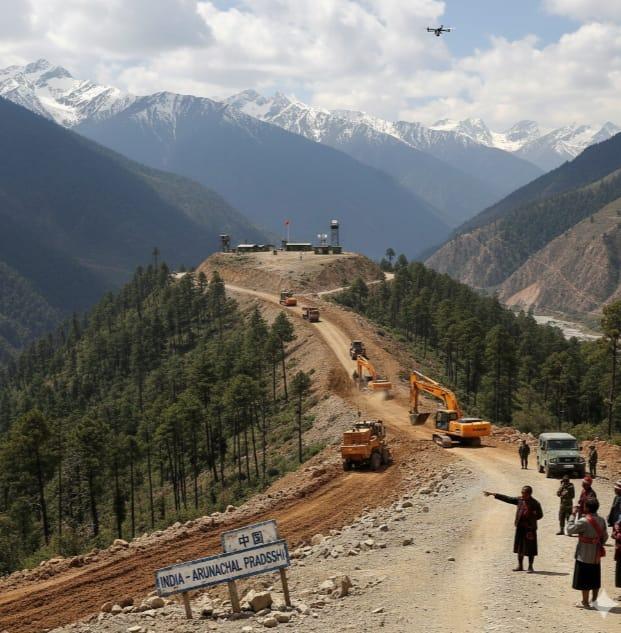
Recent reports have focused on developments near Taksing, a remote area in India’s Arunachal Pradesh.
Local reports have raised concerns over increased Chinese activity in the region, including claims that Chinese troops entered areas controlled by India and established temporary positions.
However, Indian defence officials have dismissed some of these reports as unsubstantiated, highlighting the importance of distinguishing verified military developments from local or media reports.
China, meanwhile, has described the situation along the border as generally stable.
The two countries have also continued military and diplomatic communication mechanisms designed to prevent local incidents from escalating into a wider confrontation.
India Emphasises Border Peace
India’s latest message is significant because New Delhi has repeatedly linked the condition of the border with the overall state of bilateral relations.
The basic position is that maintaining peace along the Line of Actual Control is essential if India and China are to continue improving their broader diplomatic and economic relationship.
The issue remains particularly sensitive because both countries have large military deployments and extensive infrastructure along sections of the Himalayan frontier.
Why Arunachal Pradesh Matters
The northeastern state of Arunachal Pradesh occupies a strategically important position.
China claims much of the territory as part of what it calls southern Tibet, while India firmly considers Arunachal Pradesh an integral part of the country.
The region contains difficult mountainous terrain, strategically important passes and areas close to the borders of both China and Bhutan.
Because of this geography, even relatively small changes in military activity can attract significant attention from defence analysts.
A Different Situation From 2020
The current situation should not automatically be equated with the crisis that followed the Galwan Valley clash in June 2020.
That confrontation resulted in deaths on both sides and triggered a prolonged military standoff.
Since then, India and China have conducted multiple rounds of diplomatic and military discussions aimed at reducing tensions.
A 2024 agreement between Prime Minister Narendra Modi and President Xi Jinping helped create conditions for further de-escalation and renewed diplomatic engagement.
Nevertheless, unresolved territorial disputes remain.
BRICS Summit Adds Diplomatic Importance
The timing is particularly important because India is hosting the 2026 BRICS summit.
The expected participation of President Xi makes the event potentially significant for India-China relations.
BRICS has expanded considerably in recent years and has become an important platform for emerging economies to discuss trade, finance, development and global governance.
India therefore has an interest in maintaining a stable diplomatic environment while simultaneously protecting its security interests along the border.
Military Communication Remains Crucial
One of the biggest lessons from the 2020 crisis was the importance of direct communication between Indian and Chinese forces.
Both sides have established mechanisms intended to prevent misunderstandings and local incidents from rapidly escalating.
Indian officials have continued to stress the importance of maintaining communication channels even when disagreements remain unresolved.
China has similarly said that the border situation is generally stable and that both countries should continue dialogue.
The Strategic Picture Is Bigger Than the Border
India-China relations extend far beyond their Himalayan boundary.
The two countries are major economic powers, important members of BRICS and increasingly influential players in global diplomacy.
They also compete strategically across:
- The Indian Ocean
- South Asia
- Technology
- Trade
- Infrastructure
- Regional influence
- Supply chains
At the same time, both countries have an interest in preventing a direct military confrontation that could have major economic consequences.
India’s Balancing Act
New Delhi therefore faces a complicated strategic challenge.
India needs to maintain a strong military posture along the border while avoiding unnecessary escalation with Beijing.
At the same time, it wants to expand economic opportunities and maintain diplomatic engagement with China.
This balancing act has become increasingly important as India seeks a larger role in global institutions and international supply chains.
What Could Happen Next?
The immediate focus will be on whether the reported activity around the border leads to any confirmed military confrontation or whether existing communication mechanisms prevent escalation.
The upcoming BRICS summit could also provide an opportunity for senior Indian and Chinese officials to discuss bilateral relations directly.
For now, both sides appear interested in keeping communication open.
But the Himalayan border remains highly sensitive, and developments in remote areas can quickly become politically significant.
Conclusion
India’s latest emphasis on the importance of peace along the China border highlights the delicate state of one of Asia’s most important bilateral relationships. While officials have not confirmed some of the more serious claims surrounding recent activity near Arunachal Pradesh, the episode demonstrates why the disputed Himalayan frontier continues to receive close military and diplomatic attention.
With the 2026 BRICS summit approaching in New Delhi and the possibility of President Xi Jinping visiting India, the coming months could provide an important test of whether the two countries can maintain their recent de-escalation while managing their longstanding territorial dispute.