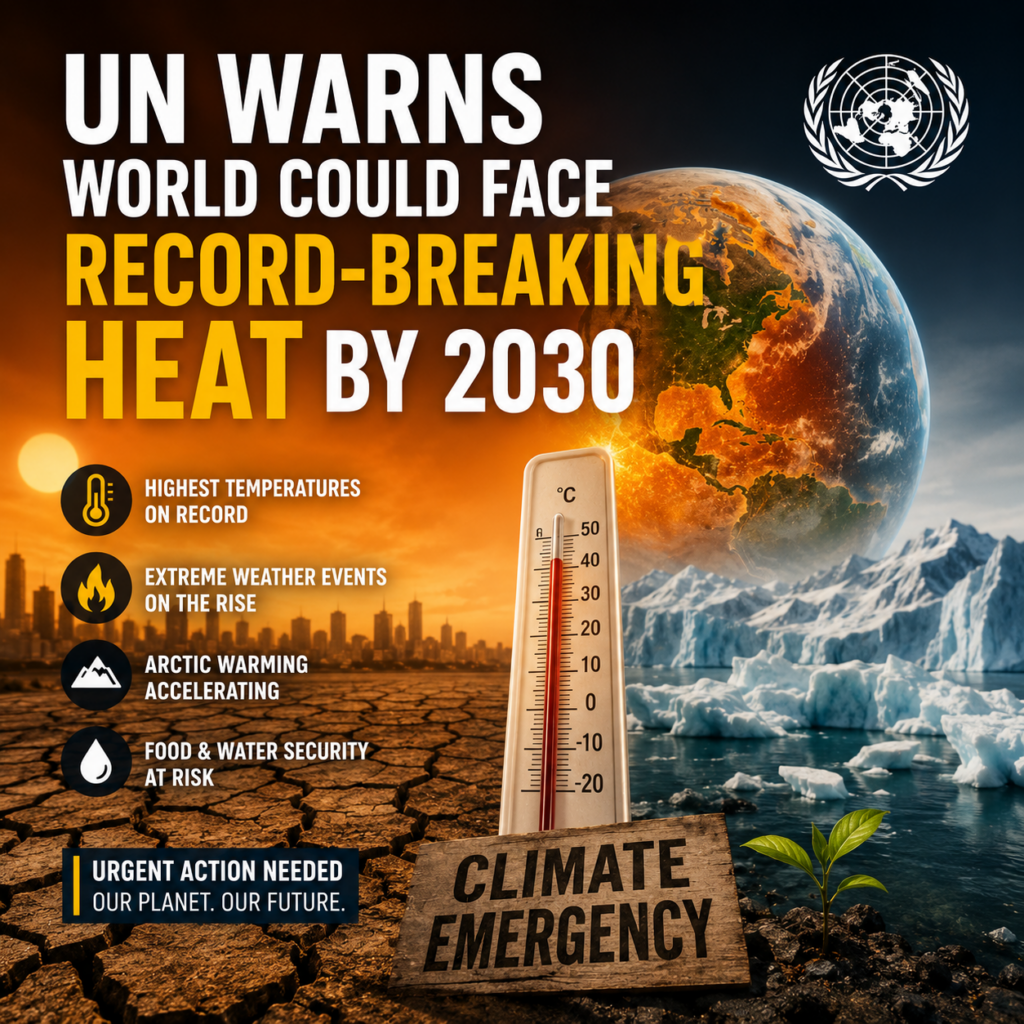
Global Climate Alert
The United Nations has issued a major climate warning, stating that the world is highly likely to experience its hottest years on record before 2030.
According to a new report from the World Meteorological Organization (WMO), global temperatures are expected to continue rising due to climate change and the possible return of El Niño weather conditions.
Key Highlights
Rising Global Temperatures
- Scientists say there is a very high chance that at least one year before 2030 will become the hottest year ever recorded.
- Average global temperatures could cross the critical 1.5°C warming threshold set under the Paris Climate Agreement.
- Climate experts warn that the effects are already visible worldwide.
Extreme Weather Events Increasing
- Heatwaves are becoming more intense across Europe, Asia, and North America.
- Several countries are already experiencing unusually high summer temperatures.
- Scientists expect stronger droughts, floods, wildfires, and storms in coming years.
Arctic Warming Faster Than Expected
- The Arctic region is heating much faster than the global average.
- Melting ice levels continue to raise concerns about rising sea levels and ecosystem damage.
- Experts say Arctic warming could further disrupt global weather patterns.
Food and Water Security at Risk
- Rising temperatures may affect crop production in multiple regions.
- Water shortages are becoming a growing issue in vulnerable countries.
- Economists warn climate change could increase global food prices.
What the UN Report Says
The World Meteorological Organization predicts:
- A 75% chance that average temperatures from 2026 to 2030 will exceed 1.5°C above pre-industrial levels.
- A strong possibility of record-breaking heat during the next El Niño cycle.
- Increasing climate-related disasters if greenhouse gas emissions are not reduced quickly.
Impact Around the World
Europe
- Several countries are facing early heatwaves.
- Authorities are issuing warnings for extreme temperatures.
Asia
- Rising temperatures are increasing pressure on energy and water supplies.
- Some regions are witnessing stronger monsoon irregularities.
North America
- Wildfire risks remain high in multiple areas.
- Heat-related health concerns are increasing.
Expert Reactions
Climate scientists say the latest findings show that global warming is accelerating faster than expected.
UN officials are urging governments to:
- Reduce fossil fuel dependency
- Increase renewable energy investments
- Strengthen climate adaptation plans
- Improve disaster preparedness systems
What Happens Next?
Global leaders are expected to discuss stronger climate action measures during upcoming international environmental meetings.
Scientists warn that immediate action will be necessary to avoid severe long-term consequences for the global economy, ecosystems, and public health.