
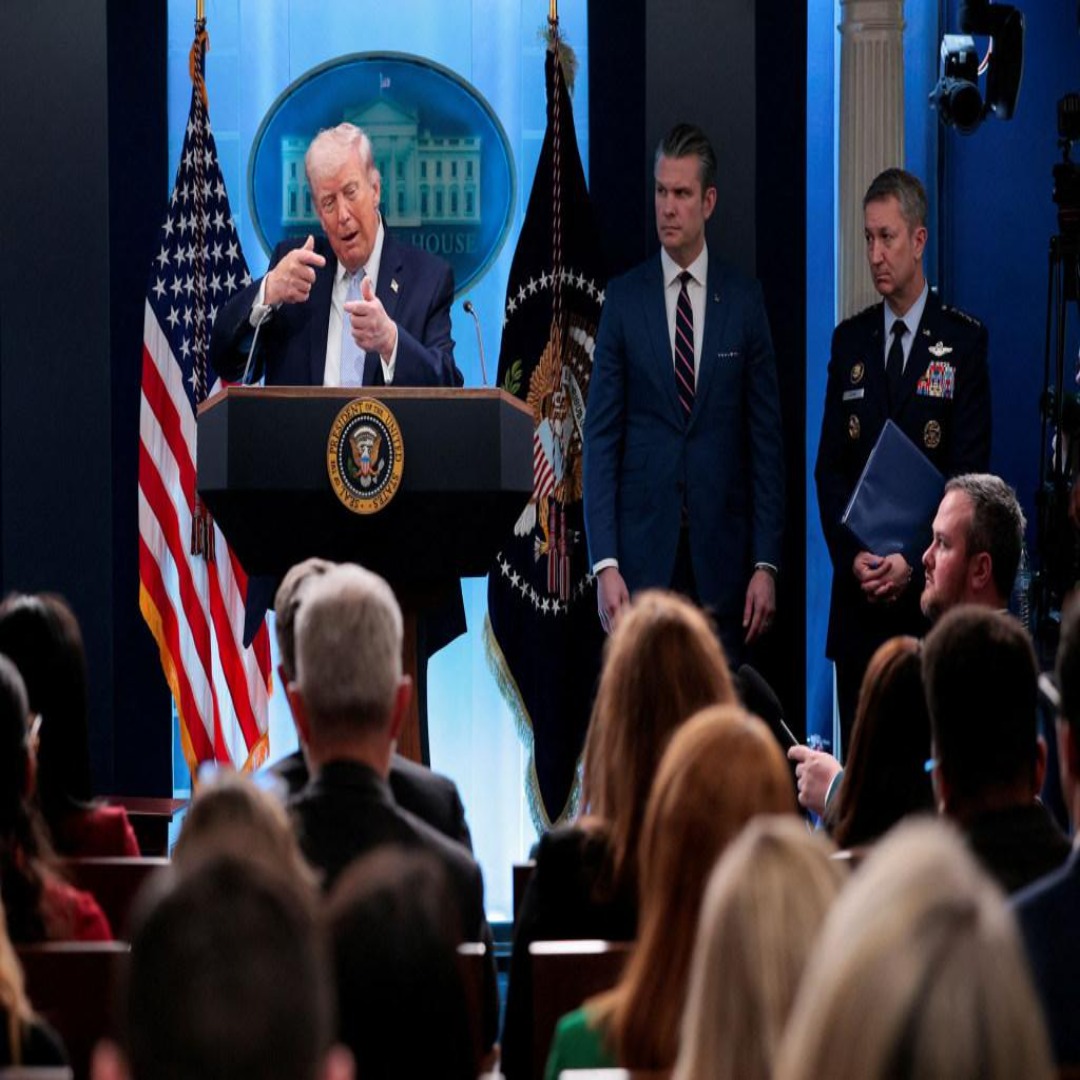
Tensions across the Middle East have intensified once again after US President Donald Trump issued a sharp warning to Iran, stating that the “clock is ticking” for Tehran to reach a peace agreement with Washington. The warning comes amid increasing fears of renewed military escalation, fresh drone attacks reported in Saudi Arabia and the United Arab Emirates, and ongoing instability surrounding the broader Iran conflict.
The developments have raised global concern over regional security, oil markets, international trade routes, and the possibility of a larger confrontation involving multiple countries across the Gulf region. As diplomatic negotiations remain stalled, military activity and political rhetoric on all sides continue to escalate rapidly.
Trump’s Warning to Iran
Speaking amid stalled negotiations, Donald Trump warned that Iran must move quickly toward a deal with the United States or face severe consequences. According to multiple reports, Trump stated that “the clock is ticking” and suggested that renewed military strikes remain a possibility if diplomatic progress fails.
The warning followed high-level discussions between Trump and Israeli Prime Minister Benjamin Netanyahu regarding the ongoing regional situation. Reports indicate that Trump’s administration is increasingly frustrated with the lack of progress in peace talks related to Iran’s nuclear activities and broader regional security concerns.
While the United States continues to publicly support diplomatic negotiations, military preparedness across the region has reportedly increased significantly.
Iran Says Talks Continue Through Pakistan
Despite the aggressive rhetoric, Iran has stated that diplomatic communication with the United States remains active through Pakistan, which is currently acting as a mediator between both sides.
Iranian officials reportedly responded to a recent US peace proposal through Pakistani channels and indicated that discussions are still ongoing. However, Tehran has also warned that it is fully prepared to confront what it describes as “aggression” from the United States or its allies.
This has created a highly unstable diplomatic environment where negotiations continue in parallel with military threats and regional escalation.
Drone Attacks Raise Regional Alarm
One of the most serious developments involved reported drone attacks near critical infrastructure in the Gulf region.
The United Arab Emirates confirmed that multiple drones entered its airspace, with at least one drone reportedly striking near the Barakah nuclear power facility, causing a fire involving an external electrical generator. Emirati authorities described the incident as a dangerous escalation and suggested that Iran or Iranian-backed groups may have been responsible.
Meanwhile, Saudi Arabia announced that it intercepted several drones that entered its territory from Iraqi airspace. Saudi officials warned that they reserve the right to respond to threats against their sovereignty and security.
Although no major casualties or radiation leaks were reported, the attacks significantly increased fears of broader regional instability.
Concerns Over Nuclear Infrastructure
The reported drone incident near the UAE’s Barakah nuclear power facility has generated particular concern internationally.
The International Atomic Energy Agency (IAEA) reportedly expressed “grave concern” regarding military threats involving nuclear infrastructure and called for restraint from all sides.
Security analysts note that attacks involving nuclear-related facilities are considered extremely dangerous because even limited damage or miscalculation could lead to severe regional consequences.
The UAE has emphasized that its energy infrastructure remains operational and secure, but officials warned that repeated attacks could destabilize the region further.
Oil Markets and Economic Impact
The growing tensions have already begun affecting global markets.
Oil prices rose sharply after reports of the drone attacks and Trump’s latest warning to Iran. Investors fear that continued instability could threaten shipping routes and energy infrastructure across the Gulf region.
The Strait of Hormuz remains one of the world’s most strategically important oil transit routes, with a significant portion of global crude oil exports passing through it daily.
Experts warn that further escalation could result in:
- Higher global fuel prices
- Increased inflation
- Disruptions to international trade
- Pressure on global stock markets
Countries heavily dependent on imported oil, including India, are closely monitoring developments.
Saudi Arabia and UAE Increase Security Measures
Following the drone incidents, Gulf nations have reportedly increased military readiness and air defense activity.
Saudi Arabia and the UAE have been strengthening cooperation with Western allies and regional partners in anticipation of potential future attacks. Reports suggest that air defense systems across the Gulf region remain on high alert.
Several Gulf countries have also condemned attacks targeting civilian infrastructure and warned against further destabilization of the region.
Ongoing Regional Conflict
The current tensions are part of the broader 2026 Iran conflict, which escalated earlier this year after major military strikes involving the United States and Israel. Since then, the region has experienced repeated exchanges involving:
- Missile attacks
- Drone strikes
- Naval confrontations
- Proxy conflicts
Multiple Gulf nations have reported being targeted by Iranian missile or drone operations during the ongoing conflict, leading to growing fears of a wider regional war.
International Diplomatic Efforts
Several countries are continuing efforts to prevent further escalation.
Pakistan has emerged as an important mediator between Washington and Tehran, while countries such as China and Turkey have called for renewed diplomacy and restraint.
At the same time, Western governments continue coordinating military and intelligence activity in the Gulf region to protect shipping routes and regional allies.
Diplomatic analysts believe the coming weeks may determine whether negotiations succeed or whether the conflict moves toward a more dangerous phase.
Growing Fear of Wider War
The combination of:
- stalled peace talks
- drone attacks
- military warnings
- rising oil prices
- increased regional mobilization
has raised concerns that the Middle East may be approaching another major escalation point.
Security experts warn that even small incidents could rapidly trigger broader retaliation cycles involving multiple countries.
Conclusion
The latest developments in the Iran conflict highlight the fragile state of security across the Middle East. Donald Trump’s warning that the “clock is ticking,” combined with fresh drone attacks reported in Saudi Arabia and the UAE, has significantly increased global concern over the possibility of renewed military escalation.
While diplomatic talks through Pakistan continue, the region remains highly unstable, with oil markets, military forces, and international governments closely watching every development.
As tensions continue rising, the coming days could prove critical in determining whether diplomacy can still prevent a wider regional conflict.