
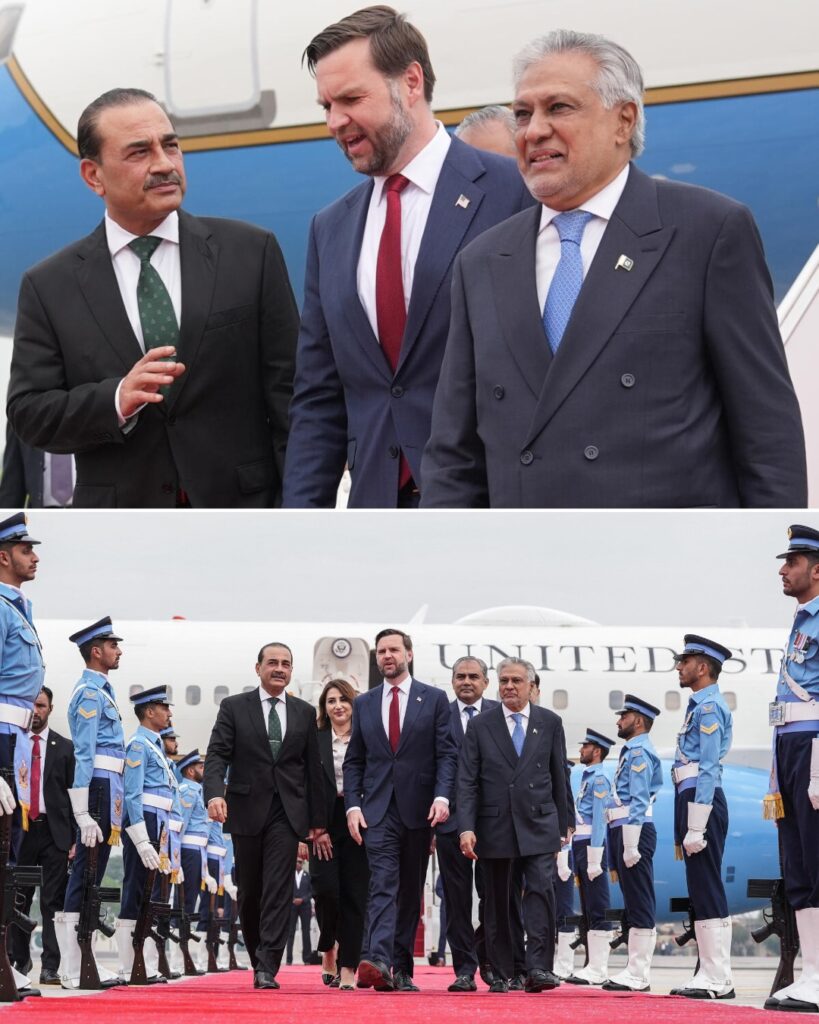
ISLAMABAD — In a historic diplomatic gambit that has the world holding its breath, U.S. Vice President JD Vance and a high-level Iranian delegation arrived in Pakistan today, Saturday, April 11, 2026. This meeting, hosted by Pakistani Prime Minister Shehbaz Sharif, marks the first direct, face-to-face engagement between Washington and Tehran since a devastating regional conflict erupted seven weeks ago.
The talks, dubbed the “Islamabad Talks,” aim to transform a fragile, two-week-old ceasefire into a permanent peace treaty to stabilize the Middle East and secure global energy markets.
Why is this Happening?
The primary driver for this meeting is a brutal war that has claimed over 3,000 lives in Iran and nearly 2,000 in Lebanon. The conflict reached a tipping point when the Strait of Hormuz—the world’s most vital oil transit point—was effectively closed due to naval hostilities and the placement of sea mines.
U.S. President Donald Trump brokered the temporary ceasefire earlier this month, but both sides remain on a hair-trigger. The U.S. is seeking to prevent Iran from obtaining a nuclear weapon and to reopen global shipping lanes, while Iran is reeling from the economic and military impact of joint U.S.-Israeli strikes.
Where are They Meeting?
The negotiations are centered in Islamabad, Pakistan, chosen for its unique position as a mediator that maintains working relationships with both the West and the Islamic Republic of Iran.
- Venue: Official negotiations are taking place at the Serena Hotel, a high-security facility in the capital.
- Media Center: A dedicated international media facilitation center has been established, where Pakistan has granted visa-on-arrival status to journalists covering the event.
- Diplomatic Facilitation: Prime Minister Shehbaz Sharif held separate introductory meetings with both delegations at the PM House before the trilateral talks commenced.
The Key Players
The delegations represent the highest levels of their respective governments, signaling the “make-or-break” nature of the summit.
| United States Delegation | Iranian Delegation |
| JD Vance (Vice President) | Mohammad Baqer Ghalibaf (Parliament Speaker) |
| Steve Witkoff (Special Envoy) | Abbas Araghchi (Foreign Minister) |
| Jared Kushner (Senior Adviser) | Military & Nuclear Technical Experts |
The Agenda: What is Being Discussed?
The talks are framed by two competing proposals: a 15-point plan from the U.S. and a 10-point proposal from Iran.
1. Security & The Strait of Hormuz
- U.S. Priority: Immediate reopening of the Strait of Hormuz. President Trump has stated the U.S. military is already preparing equipment to clear mines from the waterway.
- Iran’s Demand: Control over the Strait and a guarantee that regional allies (Hezbollah) will no longer be targeted by Israeli strikes.
2. Nuclear Restrictions & Sanctions
- U.S. Priority: Restricting Iran’s nuclear program to ensure it cannot produce a weapon.
- Iran’s Demand: The unfreezing of billions of dollars in blocked Iranian assets and the lifting of “crippling” economic sanctions.
3. Regional Ceasefire (Lebanon & Israel)
- Iran has made a permanent truce in Lebanon a precondition for any final deal. The U.S. delegation, while supportive of a ceasefire, has warned Iran not to “play” the negotiators or use the talks as a stalling tactic.
A Shaky Path Forward
Despite the optimism from the Pakistani hosts, deep distrust lingers. Upon his arrival, Iranian Speaker Ghalibaf told reporters, “We have goodwill, but we do not have trust [in Americans].” Simultaneously, JD Vance warned before landing that if Iran acts in bad faith, they would find the U.S. team “not that receptive.”
As of Saturday evening, Pakistani officials report that the talks are “progressing well,” though no formal signatures have been placed on a final agreement. Global oil prices have already shown slight volatility as traders await a signal that the Strait of Hormuz will safely reopen for commercial tankers.
“These talks serve as a stepping stone toward durable peace in the region.”
— Prime Minister Shehbaz Sharif