
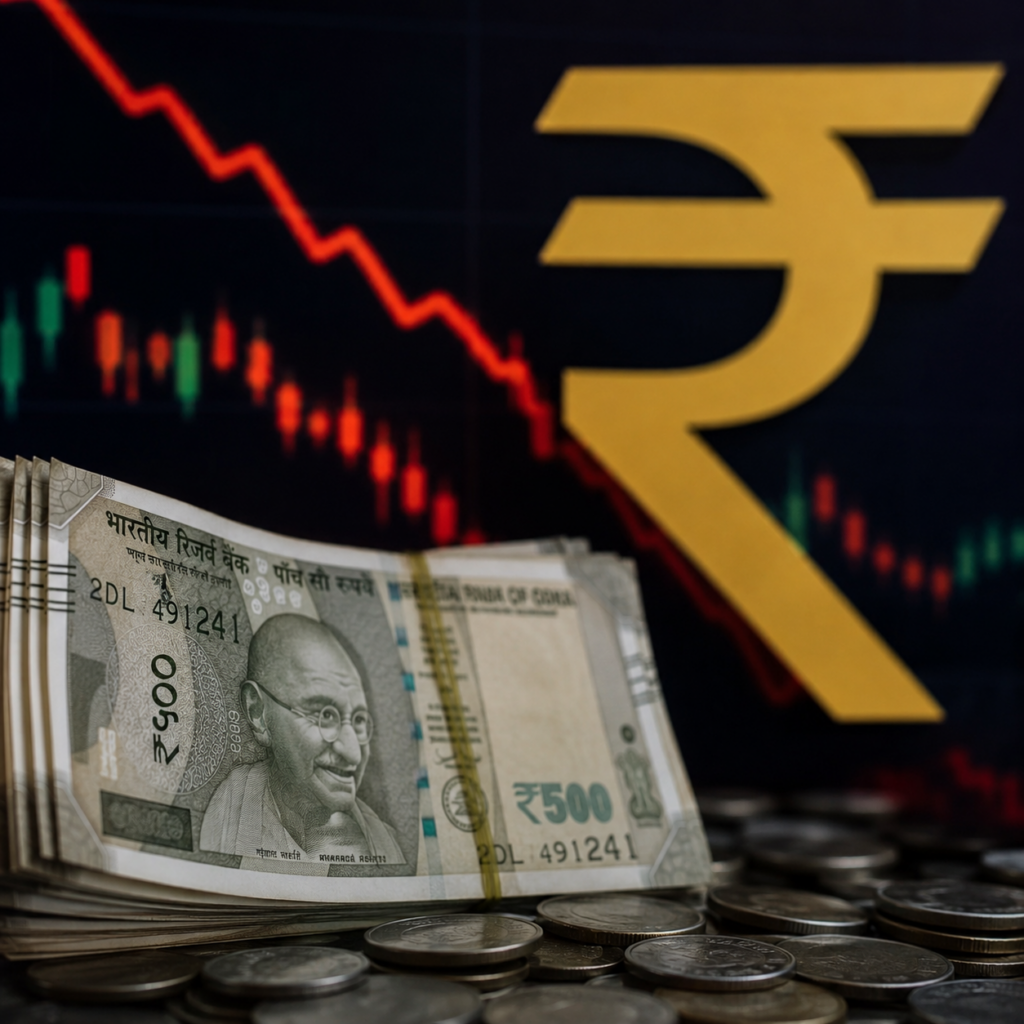
Rising Dollar Pressure, Expensive Oil Imports, and Foreign Investor Outflows Hit Indian Economy
Key Highlights
- The Indian rupee has become the worst-performing major currency in Asia in 2026.
- The rupee recently touched record low levels near ₹96 per U.S. dollar.
- Rising crude oil prices, foreign investment outflows, and global uncertainty are the main reasons behind the decline.
- The Reserve Bank of India (RBI) has intervened heavily to stabilize the currency market.
- Economists warn that continued rupee weakness may increase inflation and import costs in India.
Why Is the Indian Rupee Falling?
1. Rising Crude Oil Prices
- India imports nearly 85% of its crude oil requirements from other countries.
- Global oil prices have surged due to geopolitical tensions and supply concerns.
- Higher oil prices mean India needs more U.S. dollars to buy oil.
- Increased demand for dollars weakens the rupee in the foreign exchange market.
2. Strong U.S. Dollar
- The U.S. Federal Reserve has maintained high interest rates.
- Investors around the world are moving money into U.S. assets for better returns.
- This has strengthened the dollar globally and weakened many emerging market currencies, including the rupee.
3. Foreign Investors Pulling Money Out
- Foreign Portfolio Investors (FPIs) have sold large amounts of Indian stocks and bonds in 2026.
- Reports suggest foreign investors withdrew over ₹27,000 crore from Indian markets in May alone.
- Lower foreign investment reduces dollar inflows into India, putting additional pressure on the rupee.
4. Growing Trade Deficit
- India’s import bill has increased sharply due to expensive crude oil and electronic goods.
- The country’s trade deficit reportedly crossed $28 billion recently.
- A larger trade deficit means India is spending more dollars than it earns from exports.
Impact of Weak Rupee on Indian Economy
Higher Inflation
- Imported goods become more expensive when the rupee falls.
- Fuel prices may rise because crude oil imports cost more.
- Higher transportation costs can increase prices of food and daily essentials.
Costlier Foreign Education and Travel
- Indian students studying abroad will need to spend more money.
- International travel, hotel bookings, and visa expenses become expensive for Indian citizens.
Pressure on Businesses
- Companies dependent on imported raw materials may face higher production costs.
- Electronics, automobile, and aviation industries are likely to be affected the most.
Positive Impact on Exports
- Indian exporters may benefit from a weaker rupee.
- Sectors like:
- IT Services
- Pharmaceuticals
- Textiles
- Engineering Goods
could become more competitive globally because Indian products become cheaper for foreign buyers.
RBI’s Response
Reserve Bank Intervention
- The RBI has reportedly sold billions of dollars from its forex reserves to slow the rupee’s fall.
- The central bank aims to reduce excessive volatility and maintain investor confidence.
Forex Reserves Still Strong
- Despite intervention, India still holds one of the world’s largest foreign exchange reserves.
- Economists believe these reserves provide temporary protection against major currency shocks.
Expert Opinions
Economic Concerns
- Economists have described the current situation as a “balance of payments stress test” for India.
- If oil prices remain high and global uncertainty continues, the rupee may remain under pressure in coming months.
Long-Term Outlook
RBI policy measures
India’s strong domestic demand and growing digital economy still provide long-term economic strength.
However, currency stability will depend on:
Crude oil prices
Global interest rates
Foreign investment inflows