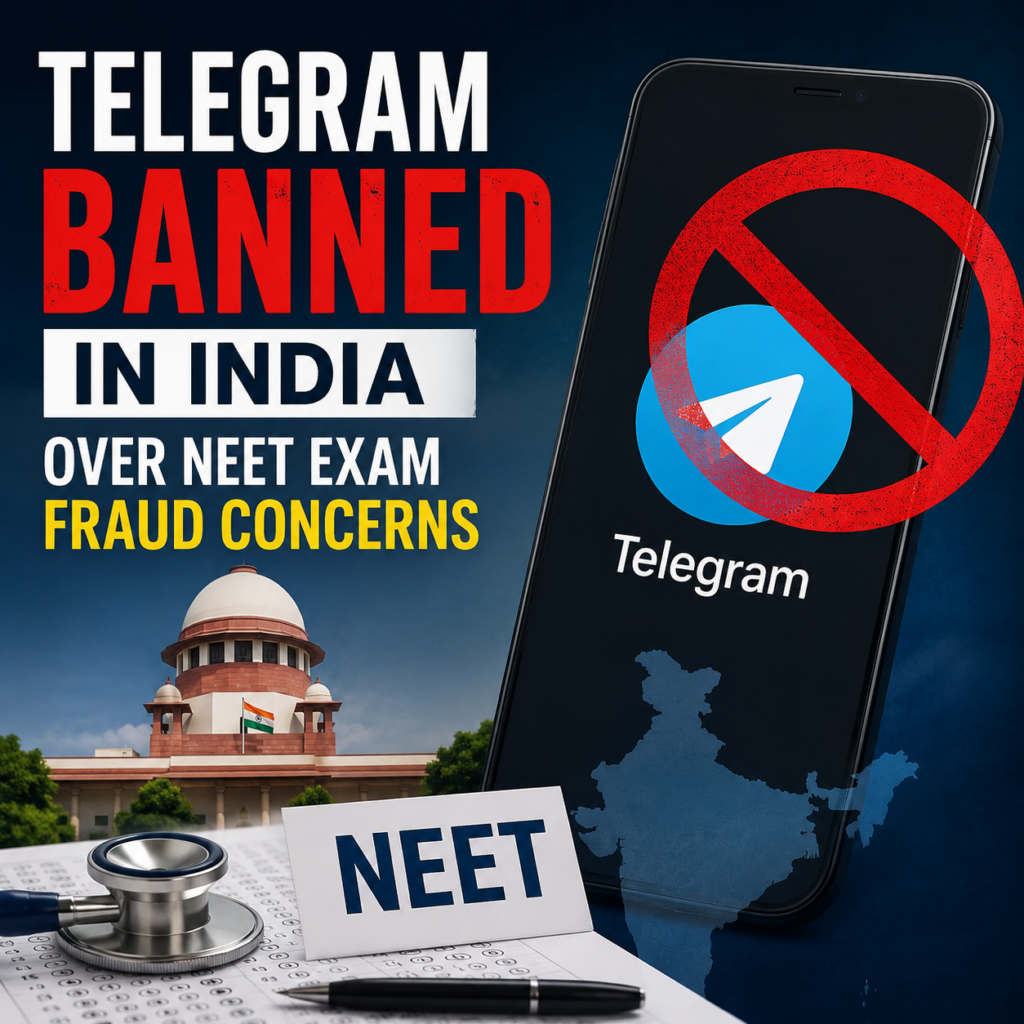
In a major move aimed at protecting the integrity of India’s medical entrance examination system, the Government of India has temporarily blocked access to the messaging platform Telegram until June 22, 2026. The decision comes amid growing concerns that the app was being used to facilitate cheating, spread misinformation, and circulate fraudulent claims related to the National Eligibility-cum-Entrance Test (NEET-UG) 2026.
The ban was announced just days before the NEET-UG 2026 re-examination scheduled for June 21. Authorities stated that the restriction is temporary and intended solely to prevent the misuse of the platform during a sensitive examination period.
Background: NEET 2026 Controversy
NEET is India’s largest medical entrance examination and is conducted by the National Testing Agency (NTA) for admission to undergraduate medical courses across the country. Earlier in 2026, the original NEET examination was cancelled after authorities discovered evidence of a question paper leak, triggering widespread protests and investigations. The matter was eventually handed over to the Central Bureau of Investigation (CBI).
Following the cancellation, a re-examination was scheduled for June 21, 2026. However, in the weeks leading up to the re-test, numerous Telegram channels began claiming that they possessed leaked question papers and answer keys. Several of these channels allegedly demanded large sums of money from students in exchange for purported access to examination materials.
Why Telegram Was Targeted
Government agencies and the NTA observed that Telegram had become a major platform for the circulation of fake paper leaks, scam messages, and exam-related misinformation. Officials reported that anonymous channels were exploiting students’ anxiety by selling allegedly leaked papers and spreading unverified content.
The Ministry of Education stated that repeated efforts to remove harmful content were not sufficient to stop the spread of fraudulent material. As a result, the government decided to temporarily block access to Telegram under Section 69A of the Information Technology Act, a provision that allows restrictions on online platforms in specific circumstances.
According to official statements, the objective was to prevent organized cheating networks from using the platform during the crucial period leading up to the re-examination.
Message Editing Feature Also Restricted
In addition to the temporary ban, authorities raised concerns about Telegram’s message-editing feature. Investigators found instances where messages had allegedly been edited after publication to create the false impression that examination questions had been leaked before the exam. This tactic was reportedly used to fabricate evidence and spread panic among students.
As a precautionary measure, the NTA requested restrictions on certain Telegram features, including message editing, until June 30. Officials believe this will help reduce misinformation and prevent manipulation of digital records during the examination process.
NTA’s Response to Students
The NTA has repeatedly urged candidates not to trust claims circulating on social media regarding leaked papers. The agency has emphasized that many viral posts are fake and designed to scam students. Candidates have been advised to rely only on official announcements published through NTA channels and the NEET website.
Government fact-checking agencies have also declared several viral “paper leak” claims to be false and warned students against sharing unverified content.
Reactions and Concerns
The decision to block Telegram has generated mixed reactions. Education authorities and examination officials have welcomed the move, arguing that extraordinary measures are necessary to ensure a fair examination process. The NTA publicly thanked government agencies for acting quickly against platforms allegedly being misused for examination fraud.
However, digital rights activists have expressed concern about the broader implications of blocking an entire communication platform. Critics argue that millions of legitimate users who rely on Telegram for education, business, and personal communication are affected by the restriction. They have called for more targeted enforcement measures instead of a blanket ban.
Conclusion
The temporary Telegram ban marks one of the strongest actions taken by Indian authorities in response to examination-related fraud. With the NEET-UG 2026 re-examination approaching, the government says the move is necessary to safeguard the credibility of one of the country’s most important entrance exams. Whether the restriction successfully curbs cheating and misinformation remains to be seen, but the episode highlights the growing challenge of maintaining exam integrity in the digital age.