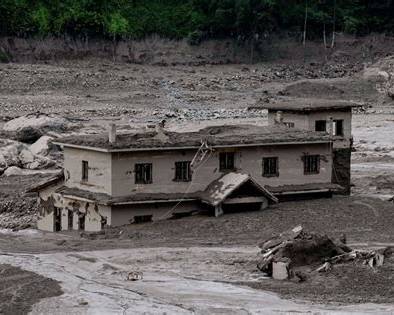
A devastating flash flood triggered by a glacier collapse has struck the Himalayan border region of Nepal and China’s Tibet, leaving hundreds dead, hundreds of people missing and communities facing the possibility of further flooding. Rescue teams are continuing operations across remote valleys after torrents of water, ice, rock and mud swept through settlements and critical infrastructure on August 26, 2026.
The disaster has become one of the region’s most serious recent emergencies, with authorities struggling to reach isolated areas because roads and bridges have been destroyed. The situation remains fluid, and casualty figures have continued to change as rescue teams reach previously inaccessible locations. According to the latest Reuters reporting, Nepal’s confirmed death toll had risen to 469, while nearly 1,000 people were reported missing across Nepal and Tibet. Chinese authorities separately reported 558 people missing in Tibet’s Gyirong County, including 260 foreign nationals.
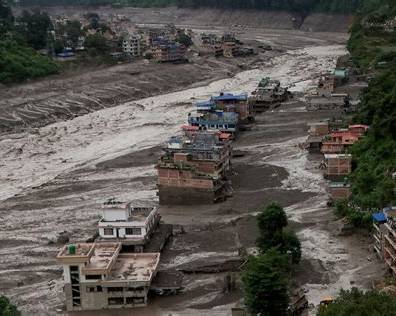
How the disaster began
The flooding followed the collapse of glacial and rocky material in the high Himalayas. A large mass of ice and rock entered a mountain river system, creating a powerful debris flow containing water, mud, boulders and ice.
The resulting torrent moved rapidly through valleys and populated areas. Reuters reported that Chinese geological assessments indicated that an ice avalanche triggered the debris flow, which then gathered glacial material as it moved downstream. The flow eventually struck areas on both sides of the Nepal-China border.
Early reports raised the possibility that an earthquake had triggered the collapse. However, subsequent analysis indicated that seismic energy detected in the area was generated by the collapse of glacial rock and ice rather than a conventional earthquake causing the disaster.
Severe destruction along the Nepal-Tibet route
The flooding caused extensive destruction to roads, bridges, homes and other infrastructure. One of the most heavily affected locations on the Chinese side was the Gyirong border crossing, an important transportation and trade link between Tibet and Nepal.
Chinese state media footage showed the border complex overwhelmed by mud and debris. Reuters reported that the border gate, customs and immigration buildings and other structures were destroyed. Rescue teams initially faced major difficulties reaching the area because the access road itself had been severely damaged.
On the Nepalese side, communities along the Trishuli and Bhote Koshi river systems were badly affected. Entire sections of settlements were damaged, while roads and bridges were washed away, leaving some communities cut off from assistance.
The destruction has also affected tourism and pilgrimage routes in the region. The affected area lies along routes used by trekkers and pilgrims traveling toward Tibet and Mount Kailash.
Foreign tourists and pilgrims among the missing
The disaster has attracted international attention because many of those missing are foreign nationals. Reuters reported that missing people in Nepal included citizens of several countries, with 288 Indians, 63 Americans, 51 Malaysians, 34 Australians, 33 Britons and 25 Canadians among those reported missing in Nepal at one stage of the rescue operation.
The region is particularly significant for religious tourism because Mount Kailash and Lake Manasarovar attract pilgrims from several countries. The Associated Press reported that people from India and other countries were among those affected while traveling in the wider pilgrimage region.
Families around the world have been waiting for information about missing relatives as communications remain difficult in some affected areas.
Rescue operations face major challenges
Nepalese authorities have deployed helicopters and emergency personnel to search for survivors, deliver supplies and evacuate people from isolated areas. Rescue workers are also using heavy machinery and search dogs in areas covered by mud and debris.
The geography of the Himalayan region makes the operation particularly difficult. Narrow valleys, damaged roads and unstable terrain have slowed access to some of the worst-hit locations. In several areas, rescuers have had to rely on aerial operations because normal ground routes are no longer usable.
China has also deployed emergency personnel to affected parts of Tibet. Chinese Premier Li Qiang visited Gyirong County as authorities assessed the damage and worked to reduce the risk of additional flooding.
New flood threat creates additional concern
Even as rescue operations continue, authorities are worried that the disaster may not be over.
The collapse and resulting debris have blocked waterways and created temporary lakes. Rising water levels could potentially cause these natural dams to fail, producing another destructive surge downstream.
Reuters reported that Nepal was monitoring a debris-formed lake on the Bhotekoshi River, while Chinese authorities were watching another dangerous lake in Tibet. Chinese officials estimated that about 3 million cubic metres of water could enter one of the affected lakes over several days, increasing concerns about a possible breach.
Engineering and emergency teams are therefore working not only to rescue people already affected but also to reduce the possibility of another flood.
Climate change and Himalayan risks
Scientists are also examining the role of a warming climate in increasing the vulnerability of high-altitude regions. Experts caution that it would be incorrect to describe climate change as the sole immediate cause of this specific collapse. However, rising temperatures can contribute to glacier and permafrost instability, alter meltwater patterns and weaken frozen ground and ice that help stabilize mountain slopes.
The Himalayan region has experienced several glacier-related disasters in recent years, highlighting the risks faced by communities living downstream of high-altitude ice and rock formations.
A crisis still unfolding
The full scale of the August 26 disaster is still becoming clear as rescuers reach more affected areas. The confirmed death toll has risen rapidly, while the number of missing people remains uncertain because communications and transportation links have been severely disrupted.
For Nepal and Tibet, the immediate priorities are locating survivors, evacuating people from dangerous areas, restoring access routes and preventing secondary flooding. For families of missing tourists and pilgrims, the search for information continues.
The disaster is also a reminder of the extreme risks faced by communities and travelers in the rapidly changing Himalayan environment. As rescue operations continue, authorities on both sides of the border remain focused on preventing another catastrophe while responding to one of the most destructive floods the region has experienced in recent years.