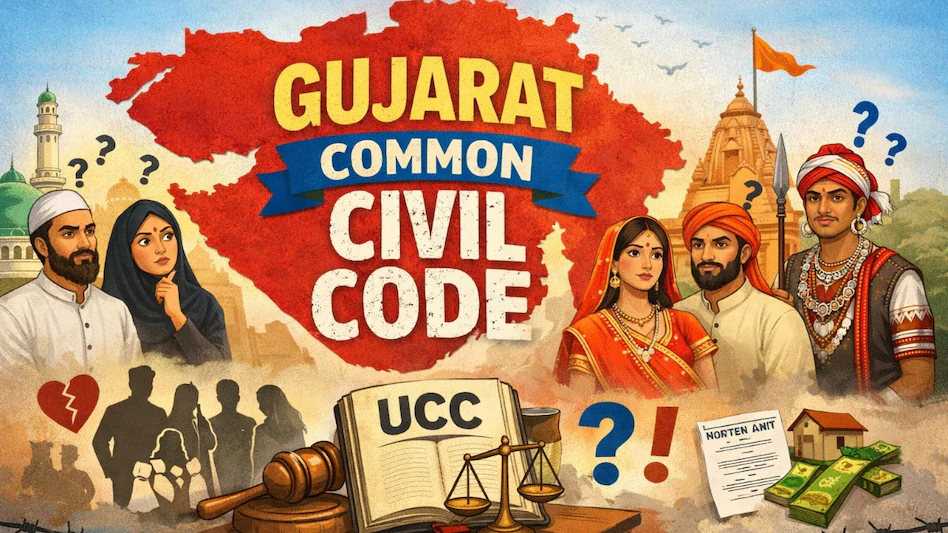
India is witnessing an important legal and social reform as Gujarat moves forward to implement the Uniform Civil Code (UCC), becoming the second state in India after Uttarakhand to adopt the policy.
The decision marks a significant step toward creating uniform personal laws for all citizens, regardless of religion, community, or gender. The move has generated national attention and discussions about legal equality and social reform.
What is the Uniform Civil Code (UCC)?
The Uniform Civil Code (UCC) is a proposal to replace personal laws based on religion with a common set of laws governing all citizens.
These laws cover important aspects of civil life such as:
- Marriage
- Divorce
- Adoption
- Inheritance
- Maintenance
Currently, these matters are governed by different religious personal laws in India. The UCC aims to create a single legal framework applicable to everyone.
The idea of UCC is also mentioned in Article 44 of the Constitution of India, which encourages the state to work toward a uniform civil code for all citizens.
Gujarat Becomes the Second State to Implement UCC
Following the historic step taken by Uttarakhand, Gujarat has announced its intention to implement the Uniform Civil Code, making it the second state in India to adopt this legal reform.
The move is being seen as a major development in India’s legal landscape, especially regarding equality in personal laws.
The decision is expected to:
- Ensure equal rights for men and women
- Simplify legal procedures related to family laws
- Promote gender justice and social equality
Uttarakhand: The First State to Implement UCC
Earlier, Uttarakhand became the first state in India to implement the Uniform Civil Code, setting a precedent for other states.
The Uttarakhand government passed the UCC bill in the state assembly, aiming to bring a common legal structure for all citizens in matters related to family law.
The implementation in Uttarakhand is often considered a pilot step for possible nationwide adoption in the future.
Why UCC is Considered Important
Supporters of the Uniform Civil Code believe it will bring several benefits:
1. Equality Before Law
A single set of laws ensures that all citizens are treated equally, regardless of religion.
2. Gender Justice
Many personal laws have been criticized for gender inequality. UCC could ensure equal rights for women.
3. Legal Simplicity
Currently, multiple personal laws create complexity in legal proceedings. A uniform system would simplify legal processes.
4. National Integration
A common civil code may promote unity and a shared legal identity among citizens.
Challenges and Debates Around UCC
Despite its advantages, the implementation of the Uniform Civil Code has also sparked debates.
Some concerns include:
- Protection of religious traditions and customs
- Need for consultation with different communities
- Ensuring that the law respects India’s cultural diversity
Experts suggest that careful drafting and public consultation will be important for successful implementation.
Impact of UCC Implementation in Gujarat
If implemented effectively, the UCC in Gujarat could:
- Create uniform family laws
- Improve women’s legal rights
- Serve as a model for other Indian states
- Influence discussions about a national UCC policy
The development also signals a growing movement toward legal uniformity in India’s civil laws.
Conclusion
With Gujarat becoming the second state after Uttarakhand to implement the Uniform Civil Code, India is witnessing a significant legal reform that could shape the future of civil laws in the country.
While the debate around UCC continues, the move represents an effort toward legal equality, gender justice, and simplified civil laws.
As more states evaluate the policy, the implementation of UCC may play a crucial role in the evolution of India’s legal system.