
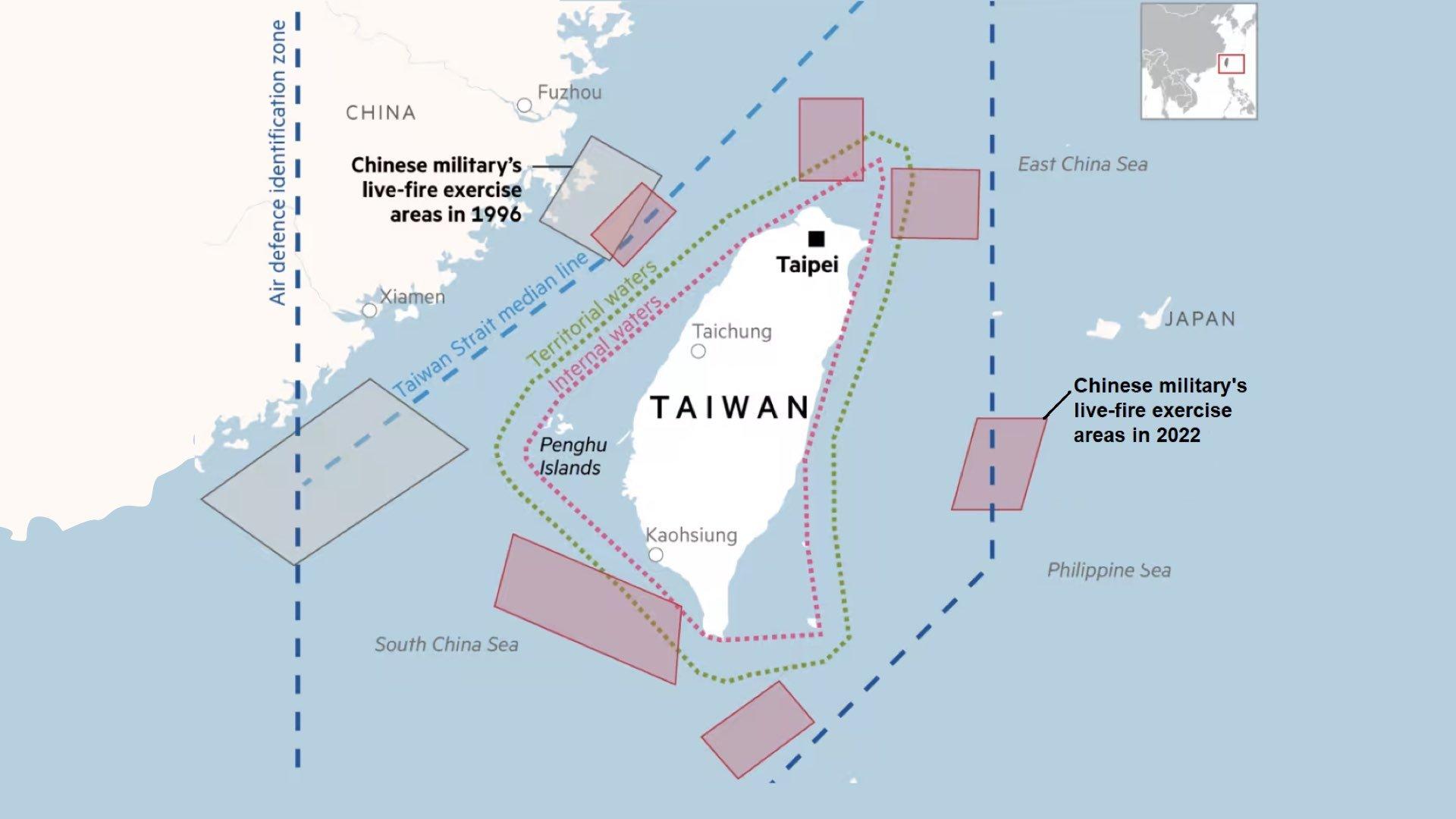
China has significantly expanded its military drills near Taiwan, escalating tensions in the region and drawing global attention. The exercises, which include naval fleets, fighter jets, and missile units, are being seen as a strong signal of Beijing’s military readiness and strategic intent.
The drills come at a time of already strained relations between China and Taiwan, raising concerns about stability in the Indo-Pacific region.
Scale and Nature of the Drills
According to reports, the Chinese military has deployed multiple warships and aircraft around Taiwan, conducting coordinated exercises in both air and sea zones. These drills are larger in scale compared to previous operations and include:
- Fighter jet sorties near Taiwan’s air defense identification zone
- Naval maneuvers involving destroyers and aircraft carriers
- Simulated strike and blockade scenarios
The exercises are designed to test combat readiness and demonstrate China’s capability to operate in high-intensity conflict situations.
China’s Position
China considers Taiwan a part of its territory and has consistently opposed any moves toward formal independence by the island. Beijing has described the drills as a necessary response to what it sees as external interference and internal separatist activities.
Chinese officials have stated that such military actions are intended to safeguard national sovereignty and territorial integrity.
Taiwan’s Response
Taiwan has strongly condemned the drills, calling them provocative and destabilizing. Taiwanese defense authorities have increased their own military readiness, deploying air and naval forces to monitor the situation.
Officials in Taiwan have emphasized their commitment to maintaining peace while also ensuring the island’s security and defense capabilities.
International Reactions
The situation has drawn concern from several countries, particularly the United States and its allies, who have urged restraint and called for peaceful resolution of disputes.
The United States has reiterated its support for stability in the region and emphasized the importance of maintaining freedom of navigation in international waters.
Other nations in the Indo-Pacific region are closely monitoring developments, given the potential impact on regional security and trade.
Strategic Importance of the Region
The Taiwan Strait is one of the most strategically important waterways in the world, serving as a key route for global trade and shipping. Any disruption in this area could have significant economic consequences.
The region is also critical from a geopolitical standpoint, as it lies at the center of major power dynamics between China, the United States, and other regional players.
Risks of Escalation
Experts warn that continued military activity increases the risk of miscalculation or accidental confrontation. Even small incidents could escalate quickly given the presence of heavily armed forces in close proximity.
The growing frequency and scale of such drills have raised concerns about long-term stability in the region.
Conclusion
China’s expanded military drills near Taiwan highlight rising tensions in one of the world’s most sensitive geopolitical regions. While both sides have avoided direct conflict, the situation remains volatile.
Diplomatic engagement and careful management of tensions will be essential to prevent escalation and maintain peace in the Indo-Pacific region.