
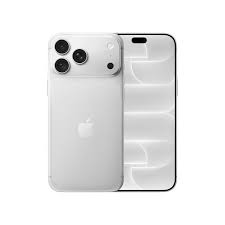
Apple has officially opened a new chapter for the iPhone with the launch of the iPhone 18 Pro and iPhone 18 Pro Max, while simultaneously introducing the company’s first-ever foldable smartphone, the iPhone Duo.
The September 9 event, held under the title “Surprise and Shine,” represents one of Apple’s most significant product launches in years. The company is not only upgrading its conventional Pro iPhones but is also entering the foldable-phone market for the first time, putting Apple directly into competition with Samsung, Google and other manufacturers that have spent years developing foldable devices.
The launch is also notable because it is the first major iPhone event under Apple’s new CEO John Ternus, marking a leadership transition at one of the world’s most valuable technology companies.
For Indian consumers, the launch is particularly significant because Apple has confirmed Indian availability for the iPhone 18 Pro and Pro Max from September 18, while the new foldable iPhone Duo will arrive later in October.
The iPhone 18 Pro starts at ₹1,64,900 in India, while the iPhone 18 Pro Max starts at ₹1,79,900. The iPhone Duo carries a dramatically higher starting price of ₹2,99,900.
iPhone 18 Pro and Pro Max are the new flagship models
Apple’s immediate flagship phones are the iPhone 18 Pro and iPhone 18 Pro Max.
The two devices retain the familiar premium iPhone design language but introduce significant changes under the hood.
The iPhone 18 Pro comes with a 6.3-inch Super Retina XDR display, while the Pro Max uses a 6.9-inch display.
Both models use Apple’s new A20 Pro chip, paired with an updated cooling system designed to handle sustained performance and increasingly demanding AI workloads.
Apple says the new architecture delivers major improvements in performance and battery life compared with the previous generation.
The phones are available in four finishes:
- Black
- Silver
- Glacier
- Burgundy
The new burgundy finish is one of the most visually noticeable changes to Apple’s Pro colour lineup this year.
A20 Pro is at the heart of the upgrade
The biggest technical change inside the iPhone 18 Pro family is Apple’s A20 Pro processor.
Apple has increasingly positioned its custom silicon as more than simply a way to make applications run faster.
The company is now designing its chips around artificial intelligence, image processing, gaming, video production and on-device machine-learning workloads.
The A20 Pro continues that strategy.
Apple says the new processor is paired with a dual 16-core Neural Engine and a seven-core GPU architecture designed to accelerate graphics and AI workloads.
The chip is also combined with a new vapour-chamber cooling system.
This is important because sustained performance has become increasingly relevant as smartphones perform more computationally demanding tasks.
AI processing, high-end gaming, computational photography and video recording can generate significant heat.
The improved thermal system is intended to allow the A20 Pro to maintain high performance for longer periods instead of quickly reducing clock speeds because of heat.
For users, that could translate into more consistent performance during gaming, video editing and demanding AI applications.
Apple is making a major camera change
The camera system is arguably the most important hardware upgrade in the iPhone 18 Pro.
Apple has introduced a new 48MP Fusion Main camera with variable aperture.
This is a major change because a variable-aperture system allows the camera to physically adjust how much light enters the lens.
That can provide greater control over exposure and depth of field.
Apple says the system offers improved low-light photography and video as well as greater creative control over the appearance of images.
The new Pro camera system consists of:
- 48MP Fusion Main
- 48MP Fusion Ultra Wide
- 48MP Fusion Telephoto
The main camera supports multiple aperture settings, including ƒ/1.48, ƒ/1.8, ƒ/2.8 and ƒ/4.0.
This gives Apple considerably more control over the photographic characteristics of the camera system.
Variable aperture could matter more than another megapixel increase
Smartphone camera upgrades have increasingly focused on computational photography rather than simply increasing megapixel counts.
Apple’s decision to introduce variable aperture therefore represents an interesting direction.
A wider aperture can allow more light into the sensor, which can help in darker environments.
A narrower aperture can increase the depth of field and provide greater control over how much of a scene appears in focus.
This is especially useful for people shooting portraits, food, products or cinematic video.
Instead of relying entirely on software to simulate depth of field, Apple is adding more optical control to the camera system itself.
That makes the iPhone 18 Pro’s camera upgrade more substantial than a simple resolution increase.
Apple is also targeting professional video creators
The company continues to position the Pro iPhone as a serious video-production device.
The new camera system, stronger processor and improved stabilization are designed to make the phone more capable for professional and semi-professional creators.
Apple has also introduced additional camera controls that allow users to access and adjust settings more directly.
The objective is clear: Apple wants the iPhone to remain one of the most important cameras used by creators, filmmakers and social-media professionals.
New 18MP Center Stage front camera
The front camera has also received a major upgrade.
The iPhone 18 Pro models feature an 18MP Center Stage front camera.
Center Stage technology is designed to keep users framed during video calls and recordings.
It can automatically adjust the framing to keep the subject positioned appropriately.
Apple is also adding Dual Capture, allowing users to capture content using the front and rear cameras in certain scenarios.
That could be particularly useful for vloggers and social-media creators who want to record themselves while simultaneously capturing what is happening in front of them.
Battery life is one of Apple’s biggest claims
Apple is also making an unusually strong battery-life claim this generation.
The company says the iPhone 18 Pro Max can provide up to 43 hours of video playback, making it the longest battery life ever offered on an iPhone.
Apple attributes the improvement to advances in the A20 Pro chip, improved system efficiency and a larger battery.
Apple’s Indian website says the iPhone 18 Pro Max provides up to six additional hours of video playback compared with the iPhone 17 Pro Max.
That is potentially one of the most practical upgrades in the new generation.
While camera improvements and AI features attract headlines, battery life directly affects almost every user.
Faster charging is also coming
Apple has also improved wired charging.
The combination of a larger battery, improved efficiency and faster charging should make the Pro Max more useful for people who spend long periods away from a charger.
This is particularly important as smartphones increasingly replace laptops, cameras, gaming devices and other electronics for everyday tasks.
iOS 27 and Siri AI
The iPhone 18 Pro family launches with iOS 27 and Apple’s latest Apple Intelligence features.
One of the biggest areas of focus is the company’s next generation of Siri.
Apple is positioning Siri AI as a more personal assistant capable of understanding context and handling more sophisticated interactions.
The company is emphasizing privacy as part of this strategy.
Apple’s approach involves using on-device processing where possible and its Private Cloud Compute infrastructure for tasks that require additional computational resources.
This is becoming increasingly important as Apple competes with Google and other companies in the AI-powered smartphone market.
Apple is trying to make AI a reason to upgrade
For several iPhone generations, the biggest question has been whether new hardware provides enough reason for existing users to upgrade.
Apple’s answer with the iPhone 18 Pro is increasingly centred on AI.
The A20 Pro is designed for AI workloads.
The Neural Engine is designed for AI workloads.
The camera system uses advanced computational processing.
Siri is becoming more intelligent.
And Apple is attempting to turn the iPhone into what it describes as an intelligent personal hub.
The company is therefore moving beyond the traditional smartphone upgrade cycle of “faster chip, better camera and slightly longer battery.”
AI is increasingly becoming the foundation connecting all of those upgrades.
But the biggest surprise was not the iPhone 18 Pro
The most important announcement of Apple’s event was arguably the iPhone Duo.
After years of speculation, Apple has finally entered the foldable-phone market.
The iPhone Duo is Apple’s first foldable iPhone.
When opened, it provides a 7.6-inch internal display, creating a much larger canvas for gaming, multitasking, reading and video consumption.
It also includes a 5.4-inch external display for normal phone use when folded.
Apple says that when unfolded, the Duo is the thinnest iPhone ever produced.
iPhone Duo starts at nearly ₹3 lakh in India
The iPhone Duo is not positioned as an affordable foldable.
Its starting price in India is ₹2,99,900.
The US starting price is $1,999.
That places Apple’s first foldable firmly in the ultra-premium smartphone segment.
For comparison, the iPhone 18 Pro begins at ₹1,64,900.
That means the foldable costs approximately ₹1.35 lakh more than the entry-level iPhone 18 Pro.
Apple is therefore clearly positioning the Duo as a completely different category rather than simply another iPhone model.
The Duo is designed around multitasking
The major advantage of the larger foldable display is multitasking.
Users can run applications side-by-side and use the larger screen for documents, websites, videos, games and other content.
Apple is also introducing software features designed specifically around the foldable form factor.
This is one area where Apple has an opportunity to differentiate itself from existing foldable phones.
Rather than simply putting iOS on a larger screen, Apple can optimize the operating system around the folding display.
Apple Pencil support
The iPhone Duo also supports Apple Pencil functionality.
That makes the large internal display potentially useful for drawing, handwritten notes, editing images and other creative work.
The combination of a large foldable display and stylus support puts the Duo closer to the territory traditionally occupied by compact tablets.
This could become one of its most interesting use cases.
Nano-texture display
Apple has also introduced a special nano-texture finish for the internal display.
The objective is to reduce reflections and glare.
That can be especially useful on a large foldable screen because reflections become more noticeable when consuming video or working outdoors.
The feature is another example of Apple trying to differentiate the Duo through hardware rather than simply relying on the novelty of the folding mechanism.
A20 Pro also powers the iPhone Duo
Despite being a completely different form factor, the iPhone Duo also uses Apple’s A20 Pro processor.
That means Apple is not treating the foldable as a lower-powered experimental product.
Instead, the Duo is designed as a premium flagship with the processing power required for demanding games, AI features and multitasking.
Apple has also engineered a specialized cooling system to manage heat within the thin foldable chassis.
The foldable iPhone arrives in October
Unlike the iPhone 18 Pro, the Duo will not be available immediately.
Apple’s Indian website lists pre-orders beginning October 16 at 5:30 PM IST, with availability beginning October 23.
The iPhone 18 Pro and Pro Max, by contrast, become available in India on September 18.
That creates a two-stage launch for Apple’s new iPhone generation.
The standard iPhone 18 is not part of this launch
Another important detail is what Apple did not announce.
The September event focused on the Pro models and the new foldable.
The standard iPhone 18 is not part of this September launch lineup.
Apple’s current Indian store continues to list the iPhone 17, iPhone 17e and iPhone Air alongside the new iPhone 18 Pro models.
This represents a major departure from Apple’s traditional September strategy.
Instead of launching the complete new-generation iPhone family simultaneously, Apple is effectively splitting the product cycle.
That could allow the company to give the Pro models and the foldable greater attention.
Apple Watch Series 12 also arrives
The iPhone wasn’t the only major product announced.
Apple introduced the Apple Watch Series 12, which starts at ₹56,900 in India.
The company is positioning the new watch around improved health and fitness features alongside the new generation of Apple’s wearable platform.
The watch uses the new S11 chip and introduces additional capabilities intended to make it a more useful health and fitness device.
Apple Watch Ultra 4 targets serious users
Apple also introduced the Apple Watch Ultra 4, starting at ₹1,09,900 in India.
The Ultra line remains targeted at athletes, outdoor users and people who want a larger and more rugged smartwatch.
The new generation adds additional health-related capabilities while continuing Apple’s push toward using the Watch as a broader health-monitoring platform.
AirPods 5 also launched
Apple’s audio lineup received an update with AirPods 5.
The standard AirPods 5 start at ₹14,900, while the version with a wireless charging case starts at ₹17,900 in India.
Apple has added features including active noise cancellation to the new generation.
The company is also improving audio performance and introducing additional controls.
That makes the AirPods launch considerably more important than a minor refresh.
India’s pricing is a major talking point
For Indian consumers, the headline numbers are substantial.
| Product | India starting price | India availability |
|---|---|---|
| iPhone 18 Pro | ₹1,64,900 | September 18 |
| iPhone 18 Pro Max | ₹1,79,900 | September 18 |
| iPhone Duo | ₹2,99,900 | October 23 |
| Apple Watch Series 12 | ₹56,900 | September 18 |
| Apple Watch Ultra 4 | ₹1,09,900 | September 18 |
| AirPods 5 | ₹14,900 | September 18 |
| AirPods 5 + Wireless Charging Case | ₹17,900 | September 18 |
These prices make the iPhone Duo particularly striking.
At ₹2,99,900, Apple’s first foldable enters a price category where buyers may begin comparing the device not only with smartphones but also with laptops, tablets, premium cameras and other major consumer electronics.
India remains an important Apple market
Apple’s decision to make the iPhone 18 Pro and Pro Max available in India at the same time as many global markets demonstrates the growing importance of the country to the company.
India has become an increasingly important manufacturing base for Apple’s iPhone supply chain as well as one of its major growth markets.
The latest launch continues that trend.
Indian consumers will be able to purchase the new Pro models from September 18, shortly after their global debut.
What does the iPhone 18 Pro actually change?
For an iPhone 17 Pro owner, the upgrade question is not straightforward.
The iPhone 18 Pro offers:
- A20 Pro processor
- Improved cooling
- Variable-aperture main camera
- Updated 48MP camera system
- 18MP Center Stage front camera
- Longer battery life
- Faster wired charging
- New AI features
- iOS 27
- Updated Siri AI
- New colours and design refinements
But the basic smartphone experience remains familiar.
You still have a premium slab-style iPhone.
The biggest changes are therefore internal and camera-focused rather than a radical redesign.
The iPhone Duo is the real generational change
If the iPhone 18 Pro represents an evolution of Apple’s flagship phone, the iPhone Duo represents something much more significant.
For the first time, Apple is changing what an iPhone physically is.
Instead of one rectangular display, the Duo can transform into a large 7.6-inch canvas.
That changes how applications can be used.
It changes multitasking.
It changes gaming.
It changes video consumption.
It even changes the relationship between an iPhone and an iPad.
That is why the Duo may ultimately be the most important product announced at the event.
Apple’s biggest challenge is now the foldable market
Apple is entering foldables much later than Samsung and several Chinese manufacturers.
That means Apple cannot rely solely on being first.
The company needs to convince consumers that its foldable approach is better.
The Duo therefore has to prove itself in areas including:
- Durability
- Hinge reliability
- Display quality
- Battery life
- Software optimization
- Multitasking
- Camera performance
- Weight
- Thickness
- Long-term reliability
The premium price makes those expectations even higher.
At ₹2,99,900, consumers are unlikely to forgive major compromises.
The bigger strategy behind Apple’s 2026 launch
The September 2026 event shows Apple pursuing several strategies simultaneously.
First, the company is strengthening its conventional iPhone business with better cameras, battery life and processors.
Second, it is making AI a much more central part of the iPhone experience.
Third, it is finally entering the foldable market.
Fourth, it is expanding its ecosystem through new Watch and AirPods products.
And fifth, it is creating a more segmented iPhone lineup instead of releasing every major model simultaneously.
This could become the beginning of a significantly different iPhone product strategy.
Final verdict
Apple’s September 2026 launch is much bigger than a conventional annual iPhone refresh.
The iPhone 18 Pro and Pro Max bring substantial improvements to performance, cooling, cameras, battery life and AI.
The new variable-aperture 48MP main camera could be one of the most meaningful photography changes Apple has introduced in years.
The A20 Pro and improved thermal architecture target sustained performance and increasingly demanding AI workloads.
And the battery improvements could address one of the most important everyday concerns for smartphone users.
But the real headline is the iPhone Duo.
With a 7.6-inch internal display, foldable design, Apple Pencil support, A20 Pro performance and a starting price of ₹2,99,900, it represents Apple’s first serious attempt to redefine what the iPhone can be.
The company’s decision to enter foldables years after competitors means the Duo will face intense scrutiny. But Apple has historically been willing to enter markets late and attempt to redefine them through hardware-software integration.
Whether that strategy works again will become clear once the Duo reaches consumers in October.
For now, Apple’s 2026 lineup sends a clear message: the next phase of the iPhone is not going to be defined only by faster processors and better cameras.
It will increasingly be defined by AI, larger flexible displays, computational photography, battery efficiency and new ways of interacting with the device.
And with the iPhone 18 Pro already heading toward Indian customers on September 18 and the iPhone Duo following on October 23, Apple’s biggest smartphone experiment in years is about to move from keynote presentation to the hands of real users.