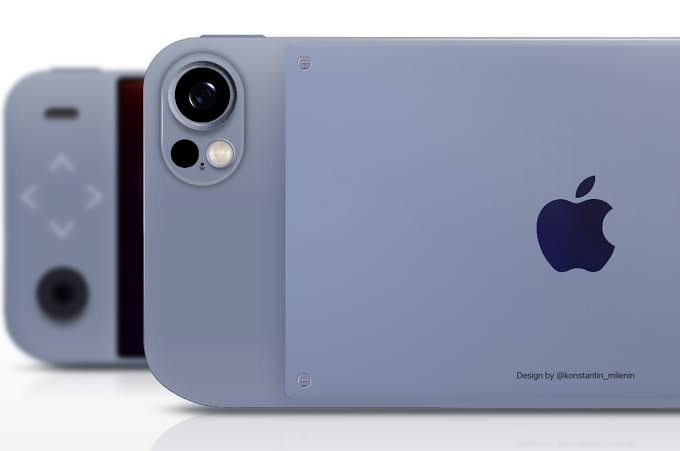
Apple has reportedly been exploring the development of dedicated gaming controllers for the iPhone, a move that could signal a much bigger ambition for the company in the gaming industry. If these reports become reality, Apple could be preparing to transform the iPhone from a powerful mobile device into something closer to a portable gaming console.
The possibility is significant because Apple’s latest iPhones already have powerful processors, high-quality displays and advanced graphics capabilities. Adding a dedicated controller could make it easier for users to experience console-style games on their phones.
Apple’s Growing Focus on Gaming
Gaming has been an important part of the mobile ecosystem for years, but Apple has traditionally focused more on hardware, software and its App Store platform than on building dedicated gaming accessories.
That could be changing.
Apple’s recent investment in gaming capabilities has made the iPhone increasingly attractive to serious gamers. Modern iPhones can run demanding games with impressive graphics, while technologies such as hardware-accelerated ray tracing have improved visual quality.
Apple has also brought several major console and PC games to its platforms, demonstrating that its hardware can handle experiences that were previously associated with dedicated gaming machines.
A dedicated controller could be the next step.
What Is Apple Reportedly Working On?
According to reports cited by Indian media, Apple is considering developing its own gaming controller for the iPhone. The goal would reportedly be to provide a more console-like gaming experience.
Instead of relying only on touchscreen controls, users could potentially attach a controller directly to an iPhone and play games using physical buttons, analog sticks and triggers.
This would be particularly useful for games that require precise controls.
First-person shooters, racing games, action games and sports titles can be difficult to play using touchscreen controls. Physical controls could provide much better accuracy and responsiveness.
Why Would Apple Need a Gaming Controller?
The biggest limitation of smartphone gaming is not necessarily processing power.
It is control.
Touchscreens are excellent for many types of mobile games, but they cannot completely reproduce the experience of holding a traditional gaming controller.
Consider a racing game.
On a touchscreen, the player may need to use virtual buttons or tilt the phone to control the vehicle. With a physical controller, however, analog sticks and triggers can provide much finer control.
The same applies to shooting games.
Physical joysticks allow players to move and aim simultaneously, while triggers can be used for shooting and other actions.
A controller designed specifically for the iPhone could therefore make high-end games much more enjoyable.
The iPhone Already Has the Hardware
One reason this idea makes sense is that Apple’s smartphones are already extremely powerful.
Apple’s A-series chips have become increasingly capable of handling demanding graphics workloads. Apple’s recent iPhones have also introduced features designed to improve gaming performance.
This creates an interesting situation.
The iPhone already has much of the hardware needed for serious gaming.
What it lacks is the complete gaming ecosystem and dedicated control experience associated with traditional consoles.
A first-party controller could help bridge that gap.
Apple Could Compete With Portable Gaming Devices
The portable gaming market has expanded significantly.
Devices such as the Nintendo Switch family, Steam Deck and other handheld gaming systems have demonstrated that consumers are interested in playing high-quality games while traveling.
A controller-equipped iPhone could enter this market without requiring users to purchase another gaming device.
Millions of people already own iPhones.
If Apple can combine the phone with a high-quality controller and a strong gaming library, the company could potentially turn its existing smartphone user base into a much larger gaming audience.
Could Apple Create a Console-Like Experience?
The phrase “console-like experience” is important.
A controller alone would not automatically turn the iPhone into a PlayStation or Xbox competitor.
Apple would also need to create a strong gaming ecosystem.
That could include:
- High-quality AAA games
- Better controller support
- Optimized graphics
- Cloud gaming integration
- Multiplayer features
- Game-focused software
- Improved gaming performance
- Better external display support
- Dedicated gaming accessories
If Apple brings these pieces together, the iPhone could become a much more serious gaming platform.
Apple’s Advantage: Its Ecosystem
Apple’s biggest advantage is not simply the iPhone’s processor.
It is the company’s ecosystem.
The iPhone, iPad, Mac, Apple TV and other Apple devices already work together through Apple’s software ecosystem.
A gaming controller could potentially work across multiple Apple products.
Imagine starting a game on an iPhone while traveling and later continuing it on an iPad, Mac or television.
If Apple integrates gaming deeply across its devices, the company could offer something different from traditional consoles.
Instead of buying a console first, users could potentially use devices they already own.
The App Store Could Become Even More Important
Gaming is already one of the biggest categories on Apple’s App Store.
A dedicated controller could encourage developers to create more sophisticated games for iPhone users.
Developers may also become more willing to bring PC and console-quality games to Apple’s platforms if they believe there is a large audience willing to play them.
This could create a cycle:
Better hardware → Better games → More gamers → More developers → More games.
That cycle could strengthen Apple’s position in gaming.
Apple Arcade Could Also Benefit
Apple already operates Apple Arcade, its gaming subscription service.
A stronger gaming focus could give Apple an opportunity to make Apple Arcade more attractive.
If Apple develops a dedicated controller, the company could potentially promote controller-optimized games through its gaming subscription ecosystem.
This could help differentiate Apple’s gaming service from conventional mobile gaming.
Instead of focusing primarily on short casual games, Apple could potentially build a library containing more ambitious titles.
What Could the Controller Look Like?
There is currently no confirmed final design for such a product based on the reports.
However, there are several possible approaches.
Apple could create a controller that connects to both sides of the iPhone, similar to existing smartphone gaming controllers.
Another possibility would be a standalone wireless controller that connects through Bluetooth.
A more Apple-like approach could involve a compact, premium design with tight integration between hardware and iOS.
The company could also potentially use USB-C connectivity for low-latency gaming and charging.
However, these possibilities remain speculative until Apple officially announces a product.
Challenges Apple Could Face
Despite the potential, Apple would face several challenges.
The first is price.
Apple products generally occupy the premium segment. If Apple’s controller is significantly more expensive than competing smartphone controllers, gamers may choose cheaper alternatives.
The second challenge is game availability.
Powerful hardware is useful only if developers create games that take advantage of it.
Apple would need strong relationships with major game publishers to make the platform attractive.
Another challenge is competition.
Gamers already have access to dedicated devices from companies with decades of experience in gaming.
Apple would therefore need to provide something compelling rather than simply offering another controller.
Privacy and Performance Could Become Selling Points
Apple could potentially use its reputation for privacy and tightly integrated hardware as part of its gaming strategy.
Because Apple controls both the operating system and hardware, it can optimize the experience more closely than many third-party ecosystems.
Performance could also be an important selling point.
If Apple develops a controller specifically for iPhone gaming, it could optimize iOS features, game APIs and hardware performance around that accessory.
This could result in a smoother experience than generic controllers.
Could This Change Mobile Gaming?
If Apple actually enters the gaming-controller market, it could influence the entire smartphone industry.
Other smartphone manufacturers could respond by developing their own gaming accessories.
Android manufacturers already offer gaming-focused phones and accessories, but Apple’s entry could increase competition.
Game developers could also begin treating smartphones more seriously as platforms for high-end gaming.
The biggest change could be cultural.
For years, mobile gaming has often been associated with casual games.
Powerful smartphones and dedicated controllers could help change that perception.
The Future of iPhone Gaming
Apple’s potential move into gaming comes at an interesting time.
Smartphone processors are becoming increasingly powerful, displays are improving and high-speed connectivity is becoming more widespread.
At the same time, gamers are showing greater interest in portable gaming.
The combination creates an opportunity for Apple.
A future iPhone could potentially function as a smartphone during the day and a portable gaming console at night.
Connect a controller, pair it with a television and perhaps even use cloud gaming or downloaded AAA titles, and the boundaries between smartphone and gaming console become increasingly blurred.
Conclusion
Apple’s reported interest in developing gaming controllers for the iPhone could represent an important new direction for the company.
The iPhone already has many of the ingredients required for high-end gaming: powerful processors, advanced graphics capabilities, high-quality displays and a massive global user base.
What has been missing is a dedicated gaming experience.
A first-party controller could help fill that gap.
However, Apple’s success will ultimately depend on more than hardware. The company would need a strong game library, competitive pricing, excellent controller integration and continued support from developers.
If Apple manages to combine all of these elements, the iPhone could become more than just a smartphone.
It could become one of the world’s most accessible portable gaming platforms.
For now, the idea remains based on reports rather than a confirmed Apple product. But if Apple really does enter the gaming-controller market, the move could make iPhone gaming significantly more competitive—and potentially take mobile gaming to an entirely new level.