
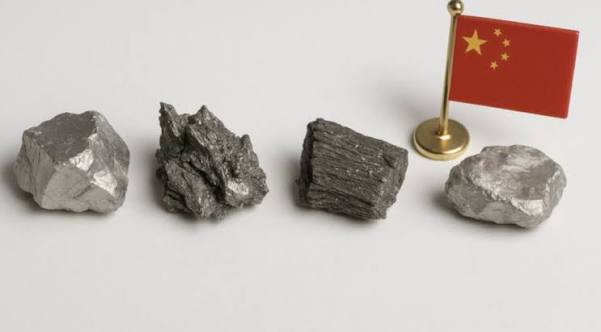
China’s dominance over the global rare-earth supply chain is once again becoming a major source of tension with the United States, with several Chinese suppliers reportedly declining to ship rare-earth materials to American customers because of growing geopolitical uncertainty.
The development adds another layer to the increasingly strategic competition between Washington and Beijing, where technology, semiconductors, artificial intelligence and critical minerals have all become instruments of economic and national-security policy.
According to people familiar with the situation, some Chinese rare-earth companies have become increasingly cautious about fulfilling U.S. orders because of concerns that shipments could become entangled in export controls or broader restrictions between the two countries.
The latest disruption does not amount to a complete Chinese ban on rare-earth exports to the United States. Instead, it reflects growing uncertainty among suppliers and buyers as both governments attempt to protect strategically important technologies and industrial capabilities.
Why Rare Earths Matter
Rare earths are a group of 17 elements that have become essential to modern manufacturing.
Despite their name, many of these elements are not necessarily extremely scarce in the Earth’s crust.
The difficulty lies in extracting and processing them economically.
China has spent decades building expertise in mining, refining and processing rare-earth materials, allowing it to establish a dominant position across much of the global supply chain.
These materials are used in permanent magnets, electric motors, electronics, renewable-energy equipment, aerospace systems and defence technologies.
Some of the most important applications involve extremely powerful magnets that can operate efficiently in compact motors.
That makes rare earths particularly important for electric vehicles, drones, aircraft, robotics and precision military systems.
China Controls More Than Just Mining
The biggest advantage China possesses is not simply the amount of rare-earth ore it produces.
It is the country’s enormous processing and refining capacity.
Rare-earth ore must undergo complicated chemical processing before the individual elements can be used in industrial products.
China has built extensive infrastructure for this stage of the supply chain.
That means another country could potentially mine rare-earth material but still depend on Chinese processing facilities before it becomes commercially useful.
This creates a major strategic vulnerability for countries attempting to reduce their dependence on China.
New Pressure on U.S. Buyers
The latest development suggests that American companies are already feeling the consequences of the deteriorating relationship.
Some Chinese suppliers are reportedly refusing or delaying shipments because they fear that supplying U.S. companies could expose them to regulatory problems.
This uncertainty can be almost as damaging as an outright export ban.
Manufacturers need predictable access to raw materials months or years in advance.
If suppliers cannot guarantee deliveries, companies may be forced to build larger inventories, find alternative sources or redesign products.
All three options increase costs.
Defence Industry Is Especially Exposed
Rare-earth magnets are particularly important to the defence sector.
They can be used in guidance systems, radar equipment, aircraft components, missiles, drones and electric motors.
Modern military systems increasingly depend on small, powerful electric motors and sophisticated electronics.
That means access to specialised materials has become a national-security issue.
The United States has been attempting to expand domestic and allied rare-earth processing precisely because of this concern.
However, rebuilding an entire supply chain is difficult.
Mining is only the first step.
Processing, separation, metal production, magnet manufacturing and recycling all require specialised infrastructure.
Electric Vehicles Add Another Layer
The electric-vehicle industry is another major consumer of rare-earth materials.
Permanent-magnet electric motors can provide high power density and efficiency, making them attractive for EV manufacturers.
If rare-earth prices rise or supplies become uncertain, automakers could face higher production costs.
Companies can potentially switch to motor designs that use fewer or no rare-earth materials, but redesigning vehicles and production systems is expensive.
This gives China considerable leverage over an industry that governments around the world are attempting to expand as part of their energy-transition strategies.
The U.S.-China Technology War
Rare earths are now part of a much larger confrontation.
Washington has imposed restrictions on China’s access to several advanced semiconductor technologies, including sophisticated AI chips and semiconductor manufacturing equipment.
Beijing has increasingly responded by strengthening controls over materials and technologies in which China possesses strategic advantages.
This has created a form of economic competition in which each side is attempting to identify the other’s critical dependencies.
The result is a gradual restructuring of global supply chains.
Instead of companies simply asking where something can be manufactured most cheaply, governments and businesses are increasingly asking:
Can we still obtain this material if relations between the two countries collapse?
China Has Used Rare-Earth Controls Before
Beijing has previously demonstrated that rare-earth exports can become a geopolitical tool.
In recent years, China introduced tighter controls on exports of several critical minerals and related processing technologies.
The measures have raised concerns in Washington, Tokyo, Brussels and other capitals about the vulnerability of global manufacturing.
The latest developments therefore come as no surprise to policymakers.
What is changing is the scale of the strategic competition surrounding the supply chain.
America Is Trying to Build Alternative Sources
The United States has been investing heavily in domestic rare-earth mining and processing.
Washington is also working with allies to establish alternative supply chains.
Countries including Australia and Japan are important potential partners because they possess mineral resources, processing capabilities or industrial expertise.
However, developing a complete alternative network takes years.
A mine can take a long time to permit and construct.
Processing facilities require large capital investments.
And downstream industries such as magnet manufacturing require specialised technical expertise.
That makes China’s existing advantage difficult to eliminate quickly.
Recycling Could Become More Important
One potential solution is recycling.
Rare-earth elements can be recovered from used electronics, industrial equipment and electric motors.
Recycling could reduce the need for newly mined materials and provide countries with another source of supply.
However, recycling technology is still developing and the economics vary considerably depending on the material and product.
It is therefore unlikely to replace mining and refining in the near term.
Instead, recycling could become one part of a broader strategy to reduce dependence on a single supplier.
Why This Matters for India
India is also watching the global rare-earth competition closely.
The country wants to expand electric vehicles, renewable energy, electronics manufacturing, defence production and advanced technology industries.
All of these sectors can potentially require rare-earth materials.
India has its own rare-earth resources, but building a competitive domestic processing and manufacturing ecosystem remains a major challenge.
The global supply disruption therefore creates both a risk and an opportunity.
If China becomes a less reliable supplier, companies around the world will look for alternative sources.
India could potentially capture part of that demand if it develops sufficient mining, processing and manufacturing capacity.
The Bigger Semiconductor Connection
Rare earths are only one part of the broader technology supply chain battle.
The United States and China are also competing over advanced semiconductor manufacturing, AI processors, lithography equipment and data-centre infrastructure.
These industries increasingly overlap with national security.
Artificial intelligence requires enormous computing resources.
Those computers depend on advanced chips.
Advanced chips depend on specialised manufacturing equipment and materials.
And the entire system depends on reliable global supply chains.
Rare-earth restrictions therefore represent one piece of a much larger strategic contest over who controls the infrastructure of future technology.
Companies Face a Difficult Choice
Multinational manufacturers now face increasing pressure to diversify their supply chains.
For years, globalisation encouraged companies to concentrate production in locations where costs were lowest.
The geopolitical environment is changing that calculation.
A company might now accept higher production costs in exchange for a supply chain that is less vulnerable to political disruption.
That could ultimately make products more expensive.
But governments increasingly view that additional cost as a form of strategic insurance.
Could Rare Earths Become the Next Oil?
The comparison is increasingly being made because both resources have enormous strategic importance.
Oil powers transportation and industry.
Rare-earth materials help power many of the technologies replacing traditional industrial systems.
Electric vehicles, drones, robotics, wind turbines, advanced electronics and military systems all depend on specialised materials.
That means control over these resources can provide a country with influence far beyond the mining industry itself.
However, rare earths differ from oil because they can potentially be substituted, recycled or sourced from multiple locations.
The bigger problem is the concentration of processing capacity.
A Supply-Chain Race Is Underway
The latest Chinese shipment concerns demonstrate that the global economy is moving toward a new phase.
Countries are no longer treating critical minerals purely as commodities.
They are treating them as strategic assets.
The United States wants to build domestic capacity.
China wants to maintain its industrial advantage.
European countries are searching for alternative sources.
India is attempting to develop its own critical-mineral ecosystem.
Japan and Australia are expanding cooperation on supply security.
The competition could therefore reshape global manufacturing over the next decade.
What Happens Next
The key question is whether the latest disruption remains limited or develops into broader Chinese restrictions on U.S.-bound rare-earth materials.
If shipments continue normally, the current market uncertainty could gradually ease.
If more suppliers stop selling to American companies, pressure on manufacturers could increase quickly.
The United States would then face greater urgency to accelerate alternative supplies.
China, meanwhile, would have to balance the strategic benefits of export controls against the possibility of encouraging other countries to permanently move their supply chains away from Chinese processing.
Conclusion
China’s growing control over rare-earth processing has become one of the most important strategic advantages in the global technology economy.
The latest reports that some Chinese suppliers are refusing or delaying U.S. shipments demonstrate how quickly geopolitical tensions can turn a mineral supply chain into a national-security issue.
For Washington, the challenge is reducing dependence on Chinese processing without disrupting industries that require rare-earth materials today.
For Beijing, the challenge is using its supply-chain advantage without accelerating the global effort to build alternatives.
For countries such as India, the confrontation presents both a warning and an opportunity.
The warning is that dependence on a single foreign supplier can become a major vulnerability during a geopolitical crisis.
The opportunity is that companies and governments looking for alternative sources will increasingly need new suppliers, processors and manufacturers.
The battle over rare earths is therefore unlikely to remain a niche mining story.
It is becoming part of the wider contest over semiconductors, artificial intelligence, electric vehicles, defence technology and the industrial infrastructure of the future.