
India has said it remains in continuous contact with both Russia and Ukraine as New Delhi explores possible avenues that could contribute to ending the war between the two countries.
External Affairs Minister S. Jaishankar made the remarks in Warsaw on Friday after completing a visit to Kyiv, where he held talks with Ukrainian President Volodymyr Zelenskyy and Foreign Minister Andrii Sybiha.
His comments underline India’s continuing attempt to maintain diplomatic engagement with both sides of the conflict while arguing that a lasting solution will ultimately require dialogue, negotiation and diplomacy.
India Maintains Contact With Both Sides
Speaking during his visit to Poland, Jaishankar said India had been in continuous touch with both Ukraine and Russia.
According to the minister, New Delhi is examining whether ideas or suggestions can be developed that could contribute to mitigating the conflict and, ideally, bringing the fighting to an end.
India’s position is significant because New Delhi has maintained working relations with Moscow while simultaneously expanding its engagement with Kyiv and Western countries.
The approach reflects India’s long-standing preference for strategic autonomy rather than formally aligning itself with one side of the conflict.
Jaishankar’s Kyiv Visit
Jaishankar’s latest diplomatic tour included meetings with senior Ukrainian leadership.
During his visit to Kyiv, he met President Zelenskyy as well as Ukrainian Foreign Minister Andrii Sybiha.
India conveyed its willingness to contribute to efforts aimed at ending the conflict, while emphasizing that dialogue and diplomacy remain essential to achieving a sustainable settlement.
The visit came at a particularly important moment for India’s foreign policy.
Prime Minister Narendra Modi has continued engaging with Russian President Vladimir Putin, while India has simultaneously increased direct diplomatic contact with Ukraine.
This balancing act has allowed New Delhi to preserve channels with both governments.
India Rejects the Idea That Trade Alone Can End the War
One of the clearest points in Jaishankar’s latest remarks was India’s position on the debate surrounding Russian oil purchases.
The minister argued that the Russia-Ukraine conflict cannot be brought to an end simply by deciding whether countries purchase Russian oil, fertilizers, metals or other commodities.
Instead, he said the conflict will ultimately end through diplomacy, dialogue and negotiation.
The statement reflects India’s broader argument that economic pressure and trade restrictions may influence the strategic environment, but they do not substitute for direct negotiations between the parties to a war.
For India, the issue also has an economic dimension because Russian energy supplies have become an important component of India’s energy-security strategy.
Why India’s Position Matters
India’s relationship with Russia remains strategically important.
Russia has historically been one of India’s major defence partners, while bilateral energy and economic ties have expanded significantly.
At the same time, India has deepened strategic cooperation with the United States, Europe and other Western partners.
This creates a complex diplomatic balancing act for New Delhi.
India wants to maintain access to Russian energy and preserve defence cooperation while avoiding a complete breakdown in relations with Ukraine and Western countries.
Its diplomatic messaging has therefore consistently emphasized dialogue rather than bloc politics.
Poland Becomes Part of the Diplomatic Picture
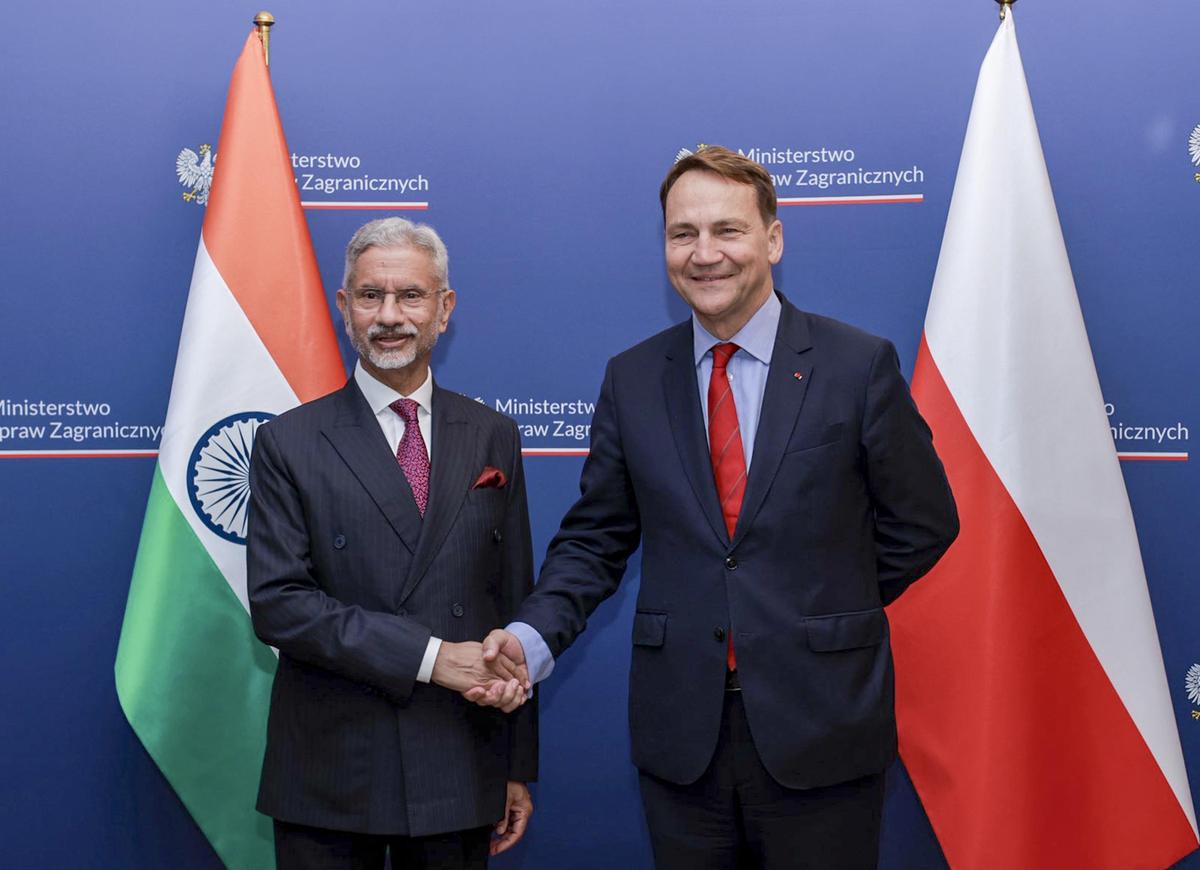
After leaving Kyiv, Jaishankar travelled to Poland, where he met Polish Deputy Prime Minister and Foreign Minister Radosław Sikorski.
Their discussions covered the Ukraine conflict as well as broader issues including supply-chain resilience and food, fuel and fertilizer security.
India and Poland have also been expanding their bilateral relationship.
The two countries are pursuing cooperation under a Joint Action Plan covering areas including trade, investment, defence, culture and multilateral cooperation.
Jaishankar also met Polish President Karol Nawrocki, with discussions including the Ukraine conflict and developments in West Asia.
The War Enters Another Diplomatic Phase
The Russia-Ukraine war has now continued for years, creating significant humanitarian, economic and geopolitical consequences.
India has repeatedly argued that military confrontation cannot provide a permanent solution.
The latest comments from Jaishankar suggest that New Delhi sees continued communication with both Moscow and Kyiv as potentially useful even while the conflict remains unresolved.
The importance of such channels becomes greater when direct negotiations between the principal parties face difficulties.
India’s ability to speak with both sides gives it diplomatic access that some Western countries do not possess with Moscow, while India’s relationship with Ukraine has also continued to develop.
India’s Strategic Autonomy Under Pressure
The Ukraine conflict has tested India’s strategic autonomy more than almost any recent international crisis.
New Delhi has resisted pressure to completely abandon its relationship with Russia, while also refusing to endorse the idea that territorial disputes should be settled through war.
At the same time, India has increased its engagement with Europe.
The approach is based on the calculation that India’s national interests are best served by maintaining multiple diplomatic options rather than becoming dependent on a single strategic bloc.
Jaishankar’s latest remarks are consistent with that policy.
What Happens Next
The immediate challenge is whether diplomatic engagement can eventually create conditions for meaningful negotiations between Russia and Ukraine.
India cannot determine the outcome of the conflict on its own, but continued communication with both sides could potentially allow New Delhi to contribute ideas, messages or diplomatic support when opportunities for negotiations emerge.
For now, however, the emphasis remains on keeping channels open.
Jaishankar’s latest message was that the conflict should ultimately be addressed through diplomacy and negotiation rather than through an indefinite continuation of war.
Conclusion
India is continuing to position itself as a country willing to engage with both Russia and Ukraine while advocating a diplomatic route toward ending the conflict.
Jaishankar’s latest comments in Warsaw, following his visit to Kyiv, reinforce New Delhi’s long-standing position that dialogue and negotiation are essential to ending the war.
The approach also reflects India’s broader foreign-policy strategy: maintain relationships across competing geopolitical blocs while attempting to preserve strategic autonomy.
Whether India can eventually play a larger role in peace efforts will depend largely on whether Moscow and Kyiv become willing to engage seriously in negotiations.
For now, New Delhi’s priority appears to be keeping communication channels open with both sides and supporting any credible diplomatic effort that could reduce the fighting.