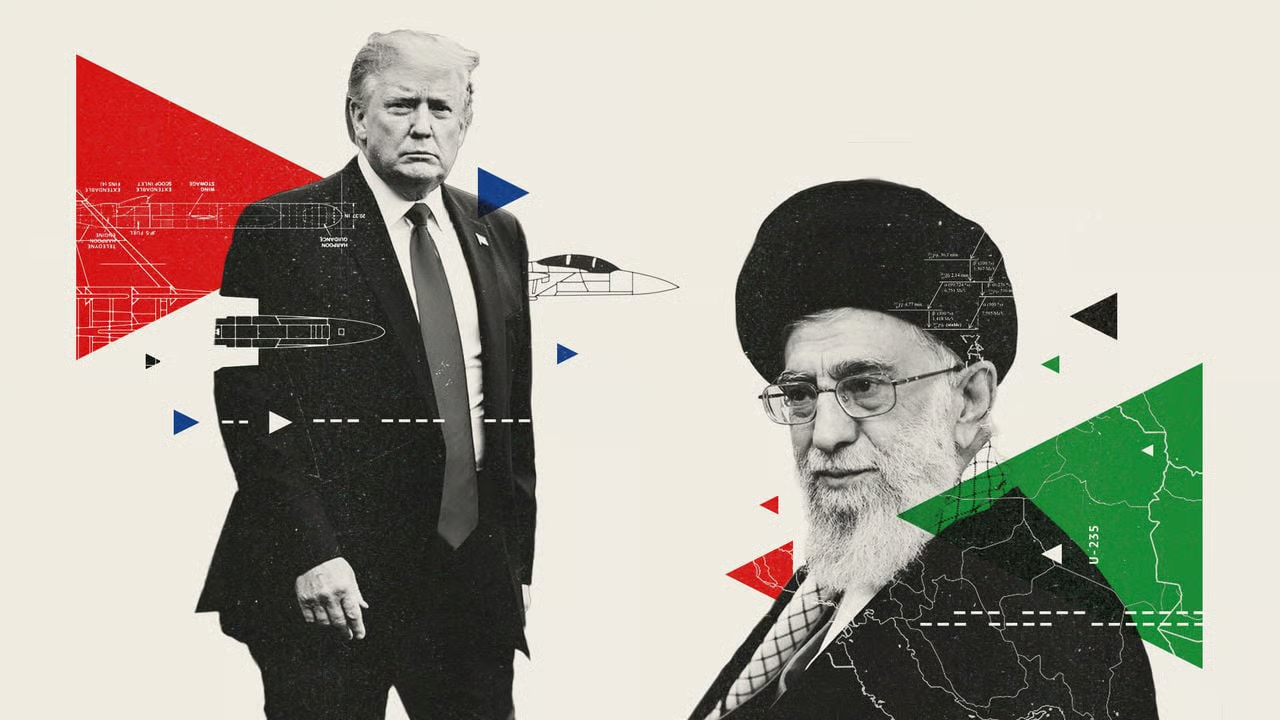
The relationship between the United States and Iran has been tense for many years. Political disagreements, military actions, and regional rivalries have all contributed to the ongoing conflict between the two countries. Several important factors explain why tensions sometimes escalate into military confrontations. Understanding these reasons helps explain the complex geopolitical situation in the Middle East.
1. Oil Market and Energy Control
One of the most important reasons for tension between the United States and Iran is the control and influence over the global oil market. Iran is one of the major oil-producing countries in the world and holds significant oil reserves. Because oil is a critical resource for the global economy, any conflict involving major oil-producing countries can have worldwide economic consequences.
A particularly strategic location in this context is the Strait of Hormuz, a narrow waterway that connects the Persian Gulf to the open ocean. A large percentage of the world’s oil shipments pass through this route every day. If Iran were to restrict access to this passage during a conflict, it could disrupt global oil supply and lead to a sharp increase in oil prices.
The United States and its allies closely monitor activities around this region because any instability could affect global energy markets. For this reason, maintaining stability in the area is considered extremely important for international trade and energy security.
2. Iran’s Nuclear Program
Another major issue that has caused conflict between the United States and Iran is Iran’s nuclear development program. Iran claims that its nuclear program is intended for peaceful purposes such as electricity generation and scientific research. However, the United States and several other countries believe that Iran may be attempting to develop nuclear weapons.
To address these concerns, an international agreement known as the Joint Comprehensive Plan of Action was signed in 2015 between Iran and several global powers. The agreement placed restrictions on Iran’s nuclear activities in exchange for relief from economic sanctions.
However, tensions increased again after the United States withdrew from the agreement in 2018. Since then, both countries have accused each other of escalating the situation. The possibility that Iran could develop nuclear weapons is considered a major security concern by the United States and its allies.
3. Conflict With Israel
The long-standing rivalry between Iran and Israel is another important factor in the broader regional conflict. Iran has frequently criticized Israel’s policies and has supported groups that oppose Israel. Israel, on the other hand, views Iran as one of its biggest security threats.
Israel is particularly concerned about the possibility of Iran developing nuclear weapons. If Iran were to acquire nuclear weapons, Israel believes it could change the balance of power in the region.
The United States has a strong political and military alliance with Israel. Because of this relationship, the United States often supports Israel in regional disputes. As a result, tensions between Iran and Israel often draw the United States into the conflict as well.
4. Support for Armed Groups in the Middle East
Another reason for conflict is Iran’s alleged support for various armed groups in the Middle East. The United States claims that Iran provides financial support, weapons, and training to groups operating in different countries in the region.
These groups are active in places such as Lebanon, Iraq, and Yemen. Some of these organizations have been involved in conflicts with U.S. allies or have carried out attacks against military bases and regional governments.
Because of this, the United States considers Iran’s influence over these groups to be a major security concern. This issue has led to economic sanctions, diplomatic pressure, and sometimes military actions.
5. Regional Power Struggle in the Middle East
The Middle East is a strategically important region for global politics, energy resources, and international trade. Both Iran and the United States want to maintain influence in the region.
The United States has many military bases and strategic partnerships with countries across the Middle East. These alliances help the United States maintain political and military influence in the region.
At the same time, Iran aims to expand its regional influence and strengthen its security position. Because both countries seek power and influence in the same region, their interests often clash.
This competition for regional dominance is one of the main reasons why tensions between the United States and Iran continue to persist.