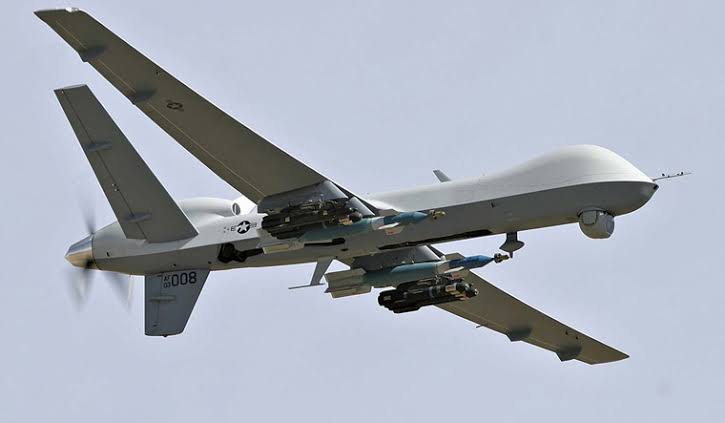
India has signed a $203 million contract with General Atomics Aeronautical Systems to lease two MQ-9B SeaGuardian unmanned aircraft, strengthening the country’s maritime surveillance capabilities at a time when security concerns across the Indian Ocean region continue to grow. The agreement was announced on August 17, 2026, and represents another step in India’s effort to expand its long-range intelligence, surveillance and reconnaissance capabilities.
The deal is particularly significant because the MQ-9B SeaGuardian is designed for extended maritime operations. The aircraft can remain airborne for long periods while carrying sensors capable of monitoring large areas of ocean, allowing Indian authorities to track vessels and identify potential security threats over vast distances.
Why India Is Expanding Maritime Surveillance
India occupies a strategically important position in the Indian Ocean, with major international shipping routes passing close to its coastline.
The country’s maritime security requirements have increased considerably in recent years because of growing activity by foreign naval forces, commercial shipping movements, piracy concerns and geopolitical competition across the wider Indo-Pacific.
For India, maintaining a clear picture of what is happening across surrounding waters has therefore become an important national-security priority.
The MQ-9B SeaGuardian is particularly suited to this role because it can conduct long-duration surveillance missions without putting a human pilot directly into a potentially dangerous environment.
What Is the MQ-9B SeaGuardian?
The MQ-9B SeaGuardian is a long-endurance remotely piloted aircraft developed by General Atomics.
It is derived from the MQ-9 family but is specifically configured for maritime operations.
Its capabilities include:
- Long-duration surveillance
- Maritime patrol
- Intelligence gathering
- Tracking ships
- Wide-area reconnaissance
- Monitoring large stretches of ocean
- Supporting search and rescue operations
The aircraft can also carry sophisticated sensors that allow operators to collect information from considerable distances.
For India, that makes the platform particularly valuable for monitoring the country’s extensive maritime approaches.
Why Lease Instead of Immediately Purchase?
The agreement is structured as a lease, rather than an outright purchase.
Leasing allows India to introduce the capability relatively quickly while avoiding some of the financial and logistical commitments associated with immediately acquiring and maintaining an entirely new fleet.
It can also provide an opportunity to evaluate how the aircraft performs in Indian operational conditions before making larger long-term procurement decisions.
The arrangement comes as India continues to expand its indigenous defence-manufacturing capabilities while simultaneously acquiring selected advanced systems from international partners.
The Indian Ocean Is Becoming Increasingly Strategic
The Indian Ocean has become one of the world’s most strategically important maritime regions.
A significant portion of global energy and commercial trade passes through its shipping routes.
India’s location gives it a natural strategic advantage, but it also means the country needs persistent awareness of activity across surrounding waters.
Long-range unmanned aircraft can provide that awareness without requiring large numbers of manned aircraft to remain continuously airborne.
This is one reason maritime surveillance has become an increasingly important part of India’s broader defence strategy.
Growing Importance of Unmanned Aircraft
The agreement also reflects a wider transformation taking place in modern warfare.
Unmanned aircraft are increasingly being used for surveillance, reconnaissance and intelligence missions because they can remain airborne for extended periods and operate in environments where deploying manned aircraft could carry greater risks.
Recent conflicts around the world have demonstrated how drones can influence military operations, from battlefield reconnaissance to long-range surveillance.
India has consequently been investing in several categories of unmanned systems.
The MQ-9B represents the high-end, long-endurance segment of that effort.
India’s Existing MQ-9B Programme
India already has a relationship with General Atomics involving MQ-9B aircraft.
The new lease therefore builds upon an existing technological and operational relationship rather than introducing an entirely unfamiliar system.
India has previously moved toward acquiring MQ-9B aircraft for both its armed forces and maritime surveillance requirements.
The SeaGuardian configuration is especially relevant to the Indian Navy because of its ability to monitor large areas of ocean for long periods.
A Major Advantage for the Indian Navy
For the Indian Navy, persistent surveillance can provide an important advantage.
A large warship can be detected by several different methods, but maintaining continuous awareness over enormous stretches of ocean is difficult.
A long-endurance unmanned aircraft can remain above a particular area for extended periods and transmit information to operators on the ground.
This can help create what military planners describe as a broader maritime picture.
That information can then potentially be combined with data from:
- Satellites
- Naval aircraft
- Warships
- Coastal radar
- Underwater sensors
- Other unmanned systems
The result is a more comprehensive understanding of maritime activity.
The Wider Indo-Pacific Context
The purchase comes amid growing strategic competition across the Indo-Pacific.
India has increasingly strengthened defence partnerships with countries including the United States, Japan, Australia and France while simultaneously expanding its own naval capabilities.
The United States has become an increasingly important defence technology partner for India, with cooperation extending across aircraft, helicopters, maritime surveillance and unmanned systems.
The latest SeaGuardian agreement adds another element to that relationship.
Not Just About Military Operations
Although the aircraft is primarily being acquired for security and surveillance purposes, long-endurance maritime aircraft can also support non-combat missions.
Potential applications include:
- Search and rescue
- Disaster response
- Monitoring illegal fishing
- Maritime domain awareness
- Tracking suspicious vessels
- Supporting humanitarian operations
This gives the platform utility beyond conventional military missions.
India’s Broader Defence Modernisation
The agreement forms part of a much larger Indian effort to modernise the country’s armed forces.
India has been investing in:
- Fighter aircraft
- Naval vessels
- Submarines
- Missiles
- Air-defence systems
- Satellites
- Unmanned aircraft
- Electronic warfare
- Indigenous defence manufacturing
At the same time, New Delhi has been attempting to reduce its dependence on foreign defence imports through the expansion of domestic manufacturing.
The government has increasingly encouraged foreign defence companies to manufacture equipment in India and partner with Indian companies.
Why the Deal Matters Now
The timing of the agreement is particularly significant.
India is dealing with a complicated regional security environment involving tensions along its land borders, increased activity in the Indian Ocean and growing strategic competition between major powers.
The ability to monitor India’s surrounding maritime environment therefore has direct implications for national security.
The $203 million agreement gives India additional surveillance capacity without requiring the immediate deployment of additional personnel into high-risk environments.
What the Deal Says About India’s Defence Priorities
The agreement also highlights a change in India’s defence priorities.
Modern military strength is no longer determined solely by the number of fighter aircraft, tanks or warships a country possesses.
Information has become equally important.
Knowing where ships are, identifying unusual activity and detecting potential threats early can provide commanders with valuable time to respond.
Long-endurance unmanned aircraft are designed precisely for this purpose.
A Sign of Deeper India-US Defence Cooperation
The agreement also reinforces the growing defence relationship between India and the United States.
Over the past decade, Washington and New Delhi have expanded military cooperation considerably.
The two countries increasingly conduct joint exercises and share defence technology, while American companies have become important suppliers to India’s armed forces.
The MQ-9B programme is one of the most visible examples of this expanding relationship.
Looking Ahead
The immediate impact of the agreement will be the addition of two leased MQ-9B SeaGuardian aircraft to India’s surveillance capabilities.
However, the longer-term significance could be greater.
If the aircraft demonstrate strong operational value, India could eventually consider expanding its unmanned maritime surveillance fleet.
That could lead to a larger network of unmanned aircraft working alongside India’s satellites, naval aircraft and surface vessels.
Such a network would significantly improve India’s ability to maintain awareness across the Indian Ocean.
Conclusion
India’s $203 million MQ-9B SeaGuardian lease agreement with General Atomics marks another significant development in the country’s defence modernisation programme.
The two aircraft will provide India with additional long-endurance maritime surveillance capability at a time when monitoring the Indian Ocean and surrounding waters has become increasingly important.
More broadly, the agreement demonstrates how India’s defence strategy is moving toward a combination of manned platforms, unmanned systems, satellites and advanced surveillance technologies.
For India, the objective is not simply to possess more military equipment. It is increasingly about gaining the ability to see, understand and respond to potential threats earlier.
As competition across the Indo-Pacific continues to intensify, that capability could become one of the most important components of India’s maritime security strategy.