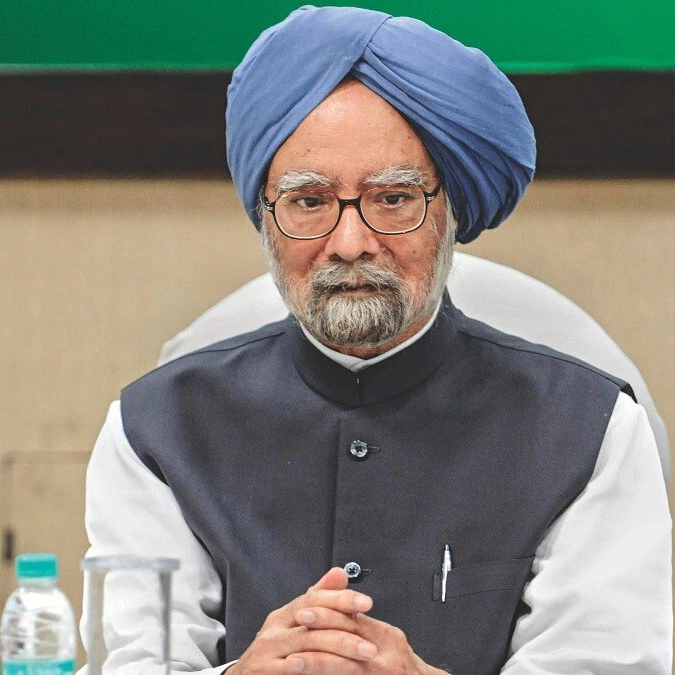
In a significant legal development, the Supreme Court of India has accepted the Central Bureau of Investigation (CBI)’s closure report in the long-running coal block allocation case related to former Prime Minister Dr. Manmohan Singh. With this decision, the apex court has officially closed the proceedings and cleared the former Prime Minister of any criminal liability in the matter.
The case, which had remained in public discussion for years due to its association with the controversial coal block allocation issue, pertained to the allocation of a coal block in Odisha in 2005, during Dr. Singh’s tenure as Prime Minister and his additional charge as Coal Minister.
The Supreme Court’s acceptance of the CBI’s findings marks the conclusion of one of the most closely watched cases linked to India’s coal allocation controversy.
Background of the Coal Block Allocation Case
The coal block allocation controversy, commonly referred to as the “Coal Scam” or “Coalgate,” involved the allocation of coal mining blocks to private and public sector companies between 1993 and 2010.
In 2012, the Comptroller and Auditor General (CAG) raised concerns that the allocation process lacked transparency and competitive bidding, potentially causing substantial losses to the public exchequer.
Several investigations were initiated by the CBI, leading to multiple criminal cases involving politicians, bureaucrats, and corporate executives.
One such case related to the allocation of a coal block in Odisha in 2005, during the period when Dr. Manmohan Singh held the Coal Ministry portfolio in addition to serving as Prime Minister.
Why Was Manmohan Singh Named?
Dr. Manmohan Singh’s name came into the investigation because he was serving as the Coal Minister at the time the allocation was approved.
Investigators examined whether there had been any criminal conspiracy, abuse of official position, or irregularities in granting the allocation.
However, after an extensive investigation spanning several years, the CBI concluded that there was no evidence establishing criminal intent or wrongdoing on the part of the former Prime Minister.
Accordingly, the agency submitted a closure report before the court, recommending that the case be closed.
Supreme Court Accepts CBI’s Closure Report
The Supreme Court has now accepted the CBI’s closure report, bringing the legal proceedings to an end.
With this decision:
- The criminal case against Dr. Manmohan Singh stands closed.
- No criminal liability has been established against the former Prime Minister.
- The CBI’s investigation has been accepted by the apex court.
- The long-pending legal uncertainty surrounding this specific case has ended.
The ruling does not rewrite the broader history of the coal allocation controversy but concludes the proceedings against Dr. Singh in this particular matter.
What Is a Closure Report?
A closure report is filed by an investigating agency when, after completing its investigation, it concludes that there is insufficient evidence to prosecute the accused or that no criminal offence is made out.
The court examines the report independently and may:
- Accept the closure report.
- Reject it and order further investigation.
- Direct the filing of charges if sufficient material exists.
In this case, the Supreme Court accepted the CBI’s findings, thereby closing the matter.
Significance of the Judgment
The Supreme Court’s decision is important for several reasons.
1. Legal Finality
The acceptance of the closure report provides legal closure to a case that remained under scrutiny for many years.
2. Reinforces Due Process
The judgment highlights that criminal liability must be based on evidence rather than assumptions or public perception.
3. Independent Judicial Review
The court independently reviewed the CBI’s findings before accepting the closure report, underscoring the judiciary’s role in ensuring fairness.
4. Accountability Through Investigation
The case demonstrates that even high constitutional office holders can be investigated, while also ensuring that prosecutions proceed only when supported by credible evidence.
Political and Public Reactions
The decision has prompted varied reactions across political circles.
Supporters of Dr. Manmohan Singh have described the judgment as a vindication of his integrity and public service, pointing to his reputation for honesty throughout his political career.
Others have emphasized that the closure pertains specifically to this case and should be viewed within the legal framework of the evidence examined by the investigating agency and the court.
Legal experts note that the decision reflects the principle that investigations and judicial outcomes must be evidence-based rather than influenced by political narratives.
Dr. Manmohan Singh’s Legacy
Dr. Manmohan Singh served as the Prime Minister of India from 2004 to 2014 and is widely recognised for his contributions to India’s economic reforms and fiscal policy.
Throughout his public life, he maintained an image of personal integrity and administrative restraint. Although the coal allocation controversy became a major political issue during his tenure, this decision concludes the criminal proceedings against him in the Odisha coal block allocation case.
Understanding the Broader Coal Allocation Issue
The coal block allocation controversy led to multiple investigations involving different companies, public officials, and allocation decisions.
While several cases resulted in trials and convictions, others ended in acquittals or closure due to insufficient evidence.
The Supreme Court’s latest decision concerns only the specific case involving Dr. Manmohan Singh and should not be interpreted as a blanket ruling on all matters arising from the broader coal allocation investigations.
Conclusion
The Supreme Court’s acceptance of the CBI’s closure report marks the end of a long-running legal chapter involving former Prime Minister Dr. Manmohan Singh in the 2005 Odisha coal block allocation case. By accepting the investigating agency’s conclusion that there was no evidence warranting prosecution, the apex court has formally closed the proceedings and cleared him of criminal liability in this matter.
The decision reinforces the principles of due process, judicial scrutiny, and evidence-based justice, while bringing legal certainty to a case that had remained under public and political discussion for years.