
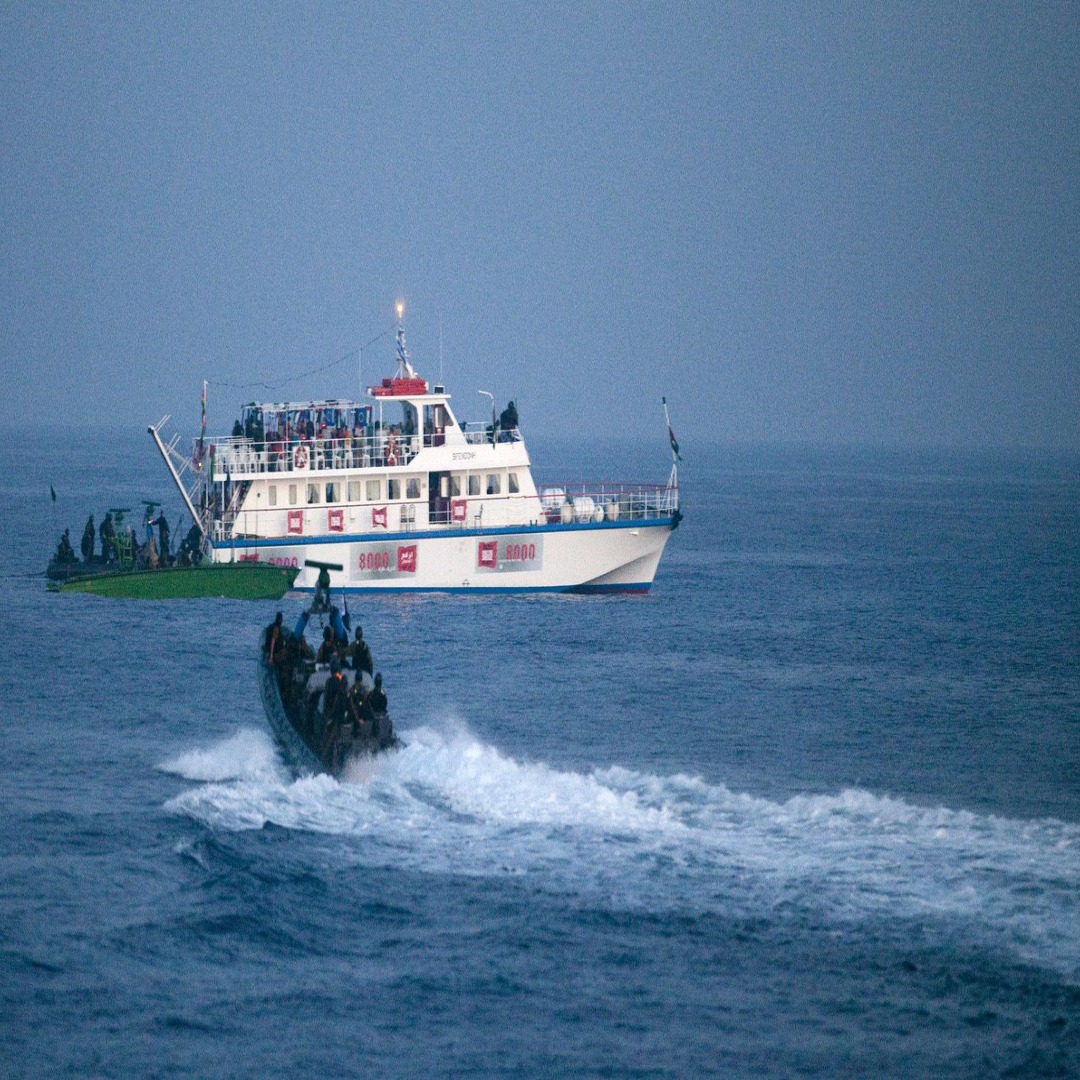
Israeli forces have intercepted multiple vessels from a Gaza-bound humanitarian flotilla in the Mediterranean Sea, reigniting international debate over Israel’s naval blockade of Gaza and the worsening humanitarian situation in the Palestinian enclave.
The flotilla, organized under the name “Global Sumud Flotilla,” involved more than 50 vessels carrying activists, journalists, and humanitarian supporters from dozens of countries. Organizers stated that the mission aimed to deliver aid to Gaza and draw global attention to the ongoing humanitarian crisis affecting millions of Palestinians.
The interception occurred as tensions across the Middle East remain elevated due to the broader regional conflict involving Iran, Israel, and ongoing military instability in neighboring areas.
What Happened at Sea
According to organizers and multiple international reports, Israeli naval forces began intercepting the flotilla as the vessels moved toward Gaza after departing from the Turkish coastal city of Marmaris. The boats had traveled through the Mediterranean over several days as part of a coordinated humanitarian campaign.
Live video footage broadcast by activists showed Israeli military vessels approaching several boats before communications from some vessels were reportedly lost. Organizers claimed that at least 10 boats were intercepted while contact with over 20 vessels became temporarily unavailable.
Israeli authorities defended the operation, stating that the naval blockade on Gaza remains in effect and that attempts to breach it would not be permitted. Israeli officials described the flotilla as a political provocation rather than a genuine humanitarian operation.
The Global Sumud Flotilla Campaign
The Global Sumud Flotilla is part of a broader international activist movement seeking to challenge the blockade imposed on Gaza since 2007.
The latest mission included:
- More than 50 vessels
- Hundreds of activists from over 40 countries
- Humanitarian aid supplies
- International media participants
Organizers said the flotilla intended both to deliver symbolic aid and increase global awareness about conditions inside Gaza.
This was not the group’s first attempt.
Earlier flotilla efforts in April 2026 were also intercepted by Israeli forces near Greece and Crete, leading to detentions and diplomatic criticism from several countries.
Humanitarian Situation in Gaza
The flotilla mission comes amid continued international concern regarding humanitarian conditions in Gaza.
According to humanitarian organizations and international agencies:
- Large portions of Gaza’s infrastructure remain heavily damaged
- Millions of residents face shortages of food, water, and medicine
- Displacement levels remain extremely high
- Medical systems continue operating under severe pressure
Israel has stated that humanitarian aid continues entering Gaza through approved channels and has accused Hamas of interfering with aid distribution. However, aid organizations and activists argue that supplies remain insufficient for the scale of the crisis.
International Reactions
The latest interception has already triggered strong reactions from governments, activists, and human rights organizations.
Several advocacy groups accused Israel of violating international maritime law by intercepting vessels in international waters. Activists associated with the flotilla described the operation as an attack on humanitarian efforts.
Meanwhile, Israel maintains that the blockade is legally justified for national security reasons and necessary to prevent weapons smuggling into Gaza.
Previous flotilla interceptions have led to diplomatic tensions involving countries such as Spain, Brazil, Turkey, and Greece. Some governments previously demanded the release of detained activists and criticized Israel’s handling of the operations.
Historical Background of Gaza Flotillas
Humanitarian flotilla campaigns attempting to reach Gaza have existed for more than a decade.
The most widely known incident occurred in 2010, when Israeli commandos intercepted the Mavi Marmara flotilla, resulting in international controversy and diplomatic fallout.
Since then, multiple flotilla missions have attempted to challenge the blockade, with many being intercepted before reaching Gaza.
The Global Sumud initiative represents one of the largest coordinated flotilla efforts in recent years.
Broader Regional Tensions
The interception also occurs during a period of heightened instability across the Middle East.
Current regional tensions include:
- Ongoing Israel–Iran confrontation
- Instability in Lebanon and Syria
- Global concerns over oil supply routes
- Increased military activity in the Eastern Mediterranean
Analysts believe that humanitarian operations and political activism in the region are becoming increasingly entangled with broader geopolitical tensions.
Debate Over Legality and Humanitarian Access
One of the biggest debates surrounding the incident concerns international law.
Supporters of the flotilla argue that humanitarian missions should be allowed to reach civilian populations facing crisis conditions.
Israel argues that the naval blockade is a lawful security measure designed to prevent weapons smuggling and militant support.
Legal experts remain divided on:
- Whether interceptions in international waters are lawful
- The limits of naval blockade enforcement
- Humanitarian obligations during armed conflicts
Social Media and Global Attention
The incident quickly spread across social media platforms after activists livestreamed portions of the interception.
Videos showing naval vessels approaching aid boats gained millions of views online within hours.
Hashtags related to Gaza, the flotilla, and humanitarian aid trended globally as online debates intensified over:
- Humanitarian access
- International law
- Middle East geopolitics
- Media coverage of Gaza
Conclusion
The interception of the Gaza-bound Global Sumud Flotilla has once again brought international focus to the humanitarian crisis in Gaza and the broader political conflict surrounding the Israeli blockade.
While Israel insists the blockade remains necessary for security purposes, activists and humanitarian organizations continue to argue that civilian suffering inside Gaza requires greater international action and unrestricted humanitarian access.
As regional tensions continue to rise, incidents like the flotilla interception are likely to remain major flashpoints in the ongoing global debate over Gaza, international law, and Middle East stability.