
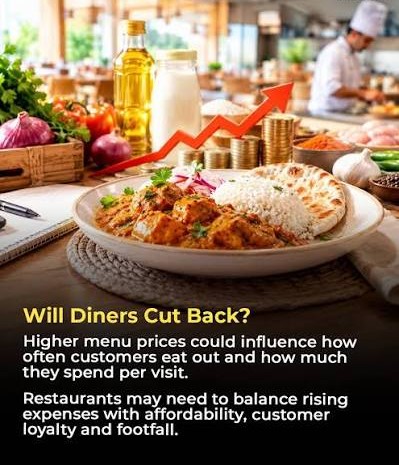
Mumbai’s food lovers may soon have to spend more on their favourite meals as restaurants reportedly consider increasing menu prices by 10–15%. Rising hygiene-related expenses and increased scrutiny from the Maharashtra Food and Drug Administration (FDA) are being cited as possible factors behind the proposed price revisions.
For a city known for its vibrant food culture, from roadside vada pav stalls and bustling cafés to premium restaurants and fine-dining establishments, even a modest price increase could affect the everyday dining budgets of thousands of customers.
However, the reported increase is not necessarily a uniform price hike across Mumbai. Individual restaurants are expected to make their own decisions based on operating costs, customer demand, and business requirements.
Why Could Mumbai Restaurants Increase Their Prices?
Restaurants operate in a competitive industry where maintaining food quality, cleanliness, and customer satisfaction is essential. However, meeting these expectations can involve additional expenses, particularly when hygiene standards receive greater attention.
1. Rising Hygiene and Sanitation Expenses
Maintaining a hygienic kitchen requires regular cleaning, safe food storage, pest control, waste management, and appropriate sanitation facilities.
Restaurants may also need to invest in improved kitchen equipment, cleaning materials, staff training, and procedures for preventing food contamination.
For establishments that need to upgrade their facilities or operating practices, these expenses can add pressure to already tight profit margins.
2. Increased FDA Scrutiny
Food safety authorities play an important role in ensuring that restaurants follow applicable food safety regulations. Increased inspections and enforcement can encourage establishments to review their kitchen practices, storage arrangements, food-handling procedures, and sanitation standards.
Restaurants that need to make improvements may face additional operational costs.
Nevertheless, inspections and hygiene requirements are intended to protect consumers. Maintaining food safety should remain a priority rather than being treated merely as an additional business expense.
3. General Restaurant Operating Costs
Hygiene-related expenses are only one possible reason for higher menu prices. Restaurants also manage costs associated with ingredients, rent, electricity, cooking gas, employee salaries, packaging, and transportation.
When several expenses rise simultaneously, businesses may consider revising menu prices to maintain financial sustainability.
The extent of any increase will depend on each establishment’s financial situation and pricing strategy.
How Much More Could Your Restaurant Bill Cost?
If a restaurant increases its prices by 10–15%, customers could notice a meaningful difference in their dining expenses.
Here are some illustrative calculations based on the reported range:
| Current bill | After a 10% increase | After a 15% increase |
|---|---|---|
| ₹300 | ₹330 | ₹345 |
| ₹500 | ₹550 | ₹575 |
| ₹800 | ₹880 | ₹920 |
| ₹1,000 | ₹1,100 | ₹1,150 |
| ₹1,500 | ₹1,650 | ₹1,725 |
| ₹2,000 | ₹2,200 | ₹2,300 |
For example, a meal that currently costs ₹500 could cost ₹550–₹575 after a 10–15% price increase, assuming the entire bill rises proportionally and no other charges change.
For customers who eat out frequently, these additional expenses can accumulate over time. A person spending ₹4,000 per month on restaurant meals could pay approximately ₹400–₹600 more if all those purchases became 10–15% more expensive.
These figures are examples, not confirmed prices or guaranteed increases across Mumbai.
Will Every Restaurant in Mumbai Increase Its Prices?
Not necessarily.
The reported revisions would depend on individual establishments rather than a single citywide price change. Restaurants may consider several factors before changing their menus, including their existing profit margins, customer base, location, competition, and cost structure.
Some establishments might increase prices, while others could keep their existing rates or adjust only selected menu items.
Premium restaurants may have different cost structures from smaller cafés, family-run eateries, and budget-friendly food outlets. Businesses may also choose to absorb some additional expenses instead of passing the entire cost on to customers.
As a result, diners should not assume that every restaurant will raise prices by 10–15%.
What Does This Mean for Mumbai’s Food Industry?
Mumbai’s restaurant industry serves a diverse population, including office workers, students, families, tourists, and food enthusiasts. Changes in menu prices can influence how frequently customers dine out and which establishments they choose.
Budget-conscious consumers may reduce discretionary spending, look for meal deals, or choose more affordable restaurants.
At the same time, restaurants face the challenge of balancing affordability with food quality, hygiene, and sustainable operations.
For restaurant owners, transparent pricing and consistent food safety practices can help maintain customer trust. For diners, comparing menu prices and checking the final bill can help manage spending.
Ultimately, the impact will depend on how widely price revisions are adopted and whether customers consider the additional cost reasonable.
What Should Diners Expect Next?
The key question is whether individual restaurants will implement price revisions and how much those changes will affect their menus.
Customers should watch for official menu updates from their favourite establishments rather than assuming that a reported industry trend applies everywhere.
It is also important to distinguish between reported proposals and confirmed price changes. The 10–15% figure should be treated as a potential range, not an officially mandated increase for all restaurants.
For now, diners can use the illustrative calculations above to understand how a possible revision might affect their budgets.
Conclusion
Mumbai diners could face higher restaurant bills if establishments implement the reported 10–15% price increases. Rising hygiene-related expenses, greater regulatory scrutiny, and broader operating costs may all influence restaurant pricing decisions.
However, the final impact will vary from one business to another. While customers may need to budget more for certain meals, restaurants must also ensure that food safety and hygiene remain central to their operations.
The important question is not simply whether prices will rise, but how individual restaurants will balance affordability, quality, and food safety in the months ahead.
What do you think? Would you continue dining at your favourite restaurant if its prices increased by 10–15%? Share your opinion in the comments!
Follow @onevisionmedia.in for more news and updates.
Disclaimer: This article is for informational purposes only. The reported price increases should not be interpreted as confirmed or applicable to every restaurant in Mumbai. Actual revisions, if any, will depend on individual establishments.