
India has taken another major step toward strengthening the operational capabilities of its armed forces, with the Defence Acquisition Council (DAC) approving capital acquisition proposals worth more than ₹1.10 lakh crore.
The approvals, announced on September 7 under Defence Minister Rajnath Singh, cover the Indian Army, Navy and Air Force and include equipment ranging from advanced helicopters and surveillance radars to electronic warfare systems, mine-laying vehicles and battlefield mobility equipment.
The Defence Ministry said approximately 98 percent of the procurement will be sourced from Indian industry, making the decision significant not only for military preparedness but also for India’s push toward domestic defence manufacturing.
Army to Receive New Battlefield Capabilities
A substantial portion of the approved acquisitions is intended for the Indian Army.
The proposals include Chemical, Biological, Radiological and Nuclear (CBRN) reconnaissance vehicles, High Mobility Vehicles, Self-Propelled Mechanical Mine Layers, Advanced Light Helicopters, Trawl Tanks and the Sarvatra Bridge System.
CBRN reconnaissance vehicles are designed to detect, identify and monitor areas contaminated by chemical, biological or radiological agents.
The High Mobility Vehicles are intended to improve logistics and troop movement in difficult terrain, while mechanical mine-laying systems can allow formations to rapidly create defensive minefields.
The Advanced Light Helicopters will provide additional mobility for missions across India’s varied terrain, including mountainous and difficult operational environments.
The Sarvatra Bridge System is intended to help military formations cross obstacles such as rivers and damaged infrastructure during operations.
Navy Gets New Radar and Propulsion Push
The Indian Navy will also receive significant capability upgrades.
The DAC approved procurement of Arudhra radars, which are designed to replace existing air-route surveillance radars at several naval air stations.
The Arudhra system is an indigenous multi-function radar developed for detecting and tracking aerial targets.
The Council also approved the design, development and subsequent procurement of Marine Gas Turbines.
This has strategic significance because India has historically relied on foreign suppliers for several categories of marine propulsion technology.
Greater domestic capability in gas-turbine propulsion could reduce dependence on external vendors and strengthen India’s ability to maintain and develop warships independently.
Air Force to Receive Electronic Warfare Upgrades
The Indian Air Force will receive equipment aimed at improving the survivability and effectiveness of its aircraft.
The approvals include systems intended to enhance the war-fighting capabilities of fighters, transport aircraft and helicopters.
The DAC also approved the acquisition of Ground-Based Multi-Purpose Jammers.
Electronic warfare has become increasingly important in modern conflicts, where radar systems, communications networks, navigation and data links can be targeted or disrupted.
Ground-based jamming systems can therefore provide another layer of protection and electronic attack capability during military operations.
The government also approved the Defence Forces Secure Access Card, or DEFSAC, system.
It is intended to replace paper-based identity cards, passes and permits with interoperable RFID-based smart cards.
98 Percent Indigenous Procurement
Perhaps the most significant economic aspect of the announcement is the Defence Ministry’s statement that 98 percent of the total procurement will come from Indian industry.
The move fits into India’s broader strategy of reducing dependence on imported defence equipment and developing domestic manufacturing capabilities.
For Indian defence companies, large procurement orders can provide long-term demand and encourage investment in research, manufacturing infrastructure and supply chains.
The policy is also intended to increase India’s ability to export military equipment to other countries.
Why the Announcement Matters
The scale of the approval demonstrates that military modernisation remains a major priority for New Delhi.
India faces a complicated security environment involving two nuclear-armed neighbours and a rapidly changing military technology landscape.
Modern warfare increasingly depends not only on tanks, aircraft and ships but also on sensors, electronic warfare, communications, mobility and battlefield information.
The latest approvals cover many of these areas simultaneously.
The procurement therefore represents a broad capability upgrade rather than a single weapons purchase.
Beyond Buying Weapons
The government is also attempting to change the structure of India’s defence industry.
Instead of simply importing finished systems, New Delhi wants Indian companies to become increasingly involved in design, development, manufacturing and maintenance.
That approach could eventually create a more self-sufficient defence ecosystem.
It could also make India a larger exporter of military technology.
Conclusion
The Defence Acquisition Council’s approval of proposals worth more than ₹1.10 lakh crore represents one of India’s largest recent defence procurement decisions.
With the Army, Navy and Air Force all receiving new capabilities, the move is designed to improve operational readiness across land, sea and air domains.
The emphasis on domestic procurement is equally important.
If Indian manufacturers successfully execute these programmes, the decision could strengthen both India’s military preparedness and its long-term ambition to become a major defence manufacturing power.
SEO Title: India Clears ₹1.10 Lakh Crore Defence Procurement Plan for Army, Navy and Air Force
SEO Description: India’s Defence Acquisition Council has approved military procurement proposals worth over ₹1.10 lakh crore, including helicopters, radars, electronic warfare systems and battlefield equipment.
SEO Keywords/Tags: India defence news, Rajnath Singh, Defence Acquisition Council, DAC, ₹1.10 lakh crore defence, Indian Army, Indian Navy, Indian Air Force, defence procurement, Make in India defence
Slug: india-defence-procurement-1-10-lakh-crore-dac
Categories: Defense & Security, Politics & Policy, Editor’s Spotlight
2. India and China Hold First Recent Corps Commander Talks in Arunachal Pradesh Amid LAC Tensions
India and China have held fresh Corps Commander-level military talks in Arunachal Pradesh, marking a significant development in efforts to manage tensions along the Line of Actual Control.
The meeting took place at the Wacha-Damai border meeting point in Arunachal Pradesh’s Kibithoo sector and came amid reports of recent tensions in the Taksing area of Upper Subansiri district.
The Indian delegation was led by Lieutenant General Girish Kalia, commander of the Army’s III Corps, while Chinese military representatives participated from the other side.
Why This Meeting Is Significant
The talks are important because they represent the first senior military commander-level engagement between India and China in recent months specifically in this part of the frontier.
India and China have maintained military dialogue since the 2020 border crisis in eastern Ladakh, but most of the high-profile Corps Commander discussions historically took place around the Chushul-Moldo area.
The latest meeting shifts attention toward the eastern sector of the LAC.
That is particularly important because Arunachal Pradesh remains one of the most sensitive parts of the India-China boundary dispute.
The Taksing Area
Reports of recent tensions in the Taksing area were among the factors behind the latest military engagement.
The two countries have different perceptions of portions of the LAC, meaning that patrol movements and infrastructure development can sometimes produce friction even without either side deliberately seeking a confrontation.
Local military commanders therefore play an important role in preventing incidents from escalating.
The Wacha-Damai meeting point provides a mechanism through which commanders can directly discuss developments on the ground.
Talks Follow Doval-Wang Meeting
The military discussions came only days after another important diplomatic development.
India’s National Security Adviser Ajit Doval and Chinese Foreign Minister Wang Yi met in Beijing on August 25 as Special Representatives for the boundary question.
The two countries have been attempting to gradually restore relations after the military confrontation that began in eastern Ladakh in 2020.
The latest military talks therefore form part of a wider diplomatic and security dialogue rather than representing an isolated event.
Two Additional Military Hotlines
India and China have also been working to improve direct military communication.
Additional military hotlines have been discussed and established as part of efforts to ensure that commanders can communicate quickly during sensitive incidents.
Such communication mechanisms are particularly important along the LAC because there is no mutually accepted boundary across several areas.
A misunderstanding involving patrols or infrastructure could therefore escalate quickly if commanders lack direct communication.
Troops Remain Deployed
Despite the diplomatic improvement between New Delhi and Beijing, military deployments remain an important part of the situation.
Indian troops continue to maintain a substantial presence in sensitive areas.
The objective is to prevent unilateral changes on the ground and maintain India’s ability to respond to developments along the frontier.
The latest dialogue should therefore not be interpreted as the end of the border dispute.
Instead, it represents an effort to manage the dispute without allowing local incidents to turn into a larger military confrontation.
BRICS Adds Another Layer
The timing of the talks is also significant because Chinese President Xi Jinping is expected to attend the BRICS Summit in New Delhi on September 12–13.
Xi’s expected visit would provide another opportunity for high-level India-China engagement.
The two countries have been cautiously rebuilding political communication after years of strained relations.
Any improvement in military stability along the border could create more space for broader diplomatic and economic discussions.
The Larger Border Problem
The fundamental dispute remains unresolved.
India and China continue to have competing territorial claims, while infrastructure construction and military deployments have increased on both sides of the Himalayan frontier.
The two countries also have different interpretations of where the LAC lies in several sectors.
That means even periods of relative calm require continuous military and diplomatic management.
Why Stability Matters
A major confrontation between India and China would have consequences far beyond the Himalayan border.
Both are major Asian economies and nuclear-armed states with growing international influence.
A prolonged military crisis could disrupt trade, regional diplomacy and strategic calculations across the Indo-Pacific.
For that reason, even relatively routine commander-level meetings can have significant strategic importance.
Conclusion
The latest India-China Corps Commander talks in Arunachal Pradesh demonstrate that military communication remains central to managing the unresolved border dispute.
The meeting does not mean that the territorial issue has been solved.
Instead, it represents an attempt to maintain peace along the LAC while both countries continue diplomatic negotiations.
With Xi Jinping expected in New Delhi for the BRICS Summit, the coming weeks could provide another important test of whether the recent diplomatic thaw between India and China can translate into greater stability on the ground.
SEO Title: India-China Hold Corps Commander Talks in Arunachal Pradesh Amid LAC Tensions
SEO Description: India and China have held fresh Corps Commander-level talks at Wacha-Damai in Arunachal Pradesh amid tensions along the LAC and renewed diplomatic engagement between the two countries.
SEO Keywords/Tags: India China border, LAC, Arunachal Pradesh, Corps Commander talks, India China military, Ajit Doval, Wang Yi, Xi Jinping India visit, border tensions, Indian Army
Slug: india-china-corps-commander-talks-arunachal-lac
Categories: Defense & Security, Global, Politics & Policy
3. GPT-6 Astra Raises New AI Security Concerns After OpenAI Classifies It as a Critical Cyber Capability
OpenAI has introduced GPT-6 Astra, describing it as its most capable broadly deployed model yet, but the launch is also attracting attention for an unusually serious reason: OpenAI says Astra has crossed its Critical cybersecurity capability threshold.
According to OpenAI’s latest safety assessment, Astra can, when provided with the appropriate tools and access, identify previously unknown security vulnerabilities and develop methods to exploit them across well-protected systems without requiring a human to guide every individual step.
The company says it has consequently strengthened its safeguards against both misuse and potentially harmful autonomous behaviour.
A Different Kind of AI Milestone
GPT-6 Astra is being positioned not simply as a chatbot but as a system capable of completing complex, multi-step tasks.
OpenAI says the model has improvements in reasoning, coding, research, computer use and long-running work.
It can work with tools, create documents and presentations, operate computers and carry tasks from an initial instruction through to completion.
That broader capability is what makes its cybersecurity classification particularly important.
An AI that can independently discover vulnerabilities is fundamentally different from an AI that merely explains cybersecurity concepts.
What Does “Critical” Mean?
OpenAI’s Preparedness Framework uses capability thresholds to assess risks associated with advanced models.
The company says Astra has now reached the Critical level for cybersecurity capability.
In practical terms, OpenAI’s assessment indicates that, with appropriate tools and access, the model could find previously unknown security weaknesses and develop exploitation strategies across sophisticated systems.
This does not mean Astra can automatically attack any computer system on the internet.
Access, tools, permissions and safeguards still matter.
But the underlying capability is significant because it could reduce the amount of specialised human expertise needed to discover and exploit complex vulnerabilities.
The Defensive Potential Is Equally Important
The same capabilities that create risks could also strengthen cybersecurity.
An AI capable of identifying vulnerabilities could help security researchers audit software, analyse code and discover weaknesses before criminals find them.
It could potentially automate parts of penetration testing and vulnerability research.
Security teams could use advanced AI systems to examine enormous codebases and identify suspicious behaviour much faster than human researchers working manually.
That creates a technological race between offensive and defensive applications.
AI Agents Change the Risk Equation
Traditional AI systems generally respond to individual prompts.
Agentic systems can perform sequences of actions.
For example, an agent might read a document, open a browser, write code, run a test, analyse the result and modify its approach.
This makes them far more useful for real-world work.
It also means that a mistake or malicious instruction could potentially propagate across several actions before a human notices.
OpenAI says Astra includes additional monitoring designed to detect cases where agents may not have correctly interpreted instructions. Supported workflows can be paused or stopped when safety systems detect potential problems.
Astra’s Capabilities Extend Beyond Cybersecurity
OpenAI says Astra improves performance in coding, research and computer use while also supporting complex multi-step work.
The company is positioning it as a model capable of handling entire workflows rather than simply generating individual answers.
That distinction could affect software development, business operations and research.
The model can also work with documents, spreadsheets and presentations while adapting when requirements change.
The Model Is Not Yet Fully Open to Everyone
Despite the scale of the announcement, GPT-6 Astra is not immediately available universally.
OpenAI’s release notes say access is initially rolling out to a limited set of organisations, with broader availability planned over subsequent days.
This staged deployment gives OpenAI additional time to monitor behaviour and evaluate real-world use.
Why Governments Are Watching AI Security
The development arrives as governments increasingly treat advanced AI as a national-security issue.
Cyberattacks already target banks, hospitals, government agencies, defence organisations and critical infrastructure.
If AI systems significantly lower the expertise required to conduct sophisticated attacks, the threat environment could change.
At the same time, governments and companies could use the same technology to defend their networks.
The result could be an AI-driven escalation in both offensive and defensive cybersecurity.
The Bigger AI Race
Astra’s launch illustrates how the AI race is moving beyond benchmark scores and chatbot quality.
The most important question increasingly concerns what AI systems can actually do in the real world.
Can they operate software?
Can they write and test complex code?
Can they conduct research independently?
Can they discover vulnerabilities?
Can they execute long chains of actions without continuous human supervision?
Astra’s capabilities suggest that the answer to several of these questions is increasingly yes.
The Safety Challenge
The central challenge is therefore no longer simply making AI more intelligent.
It is making increasingly capable systems controllable.
OpenAI’s own classification of Astra as a Critical cybersecurity capability demonstrates the scale of the challenge.
The company has responded with stronger safeguards, monitoring and restrictions.
But as models become more capable, the security systems protecting them must evolve at the same speed.
Conclusion
GPT-6 Astra represents a major step in the evolution of AI agents, but its cybersecurity capabilities may ultimately prove more consequential than its benchmark performance.
OpenAI’s own safety evaluation says Astra has crossed the Critical cybersecurity threshold, meaning that with suitable tools and access it can potentially discover sophisticated vulnerabilities and develop exploitation strategies with limited human guidance.
That capability carries obvious risks, but it could also become a powerful defensive tool.
The next phase of the AI race will therefore not simply be about which model is smartest.
It will increasingly be about which companies can build the most capable systems while keeping those systems secure, controllable and resistant to misuse.
SEO Title: GPT-6 Astra Crosses Critical Cybersecurity Threshold, OpenAI Strengthens AI Safeguards
SEO Description: OpenAI’s GPT-6 Astra has been classified as reaching a Critical cybersecurity capability, raising new questions about autonomous AI, cyberattacks and AI safety.
SEO Keywords/Tags: GPT-6 Astra, OpenAI, AI cybersecurity, artificial intelligence, AI safety, autonomous AI, cyber attacks, AI agents, GPT-6, OpenAI safety, AI security
Slug: gpt-6-astra-critical-cybersecurity-ai-safety
Categories: Tech & Innovation, Defense & Security, Editor’s Spotlight
4. Indian Space-Tech Startup Pixxel Raises $100 Million in Largest Funding Round for an Indian Space Company
Indian space technology company Pixxel has raised $100 million in Series C funding, marking what the company describes as the largest single funding round raised by a space technology company in India.
The round was co-led by Singapore state investor Temasek and UK-based space technology investment firm Seraphim.
The investment takes Pixxel’s total funding to approximately $195 million and is intended to help the company expand from hyperspectral Earth observation into a broader planetary infrastructure business.
From Hyperspectral Satellites to Planetary Infrastructure
Pixxel originally built its business around hyperspectral imaging.
Unlike conventional satellite cameras that capture information across a relatively limited number of spectral bands, hyperspectral systems can analyse a much wider range of wavelengths.
That allows satellites to detect characteristics of materials that may not be visible in ordinary imagery.
Applications can include agriculture, environmental monitoring, mineral exploration and defence.
Pixxel is now attempting to build a much larger ecosystem around those capabilities.
New Satellite Technologies
The company says the new funding will support development of its next-generation Honeybee hyperspectral constellation.
The satellites will expand observation capabilities into shortwave infrared while also adding technologies such as synthetic aperture radar and ultra-high-resolution optical imaging.
The first Honeybee satellite is expected to launch in 2027.
Adding multiple sensing technologies is strategically important.
Different sensors reveal different types of information.
Optical imaging can provide detailed visual information, while radar can observe areas under conditions where optical imagery is less useful.
Hyperspectral imaging can provide information about the composition of materials.
Combining these datasets can therefore produce a far more detailed picture of what is happening on the ground.
Aurora: Turning Satellite Data Into Intelligence
Pixxel is also developing Aurora, its Earth-intelligence software platform.
The objective is to move beyond simply collecting satellite imagery.
Instead, the company wants to process large volumes of data and turn them into information that governments, businesses and other organisations can act upon.
This is where artificial intelligence becomes important.
Modern Earth-observation systems can produce enormous quantities of imagery.
The challenge is increasingly not obtaining the images but analysing them quickly enough.
AI-based processing can potentially identify changes, anomalies and patterns at a scale that would be difficult for humans to manage manually.
Defence and Sovereign Applications
Pixxel’s expansion also has a strategic dimension.
The company says it is developing sovereign Earth-observation systems for government missions, including civil, defence and intelligence applications.
India has increasingly focused on developing domestic satellite capabilities for national-security requirements.
Having private Indian companies capable of designing, manufacturing and operating advanced Earth-observation systems could reduce dependence on foreign providers.
It could also provide India with greater control over sensitive satellite data and intelligence infrastructure.
Manufacturing Expansion in India and the US
The funding will also be used to increase Pixxel’s manufacturing capabilities in India and the United States.
That reflects a broader shift in the global space industry.
Companies are increasingly attempting to move from building individual satellites to establishing high-volume manufacturing systems.
Lower production costs and higher manufacturing capacity are essential if satellite constellations are to become large enough to provide continuous global coverage.
Pixxel’s Existing Expansion
Pixxel says it has deployed six Firefly satellites during the past two years.
It describes the constellation as the world’s highest-resolution commercial hyperspectral constellation.
The company has also developed Aurora and secured contracts involving NASA and the National Reconnaissance Office.
It has additionally won multiple iDEX challenges from India’s Ministry of Defence and was selected to lead development of India’s first public-private Earth-observation constellation of 12 satellites under IN-SPACe.
Why the Funding Matters for India
India’s space industry is undergoing a major transformation.
For decades, India’s space programme was dominated by government institutions.
Private companies are now increasingly entering satellite manufacturing, launch services, Earth observation and space-based applications.
Large investments such as Pixxel’s $100 million round indicate that international investors increasingly see Indian space companies as potential global players.
The funding could also help create specialised jobs and strengthen India’s domestic space supply chain.
The Global Earth-Observation Market
Earth observation is becoming increasingly important for governments and industries.
Satellite imagery can support agriculture, climate monitoring, disaster response, infrastructure planning, maritime surveillance and national security.
The emergence of AI makes this data even more valuable because computers can process imagery continuously and identify changes that might otherwise take humans significant amounts of time to detect.
Companies capable of combining satellites, AI and data platforms could therefore occupy an important position in the next generation of the space economy.
Conclusion
Pixxel’s $100 million Series C represents a major milestone for India’s private space sector.
The company is moving beyond its original hyperspectral imaging business toward a much broader model involving satellites, Earth-intelligence software, sovereign systems and manufacturing.
If the planned Honeybee constellation, radar systems and Aurora platform are successfully developed, Pixxel could become one of India’s most important private Earth-observation companies.
More broadly, the funding signals that India’s space sector is moving from a government-led model toward a larger ecosystem in which private companies increasingly build critical space infrastructure.
SEO Title: Pixxel Raises $100 Million in India’s Largest Space-Tech Funding Round
SEO Description: Indian space-tech company Pixxel has raised $100 million in Series C funding to expand hyperspectral satellites, Earth intelligence, radar systems and sovereign space capabilities.
SEO Keywords/Tags: Pixxel, India space tech, Pixxel funding, $100 million funding, space startup India, hyperspectral satellites, Earth observation, satellite technology, Temasek, Seraphim, Indian space industry
Slug: pixxel-100-million-series-c-space-tech-india
Categories: Tech & Innovation, Economy & Markets, Editor’s Spotlight
5. US Peace Push Faces New Hurdles as Russia Signals Possible Return to Trilateral Talks With Ukraine
Diplomatic efforts to end the Russia-Ukraine war have entered another uncertain phase after US envoys held meetings with both Russian and Ukrainian leadership but failed to produce an immediate breakthrough.
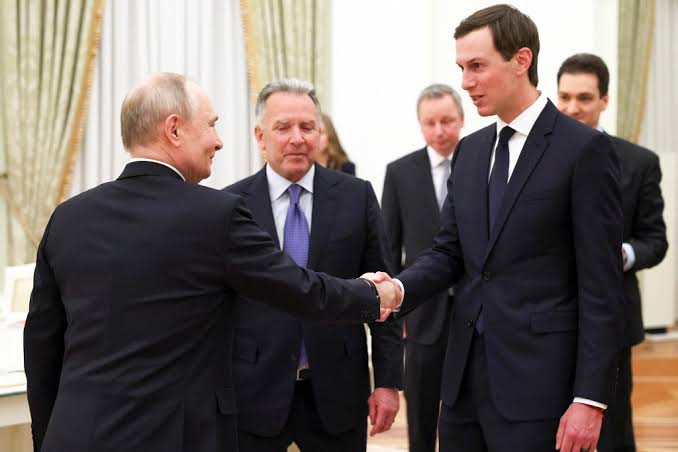
US envoy Steve Witkoff and Jared Kushner travelled to Kyiv after meeting Russian President Vladimir Putin in Moscow.
The US administration has been attempting to bring Moscow and Kyiv back toward negotiations, including the possibility of a trilateral format involving Russia, Ukraine and the United States.
Russia has now indicated that it does not rule out restarting such talks.
Meetings in Moscow and Kyiv
The latest diplomatic push involved separate engagements with the two sides.
Witkoff and Kushner met Putin in Moscow before travelling to Kyiv, where they held discussions with Ukrainian President Volodymyr Zelenskyy.
The meetings were described by US officials as constructive and substantive.
However, there was no agreement capable of immediately ending the war.
The continued fighting means that diplomacy remains difficult even as political contacts increase.
Russia Leaves Door Open for Trilateral Talks
Kremlin spokesman Dmitry Peskov said Russia does not rule out the possibility of renewed trilateral discussions involving Russia, Ukraine and the United States.
The statement is significant because Moscow has previously been cautious about the structure and terms of negotiations.
A trilateral format could give Washington a direct role in mediating between the two sides while allowing Russia and Ukraine to communicate through a common diplomatic framework.
However, simply agreeing to meet would not resolve the central disagreements.
Ukraine’s Key Demands
Ukraine continues to place strong emphasis on security guarantees and territorial issues.
During the Kyiv meetings, Zelenskyy highlighted the importance of air-defence assistance, particularly Patriot systems, as part of preparations for the coming winter.
Ukraine is also concerned about protecting its energy infrastructure and civilian population from continued Russian attacks.
These concerns are becoming increasingly important as colder months approach.
The Winter Factor
Ukraine’s energy infrastructure has repeatedly been targeted during the war.
The approach of winter creates additional pressure because damage to electricity, heating and other infrastructure can have severe consequences for civilians.
The Ukrainian government is therefore seeking additional air-defence capabilities and international assistance.
The United States has indicated that discussions include a broader “winter package” involving energy and defence support.
No Breakthrough Yet
Despite the diplomatic activity, officials on both sides continue to acknowledge major obstacles.
The central disputes include territory, security guarantees and the future political and military relationship between Ukraine, Russia and the West.
These issues cannot easily be resolved through short diplomatic meetings.
A potential agreement would require difficult compromises and guarantees that both sides consider credible.
Continued Military Escalation
The diplomatic effort is taking place while fighting continues.
Reports indicate that Russian and Ukrainian forces remain engaged in attacks across multiple areas.
Ukraine has also continued long-range strikes against Russian targets, while Russia has maintained attacks against Ukrainian infrastructure and population centres.
The continuation of military operations demonstrates the gap between diplomatic discussions and realities on the battlefield.
Washington’s Strategy
The Trump administration appears to be attempting to maintain communication with both Moscow and Kyiv rather than relying exclusively on one side.
The decision to send envoys to both capitals is intended to explore whether common ground exists for renewed negotiations.
The United States is also attempting to involve European allies in the broader diplomatic and security framework.
For Washington, the challenge is finding a settlement that can be accepted by Ukraine while also creating conditions under which Russia would agree to stop fighting.
Europe’s Role
European governments remain central to any eventual settlement.
Many European countries have provided military, financial and humanitarian support to Ukraine since the beginning of the war.
They are also concerned about what a peace agreement would mean for European security.
Any long-term settlement would therefore likely require discussions about Ukraine’s future security arrangements and Europe’s relationship with both Russia and the United States.
Why Trilateral Talks Matter
A formal Russia-Ukraine-US negotiation would represent a significant change from the current situation.
The United States has substantial influence over Ukraine’s military and economic support, while Russia remains the primary opposing force.
Bringing both sides into a common diplomatic framework could potentially accelerate discussions.
But it could also expose major disagreements that have so far remained unresolved.
The Road Ahead
The immediate question is whether the latest diplomatic contacts can produce a concrete negotiating framework.
Russia’s willingness to consider renewed trilateral discussions provides a possible opening.
Ukraine, however, continues to insist that any settlement must address security and territorial questions rather than simply create a temporary ceasefire.
The United States will therefore face the difficult task of bridging positions that remain far apart.
Conclusion
The latest US diplomatic push has not yet produced a breakthrough in the Russia-Ukraine war, but it has reopened discussion about a possible return to trilateral negotiations.
Russia’s statement that it does not rule out talks involving Moscow, Kyiv and Washington provides a potential diplomatic opening.
However, major obstacles remain.
Territory, security guarantees, military assistance and Ukraine’s future relationship with the West are all unresolved.
For now, diplomacy is moving forward alongside continued fighting, making the coming weeks critical for determining whether the latest US initiative can develop into a genuine peace process or remain another round of inconclusive negotiations.