India’s corporate landscape is facing a major leadership transition after N. Chandrasekaran announced that he will step down as chairman of Tata Sons, the holding company of the Tata Group. Chandrasekaran, who has led the conglomerate since 2017, is expected to remain in the position until the end of his current term in February 2027. His departure comes amid reported tensions with Tata Trusts, which holds a controlling 66% stake in Tata Sons, and at a time when several major Tata businesses are dealing with significant challenges.
The announcement immediately sent shockwaves through Indian markets, with shares of several Tata Group companies—including TCS, Tata Motors and Tata Steel—falling after news of the leadership change emerged. The development has therefore become more than a corporate succession story: it raises questions about the future direction, governance and strategy of one of India’s most important business groups.
Who Is N. Chandrasekaran?
Natarajan Chandrasekaran became chairman of Tata Sons in 2017, succeeding Cyrus Mistry.
His appointment was significant because he became the first non-Parsi chairman of Tata Sons, breaking from a tradition that had connected the group’s top leadership with the Parsi community for generations.
Before becoming chairman of Tata Sons, Chandrasekaran had already built a long career within the Tata Group. He joined Tata Consultancy Services (TCS) in 1987 and eventually became its chief executive.
His tenure at TCS helped establish him as one of the group’s most influential executives before he moved into the top position at Tata Sons.
Over nearly a decade as chairman, he oversaw a period of substantial expansion and transformation across the conglomerate.
Why Is Chandrasekaran Leaving?
The announcement comes against the backdrop of reported disagreements between Chandrasekaran and Tata Trusts, the charitable organization that owns approximately 66% of Tata Sons.
According to Reuters, Chandrasekaran cited a lack of support from the board amid unresolved disagreements involving several important issues.
These reportedly include:
- The potential listing of Tata Sons
- Losses at Air India
- The exit of a minority shareholder
- Broader governance questions within Tata Sons
The situation highlights the complicated ownership structure of the Tata Group, where business decisions can involve both commercial considerations and the interests of the charitable trusts that control Tata Sons.
Tata Trusts Holds a Powerful Position
Unlike many major corporate groups, Tata’s ownership structure is unusual.
Tata Trusts owns around 66% of Tata Sons, giving the charitable organization enormous influence over the group’s holding company.
Tata Sons, in turn, controls or holds significant stakes in dozens of Tata businesses.
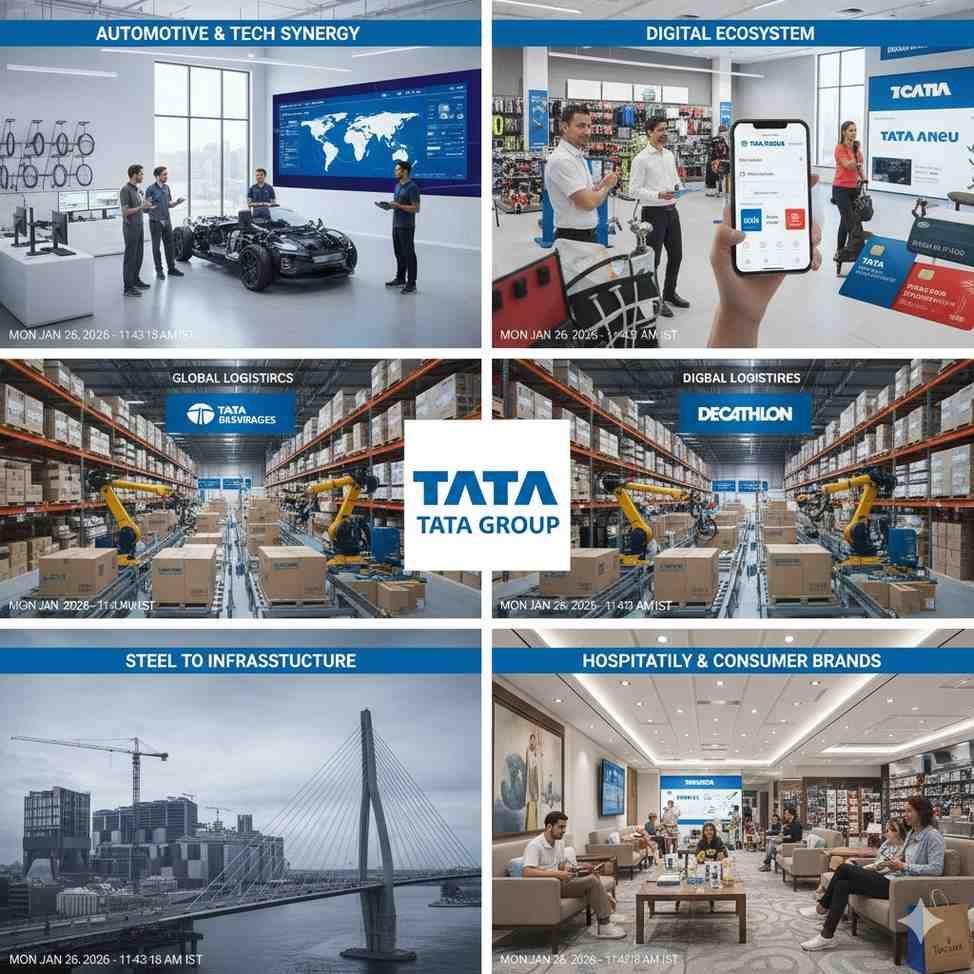
The group spans industries including:
- Information technology
- Automobiles
- Steel
- Aviation
- Consumer products
- Hotels
- Telecommunications
- Electronics
- Energy
- Financial services
The Tata Group collectively comprises more than 30 companies and reported combined revenues of around $185 billion, according to Reuters.
Because of this structure, any change at the top of Tata Sons has implications far beyond a single company.
Market Reaction Comes Immediately
Indian investors reacted quickly to the announcement.
Shares of major Tata Group companies fell after the news became public, reflecting uncertainty surrounding the conglomerate’s next phase.
TCS, Tata Motors and Tata Steel were among the companies affected.
The market reaction illustrates how closely investors associate the leadership of Tata Sons with the strategic direction of the wider group.
However, Chandrasekaran is not leaving immediately.
He is expected to continue serving until February 2027, giving Tata Sons several months to determine a successor and manage the transition.
A Challenging Period for the Tata Group
Chandrasekaran’s departure comes at a particularly complicated moment for the conglomerate.
Several Tata businesses are currently facing challenges.
Air India
Tata Group took control of Air India in 2022 after acquiring the airline from the Indian government.
The group has been investing heavily in rebuilding the airline, expanding its fleet and integrating Air India with Vistara.
However, the airline continues to face financial and operational challenges.
Jaguar Land Rover
Tata Motors’ luxury automotive subsidiary Jaguar Land Rover has also been dealing with difficulties, including weaker sales and broader challenges affecting the global automotive industry.
Electronics
Tata’s rapidly expanding electronics business has also faced challenges, including a significant data breach affecting one of its electronics operations, according to Reuters.
These developments make the timing of the leadership transition particularly important.
Chandrasekaran’s Major Legacy
Despite the challenges, Chandrasekaran leaves behind a substantial record of transformation.
During his leadership, Tata Group significantly expanded its ambitions in several emerging sectors.
One of the most important areas was electronics manufacturing.
Tata began building a much larger presence in India’s electronics supply chain, including semiconductor and smartphone manufacturing initiatives.
The group also dramatically expanded its presence in aviation following the acquisition of Air India.
Another major transformation involved Tata’s automotive operations, particularly its investments in electric vehicles and advanced automotive technologies.
The Air India Gamble
One of Chandrasekaran’s most visible strategic moves was the Tata Group’s return to aviation.
After decades away from direct ownership of Air India, Tata Group acquired the airline from the Indian government.
The group subsequently began restructuring its aviation operations, combining Air India and Vistara while attempting to create a stronger full-service airline capable of competing internationally.
The strategy requires enormous investment and long-term commitment.
Air India’s financial performance will therefore be one of the major challenges facing Tata’s next chairman.
Tata’s Push Into Technology and Manufacturing
The Tata Group has also attempted to transform itself from a traditional conglomerate into a major player in India’s technology and manufacturing ambitions.
The group has invested heavily in:
Semiconductors
Tata has been developing semiconductor manufacturing capabilities as India attempts to build a domestic chip ecosystem.
Electronics
The group has expanded smartphone and electronics manufacturing operations, including partnerships with major international companies.
Electric Vehicles
Tata Motors has become one of India’s major electric vehicle manufacturers.
Renewable Energy
Tata companies have also increased investments in renewable energy and clean technologies.
This broader strategy means the next chairman will inherit a conglomerate undergoing major transformation.
The Biggest Question: Who Will Replace Him?
The most important question following the announcement is now straightforward:
Who will become the next chairman of Tata Sons?
The succession process is likely to attract enormous attention because the chairman of Tata Sons effectively oversees one of India’s most influential corporate groups.
The next leader will have to balance several competing priorities:
- Maintaining Tata’s global expansion
- Managing Air India’s losses
- Strengthening automotive businesses
- Expanding electronics manufacturing
- Supporting TCS
- Managing Tata Sons’ governance
- Maintaining relationships with Tata Trusts
- Delivering returns to shareholders
The successor will therefore inherit one of the most complex corporate leadership positions in India.
Why the Tata Sons Listing Debate Matters
One of the reported areas of disagreement involves the potential listing of Tata Sons.
A public listing could fundamentally change the relationship between Tata Sons, its shareholders and the broader Tata Group.
However, such a move would also create significant governance and strategic implications.
Tata Sons currently sits at the center of the group’s ownership structure, so any major change to its status could affect how the entire conglomerate operates.
This is one reason the issue has become particularly sensitive.
Tata’s Unusual Corporate Structure
The Tata Group is different from many large Indian conglomerates.
Instead of being controlled primarily by an individual family, the majority ownership of Tata Sons is held by philanthropic trusts.
This structure has historically allowed Tata companies to maintain a strong focus on long-term development and social initiatives.
But it can also create complicated governance dynamics when business strategy and the interests of the trusts diverge.
The reported tensions surrounding Chandrasekaran’s departure once again put this unusual structure under the spotlight.
What Happens Between Now and February 2027?
Chandrasekaran’s decision does not mean an immediate change in leadership.
He is expected to continue serving as chairman until February 2027.
That gives Tata Sons time to:
- Begin the succession process.
- Identify potential candidates.
- Consult Tata Trusts.
- Evaluate the group’s strategic priorities.
- Prepare the next chairman for the transition.
The next several months could therefore become one of the most important periods in Tata Group’s recent history.
Why This Matters to Ordinary Indians
For many Indians, Tata is much more than a corporate name.
The group’s businesses touch everyday life through:
- TCS
- Tata Motors
- Tata Consumer Products
- Tata Power
- Tata Steel
- Tata Digital
- Tata Airlines
- Tata Hotels
Millions of Indians also work directly or indirectly for Tata companies.
The group is therefore deeply connected to India’s economy, employment and industrial development.
A leadership transition at Tata Sons could eventually influence investment decisions, expansion plans and employment across multiple sectors.
A New Chapter for Tata
N. Chandrasekaran’s departure marks the end of a nearly decade-long leadership period.
He took charge at Tata Sons during a turbulent period following the removal of Cyrus Mistry and spent the following years rebuilding stability while pushing the conglomerate into new industries.
Now, Tata faces a different challenge.
The group has grown more ambitious, more global and more diversified—but also more complex.
Its next chairman will need to manage this complexity while maintaining the institutional culture that has defined Tata for generations.
Conclusion
N. Chandrasekaran’s decision to step down as Tata Sons chairman in February 2027 represents one of the biggest leadership changes in Indian corporate India in years. His tenure was marked by expansion into aviation, electronics, electric vehicles and other strategic industries, while Tata’s traditional businesses continued to operate on a global scale.
But his departure also comes at a challenging moment, with tensions involving Tata Trusts, questions surrounding Tata Sons’ potential listing, Air India’s financial difficulties and challenges across some of the group’s major businesses.
For now, Chandrasekaran remains in charge. But the search for his successor has effectively begun—and whoever takes over Tata Sons will inherit not just a business empire, but one of India’s most influential corporate institutions.