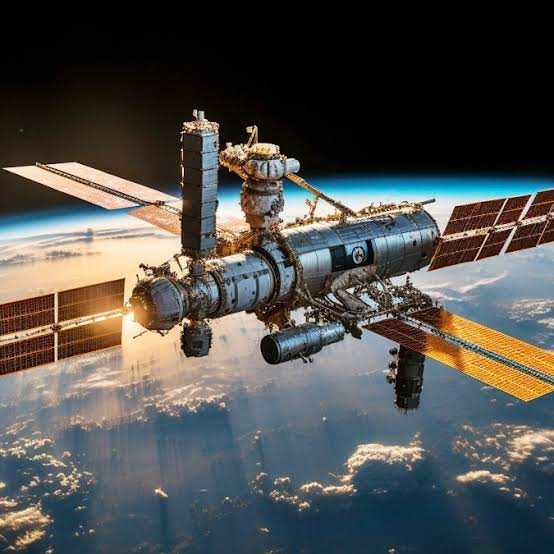
India is taking another giant leap in space exploration with its ambitious plan to build the Bharatiya Antariksh Station (BAS), the country’s first independent space station. After remarkable achievements such as Chandrayaan-3, Aditya-L1, and the upcoming Gaganyaan human spaceflight mission, the Indian Space Research Organisation (ISRO) is now working towards establishing a permanent presence in Earth orbit.
According to current plans, the first module of the Bharatiya Antariksh Station is expected to be launched in 2028, with the complete station expected to be assembled in the following years. Once operational, the project will mark a historic milestone in India’s journey toward becoming a global leader in space technology.
What is the Bharatiya Antariksh Station?
The Bharatiya Antariksh Station is India’s planned modular space station that will orbit the Earth in Low Earth Orbit (LEO). It will serve as a research laboratory where astronauts can live and conduct scientific experiments in microgravity.
Unlike the International Space Station (ISS), which is jointly operated by multiple countries, the Bharatiya Antariksh Station will be designed, built, and operated by India, making it a symbol of the country’s growing self-reliance in advanced space technologies.
Initially, the station is expected to accommodate astronauts for short-duration missions, with future upgrades allowing for longer stays and expanded research capabilities.
Why is India Building Its Own Space Station?
ISRO aims to create a dedicated platform for conducting advanced scientific research and developing technologies required for future deep-space missions.
The space station will enable India to:
- Conduct experiments in microgravity.
- Test advanced life-support systems.
- Study the effects of space on the human body.
- Develop technologies for future Moon and Mars missions.
- Strengthen India’s human spaceflight program.
Owning a national space station will also reduce dependence on international facilities and provide Indian scientists with continuous access to space-based research opportunities.
Timeline of the Project
The Bharatiya Antariksh Station is expected to be developed in phases.
Key milestones include:
- 2025–2027: Progress on the Gaganyaan human spaceflight program and testing of supporting technologies.
- 2028: Launch of the first module of the Bharatiya Antariksh Station.
- 2030s: Additional modules added to expand the station’s capabilities.
- 2035: Completion of the fully operational space station, as envisioned by ISRO.
Each module will be launched separately and assembled in orbit using advanced docking technologies.
Connection with the Gaganyaan Mission
India’s first human spaceflight mission, Gaganyaan, serves as the foundation for the Bharatiya Antariksh Station.
Before astronauts can live aboard a permanent space station, ISRO must successfully demonstrate:
- Safe human launches.
- Reliable crew recovery.
- Life-support systems.
- Orbital operations.
- Crew training and mission management.
The knowledge gained from Gaganyaan will directly contribute to the development and operation of India’s future space station.
Scientific and Technological Benefits
The Bharatiya Antariksh Station will provide Indian scientists with a unique platform for conducting research that cannot be performed on Earth.
Research areas may include:
- Space medicine.
- Biotechnology.
- Material science.
- Fluid dynamics.
- Agriculture in space.
- Artificial intelligence for autonomous space systems.
- Robotics and advanced manufacturing.
These experiments could lead to innovations that benefit healthcare, engineering, communications, and industrial technology.
Boost to India’s Space Economy
India’s space ambitions extend beyond scientific discovery.
The Bharatiya Antariksh Station is expected to create opportunities for:
- Private aerospace companies.
- Startups developing space technologies.
- Universities conducting research.
- Manufacturing industries.
- International collaborations.
With increasing participation from the private sector, India’s space economy is projected to grow significantly over the coming decade.
Global Significance
Only a handful of nations have independently developed human spaceflight capabilities and long-term orbital infrastructure.
With the Bharatiya Antariksh Station, India aims to join this elite group while strengthening its position as a major space power.
The station could eventually support international scientific collaborations and commercial research missions, enhancing India’s role in the global space community.
Challenges Ahead
Building a space station is an extremely complex engineering project.
ISRO will need to overcome several challenges, including:
- Developing long-duration life-support systems.
- Ensuring astronaut safety.
- Achieving reliable orbital docking.
- Managing long-term operations in space.
- Controlling project costs and timelines.
However, ISRO’s successful missions over the past decade have demonstrated its ability to execute ambitious projects efficiently.
Looking Toward the Future
The Bharatiya Antariksh Station represents more than just a technological achievement—it reflects India’s long-term vision for space exploration.
As the country prepares for lunar missions, deep-space exploration, and advanced scientific research, the space station will become a crucial stepping stone toward even more ambitious goals, including future missions to the Moon and Mars.
Conclusion
India’s plan to build the Bharatiya Antariksh Station marks the beginning of a new chapter in the nation’s space journey. With the first module planned for launch in 2028 and a fully operational station envisioned in the coming decade, ISRO is laying the foundation for sustained human presence in space.
The project will not only advance scientific research but also strengthen India’s technological capabilities, inspire future generations of scientists and engineers, and reinforce the country’s position as one of the world’s leading space powers.