
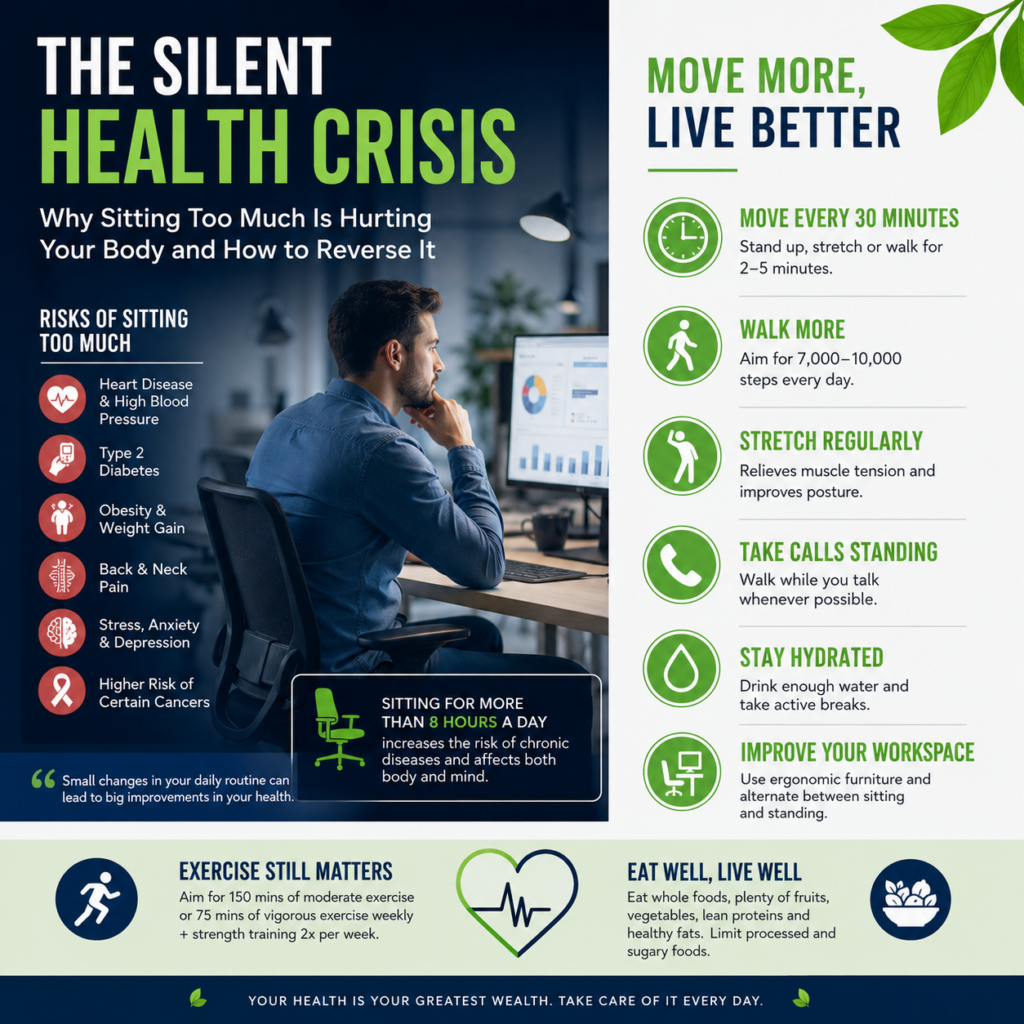
In today’s digital world, millions of people spend most of their day sitting—whether working at a desk, attending online classes, driving, or scrolling through social media. While this lifestyle may seem harmless, health experts increasingly warn that prolonged sitting has become one of the biggest modern health risks. Often referred to as the “new smoking,” excessive sedentary behavior is linked to a growing number of chronic health conditions affecting people of all ages.
Recent research continues to show that long periods of sitting can negatively impact the heart, metabolism, muscles, joints, and even mental health. The good news is that simple daily habits can significantly reduce these risks without requiring intense exercise or major lifestyle changes.
Why Sitting for Long Hours Is Harmful
The human body is designed to move. When we remain seated for extended periods, muscle activity decreases dramatically. This slows blood circulation, reduces calorie burning, and affects how the body regulates blood sugar and fats.
People who sit for more than eight hours a day have been found to face a higher risk of several health problems, including:
- Heart disease
- Type 2 diabetes
- High blood pressure
- Obesity
- Lower back and neck pain
- Poor posture
- Anxiety and depression
- Certain types of cancer
What’s concerning is that even individuals who exercise regularly may still experience some of these risks if they remain sedentary for most of the day.
The Impact on Mental Well-Being
Physical inactivity doesn’t only affect the body—it also influences the brain.
Studies suggest that sitting for prolonged periods can contribute to stress, reduced concentration, lower energy levels, and mood disorders. Spending excessive time indoors in front of screens also reduces exposure to natural sunlight, which plays an important role in maintaining healthy vitamin D levels and regulating mood.
Experts recommend taking regular movement breaks not only for physical health but also to improve productivity and mental clarity.
Warning Signs You Shouldn’t Ignore
Many people experience early symptoms of a sedentary lifestyle without realizing their cause. Common warning signs include:
- Constant stiffness in the neck and shoulders
- Lower back pain
- Fatigue despite adequate sleep
- Poor posture
- Tight hips
- Swollen feet after work
- Difficulty concentrating
- Weight gain around the waist
Ignoring these signs can gradually lead to more serious health complications over time.
Small Changes Can Make a Big Difference
Fortunately, improving your health doesn’t require spending hours in the gym. Research shows that frequent movement throughout the day is extremely beneficial.
Here are practical ways to stay active:
1. Follow the 30-Minute Rule
Stand up and move for at least two to five minutes every 30 minutes. Walk around your room, stretch, or refill your water bottle.
2. Walk More Every Day
Aim for around 7,000 to 10,000 steps daily. Even short walks after meals help improve digestion and blood sugar control.
3. Stretch Regularly
Simple stretches for your neck, shoulders, hips, and hamstrings reduce muscle tightness and improve posture.
4. Take Phone Calls Standing Up
Instead of remaining seated during meetings or calls, walk while talking whenever possible.
5. Stay Hydrated
Drinking enough water not only supports overall health but naturally encourages more movement through regular breaks.
6. Improve Your Workspace
Adjust your chair, monitor, and keyboard to maintain proper posture. If possible, alternate between sitting and standing using an adjustable desk.
Exercise Still Matters
Although reducing sitting time is important, regular exercise remains essential.
Health organizations generally recommend adults complete at least:
- 150 minutes of moderate-intensity aerobic activity each week, or
- 75 minutes of vigorous exercise weekly
Adding strength training at least twice a week helps preserve muscle mass, improve bone health, and support long-term mobility.
The key message is that daily movement and structured exercise complement each other—they are not substitutes.
Nutrition Supports an Active Lifestyle
Movement alone isn’t enough if eating habits are poor.
A balanced diet rich in vegetables, fruits, whole grains, lean protein, nuts, seeds, and healthy fats supports energy levels and overall health. Reducing highly processed foods, sugary beverages, and excessive salt intake can further lower the risk of chronic diseases.
Healthy nutrition combined with regular movement creates the strongest foundation for long-term wellness.
Building Sustainable Habits
Many people attempt dramatic lifestyle changes that become difficult to maintain. Instead, health professionals recommend starting with small, realistic goals.
Examples include:
- Taking the stairs instead of the elevator.
- Walking during lunch breaks.
- Parking farther from entrances.
- Performing light stretching every morning.
- Going for a short evening walk with family.
These habits may appear minor individually, but over weeks and months they create meaningful improvements in health.
The Bottom Line
Modern technology has made life more convenient, but it has also encouraged people to spend unprecedented amounts of time sitting. Fortunately, reversing many of the health risks associated with inactivity doesn’t require expensive equipment or extreme fitness routines.
Standing more often, walking regularly, stretching throughout the day, eating a balanced diet, and maintaining a consistent exercise routine can significantly improve physical and mental well-being.
In an era where many jobs and daily activities revolve around screens, making movement a priority is one of the simplest—and most powerful—investments anyone can make in their long-term health.