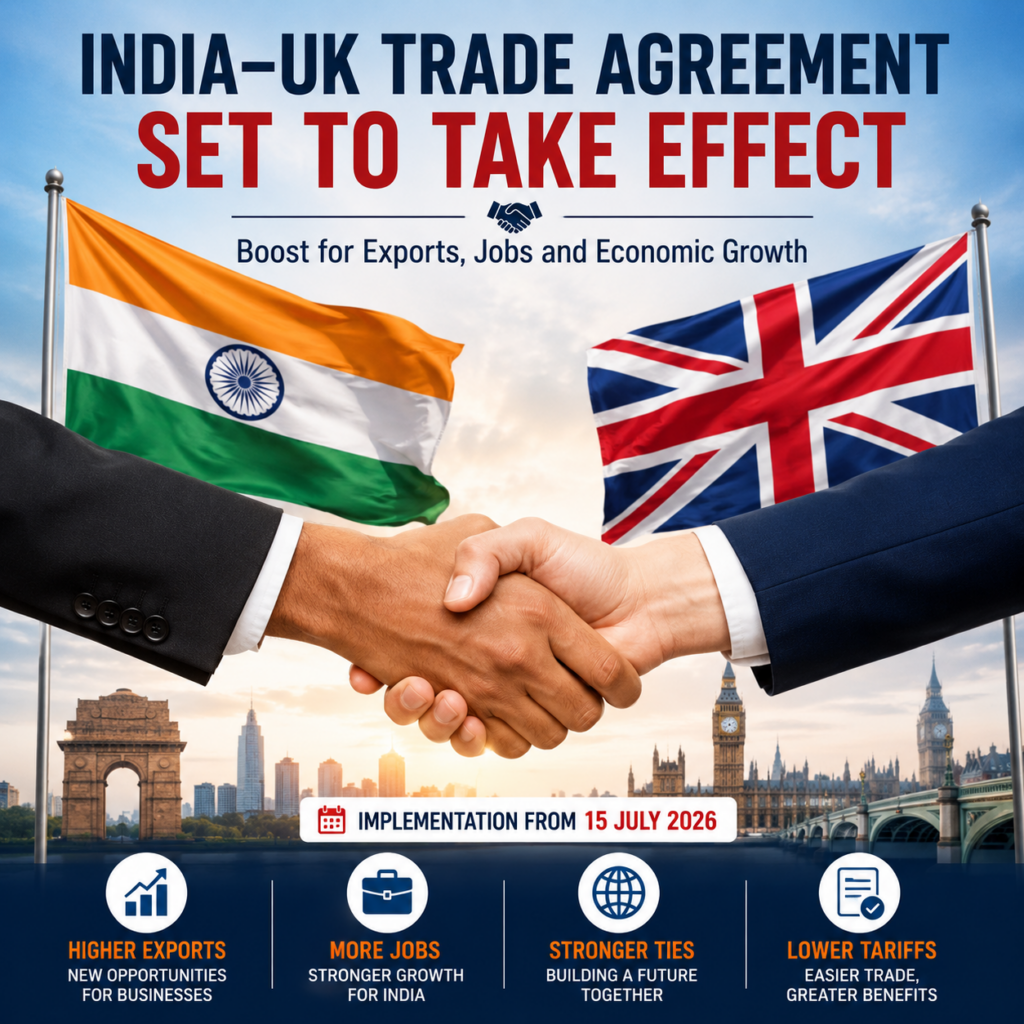
India is preparing for a significant milestone in its trade and economic policy as the India–United Kingdom Comprehensive Economic and Trade Agreement (CETA) is scheduled to come into effect on July 15, 2026. Businesses on both sides have already started accelerating shipments, hoping to benefit from lower tariffs and improved market access once the agreement becomes operational. The development is being viewed as one of India’s most important trade policy achievements in recent years, with the potential to strengthen exports, create employment and deepen strategic ties with the UK.
The agreement reflects the government’s broader strategy of expanding global trade partnerships while reducing barriers for Indian manufacturers, exporters and service providers. Industry experts believe the pact could significantly improve India’s competitiveness in one of its largest export destinations.
Exporters Rush to Take Advantage
With the implementation date approaching, Indian exporters have reported a sharp rise in new orders from British buyers. Importers in the UK are placing advance orders so that goods can qualify for reduced customs duties under the new agreement.
Sectors expected to benefit immediately include:
- Textiles and garments
- Engineering goods
- Pharmaceuticals
- Gems and jewellery
- Processed food products
- Leather and footwear
- Auto components
The surge in orders is already creating optimism among export-oriented businesses, especially small and medium enterprises that depend heavily on overseas markets.
What Makes the Agreement Important?
Trade agreements are designed to reduce tariffs, simplify customs procedures and improve access to international markets. Under the India–UK pact, businesses in both countries are expected to enjoy lower trade costs and faster movement of goods.
Key expected benefits include:
- Reduced import and export duties
- Better access for Indian products in the UK market
- Increased foreign investment opportunities
- Easier business collaboration
- Greater support for manufacturing industries
- Improved competitiveness for Indian exporters
Government officials believe the agreement will strengthen India’s position as a global manufacturing and export hub while supporting the “Make in India” initiative.
Economic Impact on India
The agreement is expected to have a positive impact across several sectors of the Indian economy.
Potential advantages include:
- Higher export revenues
- Increased production by manufacturing companies
- Creation of new employment opportunities
- Stronger participation of MSMEs in global trade
- Growth in logistics and shipping industries
- Higher inflow of foreign investment
Economists also believe that improved trade relations with developed economies help diversify India’s export markets and reduce dependence on a limited number of countries.
Political Significance
Beyond economics, the agreement carries considerable political importance.
It demonstrates India’s growing role in global trade negotiations and reflects New Delhi’s strategy of building stronger partnerships with major economies after Brexit. The deal also strengthens diplomatic ties between India and the United Kingdom, opening opportunities for greater cooperation in technology, education, clean energy and innovation.
The agreement is expected to serve as a model for future trade negotiations with other developed nations, reinforcing India’s long-term vision of expanding its global economic footprint.
Industries Watching Closely
While exporters are optimistic, businesses are also preparing for increased competition as imports become more accessible in certain sectors.
Industry associations have urged companies to:
- Improve product quality
- Increase manufacturing efficiency
- Expand export capacity
- Adopt international standards
- Invest in technology and automation
Experts say businesses that adapt quickly to global market requirements are likely to gain the maximum advantage from the agreement.
Challenges Remain
Despite the optimism, some concerns remain.
Trade experts note that Indian companies must continue improving productivity and maintaining competitive pricing to fully utilize the opportunities created by the agreement. Infrastructure, logistics efficiency and customs modernization will also play a crucial role in determining the long-term success of the trade pact.
Additionally, global economic uncertainties and currency fluctuations may influence export performance in the coming months.
Looking Ahead
As the July 15 implementation date approaches, the India–UK trade agreement represents a significant step in India’s evolving economic and trade policy. The early surge in export orders indicates strong confidence among businesses, while policymakers expect the agreement to contribute to higher exports, employment generation and sustained economic growth.
If successfully implemented, the pact could strengthen India’s position in international trade and pave the way for future agreements with other major global economies. For businesses, manufacturers and exporters, the coming weeks will mark the beginning of a new chapter in India’s expanding global trade ambitions.