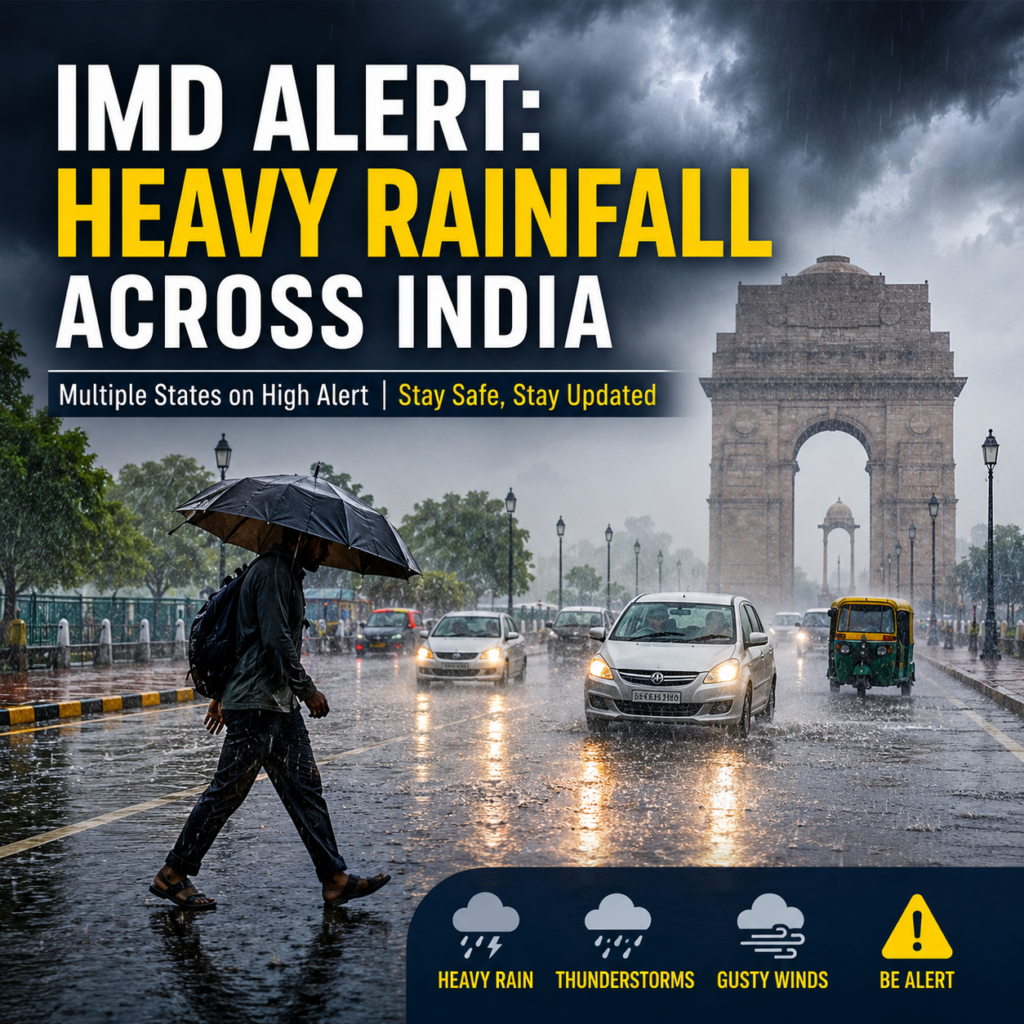
India is witnessing an active phase of the southwest monsoon, with the India Meteorological Department (IMD) issuing warnings of heavy to extremely heavy rainfall across several states over the coming days. States including Gujarat, Odisha, Maharashtra, Madhya Pradesh, Chhattisgarh, Rajasthan, Uttarakhand, Himachal Pradesh and parts of North India are expected to receive widespread rainfall accompanied by thunderstorms and gusty winds.
The latest weather forecast has prompted state governments and disaster management authorities to remain on high alert as the possibility of waterlogging, flash floods, traffic disruptions and localized landslides increases. With millions of people depending on the monsoon for agriculture and water resources, the rainfall is both a blessing and a challenge.
Monsoon Gains Momentum Across the Country
According to IMD, favorable atmospheric conditions and active weather systems over the Arabian Sea and Bay of Bengal have strengthened monsoon activity. As a result, rainfall intensity has increased significantly across western, central and northern India.
Meteorologists expect the current spell to continue over the next few days, bringing relief from high temperatures while also increasing the risk of flooding in vulnerable regions.
Several cities have already reported continuous showers, reduced visibility, waterlogged roads and slower traffic movement during peak hours.
States Likely to Receive Heavy Rainfall
The IMD has highlighted multiple regions where rainfall activity is expected to remain intense.
Major states under heavy rain watch:
- Gujarat
- Odisha
- Maharashtra
- Madhya Pradesh
- Chhattisgarh
- Rajasthan
- Uttarakhand
- Himachal Pradesh
- Delhi-NCR
- Parts of Uttar Pradesh
Authorities have advised residents living near rivers, hilly areas and low-lying regions to remain cautious as rainfall could intensify rapidly.
Impact on Daily Life
Heavy rainfall is already affecting transportation and daily activities in several cities.
Possible disruptions include:
- Traffic congestion due to waterlogging
- Delays in train and bus services
- Flight schedule adjustments in some airports
- Localized flooding in urban areas
- Increased risk of landslides in hilly regions
- Temporary closure of schools in rain-affected districts
Emergency response teams have been deployed in vulnerable locations to ensure quick assistance if flooding or infrastructure damage occurs.
Relief for Farmers
While heavy rainfall creates short-term challenges, it also brings encouraging news for India’s agriculture sector.
A healthy monsoon is essential for:
- Kharif crop sowing
- Groundwater recharge
- Reservoir water levels
- Rural economy
- Drinking water availability
Farmers across several states have welcomed the improved rainfall after concerns over delayed monsoon activity earlier this season. Adequate rainfall during July is expected to support crops such as paddy, cotton, soybean, maize and pulses.
However, agricultural experts have advised farmers to remain alert for excessive rainfall that could damage newly sown crops in flood-prone districts.
Authorities Issue Safety Advisory
Disaster management agencies have urged citizens not to ignore weather warnings.
People are advised to:
- Avoid unnecessary travel during heavy rainfall.
- Stay away from flooded roads and underpasses.
- Keep emergency supplies and mobile phones charged.
- Follow official weather updates from IMD and local authorities.
- Avoid visiting rivers, waterfalls and landslide-prone areas during the alert period.
Motorists have also been advised to drive cautiously due to reduced visibility and slippery roads.
Weather May Change Later This Month
Interestingly, while the first half of July is expected to remain highly active, meteorologists believe rainfall may reduce during the second half of the month in many parts of the country. Extended-range forecasts indicate that monsoon activity could weaken after the current spell, making efficient water management important for both farmers and local administrations.
Outlook
The latest monsoon surge highlights both the importance and unpredictability of India’s rainy season. While the widespread rainfall is expected to strengthen agricultural activity and replenish water resources, authorities remain focused on minimizing risks from flooding, transport disruptions and landslides.
Citizens are encouraged to monitor official weather updates, plan travel carefully and follow safety advisories as the active monsoon phase continues over the coming days. With the monsoon now firmly established across much of the country, the coming week will be crucial in determining its impact on agriculture, infrastructure and daily life.