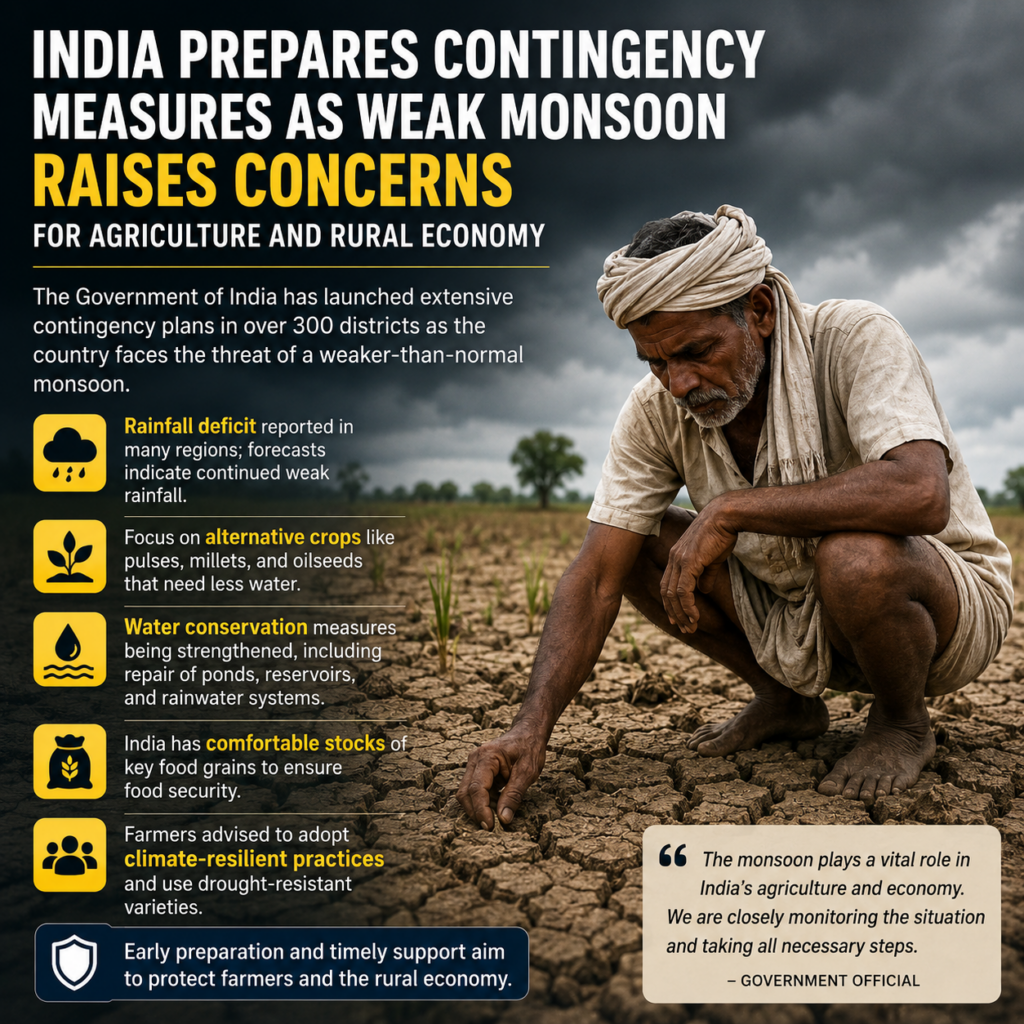
New Delhi, June 2026: The Government of India has initiated extensive contingency planning across hundreds of districts as the country faces the possibility of a significantly weaker-than-normal monsoon season. With rainfall levels reported substantially below average in several regions, policymakers, agricultural experts, and state administrations are working together to minimize the impact on farming, food production, and rural livelihoods.
The southwest monsoon plays a crucial role in India’s economy, supplying nearly 70 percent of the country’s annual rainfall and supporting agricultural activities across vast areas of the country. Millions of farmers depend on seasonal rains for sowing and cultivating crops such as rice, pulses, oilseeds, and cotton. A prolonged rainfall deficit can directly affect crop yields, rural incomes, and food prices.
According to recent assessments, rainfall during the early phase of the monsoon has remained well below normal levels. Meteorological forecasts have also indicated the possibility of continued weak rainfall conditions in the coming weeks, increasing concerns among policymakers and farming communities. The situation is being closely monitored by the India Meteorological Department (IMD) and other government agencies.
In response, the central government has prepared contingency plans covering more than 300 vulnerable districts. These plans focus on helping farmers adapt to changing weather conditions by promoting crops that require less water and have shorter growing periods. Agricultural authorities have advised farmers in affected regions to consider alternatives such as pulses, millets, and oilseeds, which can perform better under limited rainfall conditions.
Officials have identified over 100 districts as high-risk areas due to their low irrigation coverage and greater dependence on rainfall. Another group of districts has been categorized as medium risk. State governments have been instructed to ensure adequate availability of seeds, fertilizers, and technical guidance so that farmers can quickly adjust their cropping patterns if rainfall shortages persist.
Water conservation has emerged as another major focus area. Authorities are encouraging states to repair and maintain ponds, reservoirs, check dams, and rainwater harvesting systems. Such infrastructure can help store available water and provide support to agricultural activities during dry periods. Experts believe that efficient water management will be critical in reducing the impact of any prolonged rainfall deficit.
Despite the concerns, government officials have emphasized that India currently maintains comfortable stocks of key food grains, including rice and wheat. These reserves are expected to provide a buffer against potential supply disruptions and help stabilize food prices if agricultural production faces challenges during the current season.
Economists note that the monsoon has a broader influence beyond agriculture. Rural consumption, employment opportunities, and demand for goods and services often depend on farm incomes generated during a successful agricultural season. A weaker monsoon could therefore have implications for economic growth in rural regions. However, proactive planning and early intervention measures may help mitigate some of these risks.
Climate experts have also pointed to the increasing influence of global weather patterns, including El Niño conditions, which are often associated with below-average rainfall in India. The growing frequency of extreme weather events has reinforced the need for climate-resilient farming practices, improved irrigation infrastructure, and long-term investments in water conservation.
Agricultural scientists are encouraging farmers to adopt modern techniques such as drought-resistant crop varieties, precision irrigation, and soil moisture conservation practices. These measures can improve resilience and reduce dependence on uncertain rainfall patterns. Several state governments have already launched awareness campaigns to help farmers prepare for potential challenges during the current agricultural season.
As the monsoon progresses, rainfall patterns over the next few weeks will be closely watched. While concerns remain, authorities are confident that early preparedness measures, combined with existing food grain reserves and coordinated action between the central and state governments, can help reduce the impact of any adverse weather conditions.
The coming weeks will be crucial in determining the overall strength of the monsoon and its implications for India’s agriculture sector, food security, and rural economy. For now, the focus remains firmly on preparedness, adaptation, and ensuring support reaches farmers in the most vulnerable regions of the country.